Quotessence
Home / Quotes / Quote by Kenneth Keniston

Quote by Kenneth Keniston

“We measure the success of schools not by the kinds of human beings they promote but by whatever increases in reading scores they chalk up. We have allowed quantitative standards, so central to the adult economic system, to become the principal yardstick for our definition of our children's worth.”

Quote by Kenneth Keniston

Author
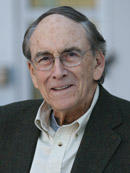
Kenneth Keniston
Kenneth Keniston

Kenneth Keniston, born on January 6, 1930, is an individual whose profession and category are unknown. His life story and contributions are not well-documented, and further research is needed to understand his background and achievements. more

You May Also Like

“The psychological pain--and the ethical shame--of American poverty are made greater by the fact that this country possesses the wealth and the energy to raise all children to a minimally decent standard of living.”

“Recognizing that family self-sufficiency is a false myth, we also need to acknowledge that all today's families need help in raising children. The problem is not so much to reeducate parents but to make available the help they need and to give them enough power so that they can be effective advocates with and coordinators of the other forces that are bringing up their children.”

“One current reaction to change in families, for example, is the proposal for more "education for parenthood," on the theory that this training will not only teach specific skills such as how to change diapers or how to play responsively with toddlers, but will raise parents' self-confidence at the same time. The proposed cure, in short, is to reform and educate the people with the problem.”

“Parents still have primary responsibility for raising children, but they must have the power to do so in ways consistent with their children's needs and their own values.... We must address ourselves less to the criticism and reform of parents themselves than to the criticism and reform of the institutions that sap their self-esteem and power.”

“Within forty years of their arrival in the Plymouth colony, the first white settlers were afraid their children had lost the dedication and religious conviction of the founding generation. Ever since, Americans have looked to the next generation not only with love and solicitude but with a good measure of anxiety, worrying whether they themselves were good parents, fearful that their children would not turn out well.”

“In the early nineteenth century, the doctrine of self-sufficiency came to apply to families as well as individuals.... The familybecame a special protected place, the repository of tender, pure, and generous feelings (embodied by the mother) and a bulwark and bastion against the raw, competitive, aggressive, and selfish world of commerce (embodied by the father).... In performing this protective task, the good family was to be as self-sufficient as the good man.”

“It is misleading to discuss recent changes in family life without emphasizing the fact that for generations some Americans have had to raise children under particularly appalling pressures. Although much of what is worrying American parents is shared by them all, the most grievous problems are those that especially afflict a large minority--the poor, the nonwhite and, in various ways, the parents of handicapped children.”

“Today's parents have little authority over those others with whom they share the task of raising their children. On the contrary,most parents deal with those others from a position of inferiority or helplessness. Teacher, doctors, social workers, or television producers possess more status than most parents.... As a result, the parent today isa maestro trying to conduct an orchestra of players who have never met and who play from a multitude of different scores, each in a notation the conductor cannot read.”

“The myth of the self-sufficient individual and of the self-sufficient, protected, and protective familytells us that those who need help are ultimately inadequate. And it tells us that for a family to need help--or at least to admit it publicly--is to confess failure. Similarly, to give help, however generously, is to acknowledge the inadequacy of the recipients and indirectly to condemn them, to stigmatize them, and even to weaken what impulse they have toward self-sufficiency.”