“The premium so often put in schools upon external "discipline," and upon marks and rewards, upon promotion and keeping back, are the obverse of the lack of attention given to life situations in which the meaning of facts, ideas, principles, and problems is vitally brought home.”
Quote by John Dewey
Work
The Middle Works of John Dewey, 1899-1924, Volume 9: 1916, Democracy and Education
The Middle Works of John Dewey, Volume 9, is a collection of essays and lectures by the influential philosopher and educator John Dewey. This particular volume, published in 1916, delves into the intersection of democracy and education, exploring the role of education in fostering democratic values and practices. Dewey's writings in this volume reflect his commitment to progressive education and his belief in the transformative power of education for individual and societal development. more
Author
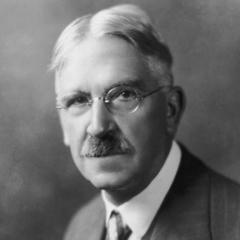
John Dewey
John Dewey was an American philosopher and educator, born on October 20, 1859, and died on June 1, 1952. He was a leading figure in the philosophy of pragmatism and had a profound impact on 20th-century education, philosophy, and the social sciences. more
You May Also Like
Source: Democracy and Education: Top American Authors
Source: Democracy and Education: Top American Authors
Source: Democracy And Education
Source: Democracy and Education: Top American Authors
Source: Democracy And Education
“It is a familiar and significant saying that a problem well put is half-solved.”
Source: The Later Works, 1925-1953: 1938
Source: The Later Works, 1925-1953: 1938-1939
“Democracy means the belief that humanistic culture should prevail.”
Source: The Later Works, 1925-1953: 1938-1939
Source: Democracy and Education: Top American Authors
Source: Democracy and Education: Top American Authors