Quotessence
Home / Quotes / Quote by John Carroll

Quote by John Carroll

“The enemies of Christ ... could not bear his independence; his "Give the emperor that which is the emperor's" showed a contempt for the affairs of state and its politics for the moral order that their self-respect would not let them tolerate.”

Quote by John Carroll

Author
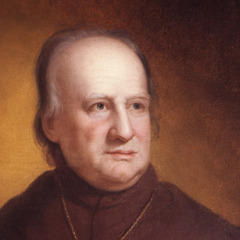
John Carroll
John Carroll

John Carroll (January 8, 1735 - December 3, 1815) was an American religious leader and one of the founding figures of Catholicism in the United States. Born in Ireland, he immigrated to the United States and became the first Archbishop of the United States, playing a significant role in promoting Catholicism and advocating for religious freedom for Catholics in America. more

You May Also Like

“There is a strain in Marx of the cleric, of the vulgar moralist. He paints the capitalist and the bourgeois as incarnations of evil; it is they who are responsible for the woes of mankind. The dismissal of the individual's responsibility for his own misery is the quintessence of clericalism.”

“The virtual suppression of ethical discussion after 1845 produces the semblance of purely descriptive analysis, dressed in the mantle of positivist objectivity, analysis which is, in fact, strung to a framework of crude, because unexplicated, moral assumptions.”

“Stirner's political praxis is quixotic. It accepts the established hierarchies of constraint as given. ... Not liable to any radical change, they constitute part of the theatre housing the individual's action. ... The egoist uses the elements of the social structure as props in his self-expressive act.”

“Any attempt to break with the past, or with existing social structures, is a failure if it leads to a bored, listless, and colourless style of life; assertive and enduring innovation, like the mastering of a new environment, requires the confidence and discipline which are founded on exuberant emotions.”

“Nietzsche saw in the Protestant ethic, in both its religious and secular (economic) forms, a final protest before the emergence into dominance of the ordered, bourgeois world of the 'last man' he who will pay any price in tedium for comfort and the absence of tension.”

“Life is more than thought: what a man feels, and what his senses awaken in him, are more indispensable to his life's fullness than subsequent reflection on their significance. Both Stirner and Nietzsche have elaborated Faust's opening speech in which he bemoans his wasted years in academia: this speech is Goethe's own impeachment of Kant and Hegel . Philosophy proceeds always under the risk of making a fetish of thinking.”