Quotessence
Home / Quotes / Quote by Vladimir Nabokov

Quote by Vladimir Nabokov

“But after all we are not children, not illiterate juvenile delinquents, not English public school boys who after a night of homosexual romps have to endure the paradox of reading the Ancients in expurgated versions.”

Quote by Vladimir Nabokov

Author
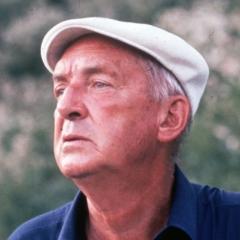
Vladimir Nabokov
Vladimir Nabokov

Russian-born American novelist, best known for his novel 'Lolita'. Nabokov is renowned for his unique literary style and profound use of language and symbolism. more

You May Also Like

“When I was a schoolboy in England, the old bound volumes of Kipling in the library had gilt swastikas embossed on their covers. The symbol's 'hooks' were left-handed, as opposed to the right-handed ones of the Nazi hakenkreuz, but for a boy growing up after 1945 the shock of encountering the emblem at all was a memorable one. I later learned that in the mid-1930s Kipling had caused this 'signature' to be removed from all his future editions. Having initially sympathized with some of the early European fascist movements, he wanted to express his repudiation of Hitlerism (or 'the Hun,' as he would perhaps have preferred to say), and wanted no part in tainting the ancient Indian rune by association. In its origin it is a Hindu and Jainas symbol for light, and well worth rescuing.”

“For Oscar, high school was the equivalent of a medieval spectacle, like being put in the stocks and forced to endure the peltings and outrages of a mob of deranged half-wits, an experience from which he supposed he should have emerged a better person, but that’s not really what happened—and if there were any lessons to be gleaned from the ordeal of those years he never quite figured out what they were. He walked into school every day like the fat lonely nerdy kid he was, and all he could think about was the day of his manumission, when he would at last be set free from its unending horror. Hey, Oscar, are there faggots on Mars?—Hey, Kazoo, catch this. The first time he heard the term moronic inferno he know exactly where it was located and who were its inhabitants.”

“... I succeeded at math, at least by the usual evaluation criteria: grades. Yet while I might have earned top marks in geometry and algebra, I was merely following memorized rules, plugging in numbers and dutifully crunching out answers by rote, with no real grasp of the significance of what I was doing or its usefulness in solving real-world problems. Worse, I knew the depth of my own ignorance, and I lived in fear that my lack of comprehension would be discovered and I would be exposed as an academic fraud -- psychologists call this "imposter syndrome".”

“The objective of learning is not necessarily to remember. It may even be salutary to forget. It is only when we forget the early pains and struggles of forming letters that we acquire the capacity for writing. The adult does not remember all the history s/he learned but s/he may hope to have acquired a standard of character and conduct, a sense of affairs and a feeling of change and development in culture. Naturally there is nothing against having a well-stocked mind provided it does not prevent the development of other capacities. But it is still more important to allow knowledge to sink into one in such a way that it becomes fruitful for life; this best done when we feel deeply all we learn. For the life of feeling is less conscious, more dream-like, than intellectual activity and leads to the subconscious life of will where the deep creative capacities of humanity have their being. It is from this sphere that knowledge can emerge again as something deeply significant for life. It is not what we remember exactly, but what we transform which is of real value to our lives. In this transformation the process of forgetting, of allowing subjects to sink into the unconscious before "re-membering" them is an important element.”

“In a universe where all life is in movement, where ever fact seen in perspective is totally engaging, we impose stillness on lively young bodies, distort reality to dullness, make action drudgery. Those who submit - as the majority does - are conditioned to a life lived without their human birthright: work done with the joy and creativity of love. But what are schools for if not to make children fall so deeply in love with the world that they really want to learn about it? That is the true business of schools. And if they succeed in it, all other desirable developments follow of themselves. In a proper school, no fact would ever be presented as a soulless one, for the simple reason that there is no such thing. Every facet of reality, discovered where it lives, startles with its wonder, beauty, meaning.”

“His sensitive nature was still smarting under the lashes of an undivided and squalid way of life. His soul was still disquieted and cast down by the dull phenomenon of Dublin. He had emerged from a two years' spell of revery to find himself in the midst of a new scene, every event and figure of which affected him intimately, disheartened him or allured and, whether alluring or disheartening, filled him always with unrest and bitter thoughts. All the leisure which his school life left him was passed in the company of subversive writers whose jibes and violence of speech set up a ferment in his brain before they passed out of it into his crude writings.”