Quotessence
Home / Quotes / Quote by Madeleine L'Engle

Quote by Madeleine L'Engle

“Give the public the 'image' of what it thinks it ought to be, or what television commercials or glossy magazine ads have convinced us we ought to be, and we will buy more of the product, become closer to the image, and further from reality.”

Quote by Madeleine L'Engle

Work

A Circle of Quiet

This book is a reflective and introspective journey that delves into the author's personal experiences and observations, focusing on the beauty of simplicity and the importance of spiritual reflection in daily life. more

Author

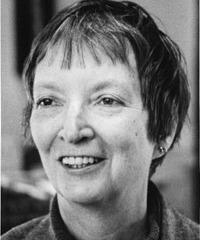
Madeleine L'Engle
Madeleine L'Engle

American writer, born on November 29, 1918, and died on September 6, 2007. Madeleine L'Engle is renowned for her science fiction and fantasy novels, with her most famous work being 'A Wrinkle in Time'. more

You May Also Like

“However destructive may be the policies of the government and the methods and products of the corporations, the root of the problem is always found to be found in private life. We must learn to see that every problem that concerns us as conservationists always leads straight to the question of how we live. The world is being destroyed, no doubt about it, by the greed of the rich and powerful. It is also being destroyed by popular demand.”

“Human beings are themselves considered consumer goods to be used and then discarded. We have created a “disposable” culture which is now spreading. It is no longer simply about exploitation and oppression, but something new. Exclusion ultimately has to do with what it means to be a part of the society in which we live; those excluded are no longer society’s underside or its fringes or its disenfranchised – they are no longer even a part of it. The excluded are not the “exploited” but the outcast, the “leftovers”.”

“In a consumer society, expectations dare not plateau, because a growing economy depends on rising expectations... The more we let our level of contentment be determined by outside factors-a new car, fashionable clothes, a prestigious career, social status-the more we relinquish control over our own happiness.”

“Many of our miseries are merely comparative: we are often made unhappy, not by the presence of any real evil, but by the absence of some fictitious good; of something which is not required by any real want of nature, which has not in itself any power of gratification, and which neither reason nor fancy would have prompted us to wish, did we not see it in the possession of others.”