Quotessence
Home / Quotes / Quote by Sir John Richard Hicks

Quote by Sir John Richard Hicks

Work

The theory of wages

This book delves into the factors influencing wage levels in various economic contexts, analyzing the interplay between labor supply and demand, market conditions, and the role of labor unions. more
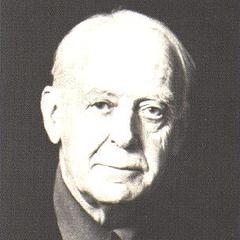
Author

Sir John Richard Hicks

British economist and Nobel laureate. Hicks is renowned for his contributions to general equilibrium theory and consumer surplus theory. more

You May Also Like

“Sharp increases in the minimum wage rate are also inflationary. Frequently workers paid more than the minimum gauge their wages relative to it. This is especially true of those workers who are paid by the hour. An increase in the minimum therefore increases their demands for higher wages in order to maintain their place in the structure of wages. And when the increase is as sharp as it is in H.R. 7935, the result is sure to be a fresh surge of inflation.”

“I first came into the labor force in 1941 when the minimum wage was 40 cents an hour, and that was my first job. And each time that we've tried to boost the lower level of salary for the most underpaid workers, there have been predictions of catastrophe. But each time, in [m]y opinion, the change has helped our Nation and its economic strength.”

“A general flat minimum-wage law for all industry is permissible, but I do not think that it is a particularly wise method of achieving the end. I know much better methods of providing a minimum for everybody. But once you turn from laying down a general minimum for all industry to decreeing particular and different minimum for different industries, then, of course, you make the price mechanism inoperative, because it is no longer the price mechanism which will guide people between industries and trades.”

“In short, what the living wage is really about is not living standards, or even economics, but morality. Its advocates are basically opposed to the idea that wages are a market price-determined by supply and demand, the same as the price of apples or coal. And it is for that reason, rather than the practical details, that the broader political movement of which the demand for a living wage is the leading edge is ultimately doomed to failure: For the amorality of the market economy is part of its essence, and cannot be legislated away.”