Quotessence
Home / Quotes / Quote by Porochista Khakpour

Quote by Porochista Khakpour

“The original Zal story by Ferdowsi gives a very moving account of an infant who had all odds against him - he was left to die in the wilderness and a giant, benevolent bird rescued him and became his guardian angel. This tale thrilled me; I've always wanted to write about it.”

Quote by Porochista Khakpour

Author
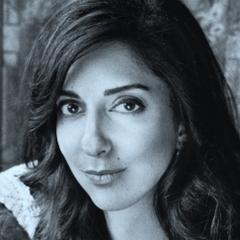
Porochista Khakpour
Porochista Khakpour

Porochista Khakpour is an American novelist born on January 17, 1978. Her works often focus on the identity and cultural conflicts of Iranian Americans, as well as personal growth. Her debut novel 'Lowland' was nominated for the National Book Award in 2013 and won numerous other awards. more

You May Also Like

“My interest, perhaps, came out of the trauma of being a young immigrant in this country and constantly feeling my "resident alien" status. I remember trying to learn English on kindergarten playgrounds. I tried hard to be a convincing American but it was a losing battle. I was labeled weird and that tag never left me - all through high school, I was always the oddball. It was not always an easy path - I just had to tell myself that one day, being on the periphery would become an asset (and I think it finally has, as a creative adult).”

“I both loved and hated South Pasadena. On the one hand, it was so diverse - all my closest friends were immigrants or had immigrant parents. On the other hand, it was a bit conservative - in a sort of wholesome, Midwestern, small-town sense. I never met a single writer until I moved to New York City for college.”

“I write first drafts feverishly fast, and then I spend years editing. It's not that sentence-by-sentence perfectionist technique some writers I admire use. I need to see the thing, in some form, and then work with it over and over and over until it makes sense to me - until its concerns approach me, until its themes come to my attention. At that editing stage, the story picks itself and it's just up to me to see it, to find it. If I've done a good job, what it all means will force me to confront it in further edits.”

“The Illusionist is the storyteller in so many ways. Symbols become his obsession. It's not simply about creating plot - one must also grapple with theme. Nowadays we have a lot of characters and a lot of action but it's hard to sit still and really meditate on meaning, worldviews, concepts, ideologies even. I make my Illusionist do what I've had to do, often with copious amounts of stumbling and frustration. His real humanity comes from being an artist, I think - his creativity is what makes him a man.”

“It [9/11 tragedy] was the spectacle, what al-Qaeda gets its main power from - why their terrorism truly earns the word "acts." They are very theatrical, always - the simultaneous violence, the grandiose, symbolic gestures (the number 911, "United" and "American" flights, the World Trade as target etc). And then its aftermath.”

“Maybe in writing about and through trauma it was therapeutic in a way, but it didn't feel like it at the time. I was in a very dark place, in lots of foreign cities, far from New York. A lot of personal trials and tribulations took over my life in those years. It might be some time before I see what therapeutic function this book did serve. But for now, it's not even easy to read from it.”