Quotessence
Home / Quotes / Quote by Victor Davis Hanson

Quote by Victor Davis Hanson

“In Iraq #1 we stayed within U.N. mandates, limited our response, went home after Kuwait was freed - and were censured for allowing Shiites and Kurds to be butchered and not going to Baghdad when the road was open and the dictator tottering. In Iraq #2 we removed the tyrant at less cost than the liberation of Kuwait during the earlier war, stayed on to ensure freedom and fair representation for various groups - and are being castigated for either using too little force to ensure needed order or too much power that stifles indigenous aspirations and turns popular opinion against us.”

Quote by Victor Davis Hanson

Author
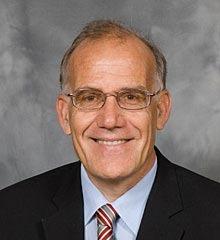
Victor Davis Hanson
Victor Davis Hanson

Victor Davis Hanson is an American historian renowned for his research on ancient Greek history. His works cover a wide range of topics from the classical era to modern political and social issues. more

You May Also Like

“A country that cannot count its own illegal aliens - estimates range from 8-12 million - with a porous 2,000 mile border is not secure despite twelve carrier battle groups. We must accept that it is a cornerstone of Mexican foreign policy to export illegally each year a million of its own to the United States to avoid needed reform at home and to influence American domestic policy.”

“The problem with deterrence - apparently sometimes forgotten by our former presidents - is that it is not static, but a creature of the moment, captive to impression, and nursed on action, not talk. It must be maintained hourly and can erode or be lost with a single act of failed nerve, despite all the braggadocio of threatened measures. And, once gone, the remedies needed for its restoration are always more expensive, deadly - and controversial - than would have been its simple maintenance.”

“The fact is that we have been consistent in a predictable 60-year commitment to national security, while our friends and former enemies - by intent or default - have followed different paths since 1989. We stayed mostly the same as they became hypopowers that, to take a small example, would and could do nothing should a madman in Korea wish to kill millions.”

“Western societies from ancient Athens to imperial Rome to the French republic rarely collapsed because of a shortage of resources or because foreign enemies proved too numerous or formidable in arms - even when those enemies were grim Macedonians or Germans. Rather, in times of peace and prosperity there arose an unreal view of the world beyond their borders, one that was the product of insularity brought about by success, and an intellectual arrogance that for some can be the unfortunate byproduct of an enlightened society.”

“Did either the nonexistent or the measured response after a series of attacks on Americans the past decade - in Lebanon, Africa, Saudi Arabia, New York, and Yemen - suggest to our terrorist enemies that it was wrong and unwise to kill reasonable and affable people, or did the easy killing imply that self-absorbed and pampered Lotus-eaters would not much care who or how many were butchered as long as it was within reasonable numbers and spread out over time?”

“For all the criticism about warlords, it is now likely that Afghanistan will never again be turned over to al Qaeda to train thousands to conduct the type of murder we saw on September 11. For all real problems with ambushes and sabotage, there will be no more gassings, mass murdering, invading neighbors, sending guided missiles across borders or no-fly zones in Iraq, but rather the hard work of consensual government - a difficult process easily caricatured, but when completed universally admired.”

“It is rather the nature of America - our freewheeling, outspoken, prosperous, liberty-loving citizens extend equality to women, homosexuals, minorities, and almost anyone who comes to our shores, and thereby create desire and with it shame for that desire. Indeed, it is worse still than that: Precisely because we worry publicly that we are insensitive, our enemies scoff privately that we in fact are too sensitive - what we think is liberality and magnanimity they see as license and decadence. If we don't have confidence in who we are, why should they?”