Quotessence
Home / Quotes / Quote by Neil Armstrong

Quote by Neil Armstrong

“The [Moon] surface is fine and powdery. I can kick it up loosely with my toe. It does adhere in fine layers like powdered charcoal to the sole and sides of my boots. I only go in a small fraction of an inch, maybe an eighth of an inch, but I can see the footprints of my boots and the treads in the fine sandy particles.”

Quote by Neil Armstrong

Author
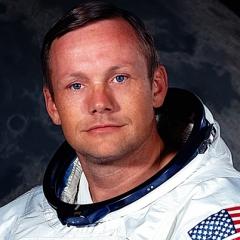
Neil Armstrong
Neil Armstrong

Neil Armstrong, born on August 5, 1930, in Ohio, United States, was an American astronaut and the first human to walk on the Moon. On July 20, 1969, as the commander of Apollo 11, Armstrong made history by becoming the first person to set foot on the lunar surface. His famous quote, 'That's one small step for man, one giant leap for mankind,' has become an iconic statement in human space exploration. more

You May Also Like

“The transfinite numbers are in a certain sense themselves new irrationalities and in fact in my opinion the best method of defining the finite irrational numbers is wholly disimilar to, and I might even say in priciple the same as, my method described above of introducing trasfinite numbers. One can say unconditionally: the transfinite numbers stand or fall with the finite irrational numbers; they are like each other in their innermost being; for the former like the latter are definite delimited forms or modifications of the actual infinite.”

“What I assert and believe to have demonstrated in this and earlier works is that following the finite there is a transfinite (which one could also call the supra-finite), that is an unbounded ascending lader of definite modes, which by their nature are not finite but infinite, but which just like the finite can be determined by well-defined and distinguishable numbers.”

“Well, part of it is a longstanding belief - it's been in our education establishment at least since the 1930s - that somehow children should be allowed to discover knowledge for themselves, that they should construct their own knowledge. This has surfaced most recently in connection with mathematics instruction, where the idea is that they need to discover how to add for themselves. Rather than being taught how to add, they should construct this knowledge on their own.”

“The rainbow is such a remarkable phenomenon of nature, and its cause has been so meticulously sought after by inquiring minds throughout the ages, that I could not choose a more appropriate subject for demonstrating how, with the method I am using, we can arrive at knowledge not possessed at all by those whose writings are available to us.”