Quotessence
Home / Quotes / Quote by Richard P. Feynman

Quote by Richard P. Feynman

“The difficulty really is psychological and exists in the perpetual torment that results from your saying to yourself, "But how can it be like that?" which is a reflection of uncontrolled but utterly vain desire to see it in terms of something familiar. ... If you will simply admit that maybe Nature does behave like this, you will find her a delightful, entrancing thing. Do not keep saying to yourself, if you can possible avoid it, "But how can it be like that?" because you will get 'down the drain', into a blind alley from which nobody has escaped. Nobody knows how it can be like that.”

Quote by Richard P. Feynman

Author
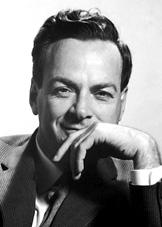
Richard P. Feynman
Richard P. Feynman

Richard P. Feynman was a renowned theoretical physicist known for his contributions to quantum mechanics and quantum electrodynamics. He was also an exceptional physicist in the field of physics education, with popular science books like 'Surely You're Joking, Mr. Feynman!' that have won the hearts of readers. more

You May Also Like

“The increasing technicality of the terminology employed is also a serious difficulty. It has become necessary to learn an extensive vocabulary before a book in even a limited department of science can be consulted with much profit. This change, of course, has its advantages for the initiated, in securing precision and concisement of statement; but it tends to narrow the field in which an investigator can labour, and it cannot fail to become, in the future, a serious impediment to wide inductive generalisations.”

“If you walk along the street you will encounter a number of scientific problems. Of these, about 80 per cent are insoluble, while 19½ per cent are trivial. There is then perhaps half a per cent where skill, persistence, courage, creativity and originality can make a difference. It is always the task of the academic to swim in that half a per cent, asking the questions through which some progress can be made.”

“The human understanding is unquiet; it cannot stop or rest, and still presses onward, but in vain. Therefore it is that we cannot conceive of any end or limit to the world, but always as of necessity it occurs to us that there is something beyond... But he is no less an unskilled and shallow philosopher who seeks causes of that which is most general, than he who in things subordinate and subaltern omits to do so”

“Experience hobbles progress and leads to abandonment of difficult problems; it encourages the initiated to walk on the shady side of the street in the direction of experiences that have been pleasant. Youth without experience attacks the unsolved problems which maturer age with experience avoids, and from the labors of youth comes progress. Youth has dreams and visions, and will not be denied.”

“Stem cells are probably going to be extremely useful. But it isn't a given, and even if it were, I don't think the end justifies the means. I am not against stem cells, I think it's great. Blanket objection is not very reasonable to me-any effort to control scientific advances is doomed to fail. You cannot stop the human mind from working.”