Quotessence
Home / Quotes / Quote by Mary Ritter Beard

Quote by Mary Ritter Beard

Author

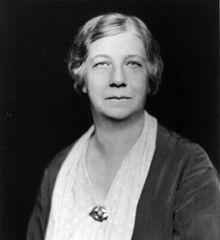
Mary Ritter Beard
Mary Ritter Beard

Mary Ritter Beard was an American historian known for her research on women's history. Her book 'The American Woman: Her Past and Present' had a profound impact on gender studies. more

You May Also Like

“Instead of disbursing her annual millions for these dye stuffs, England will, beyond question, at no distant day become herself the greatest coloring producing country in the world; nay, by the very strangest of revolutions she may ere long send her coal-derived blues to indigo-growing India, her tar-distilled crimson to cochineal-producing Mexico, and her fossil substitutes for quercitron and safflower to China, Japan and the other countries whence these articles are now derived.”

“The so-called ‘crank’ may be quite original in his ideas. … Invention, however, in the engineering sense involves originality; but not that alone, if the results are to be of value. There is imagination more or less fertile, but with it a knowledge of what has been done before, carried perhaps by the memory, together with a sense of the present or prospective needs in art or industry. Necessity is not always the mother of invention. It may be prevision.”

“The steady states of the fluid matrix of the body are commonly preserved by physiological reactions, i.e., by more complicated processes than are involved in simple physico-chemical equilibria. Special designations, therefore, are appropriate:—“homeostasis” to designate stability of the organism; “homeostatic conditions,” to indicate details of the stability; and “homeostatic reactions,” to signify means for maintaining stability.”

“Ninety-nine and nine-tenths of the earth’s volume must forever remain invisible and untouchable. Because more than 97 per cent of it is too hot to crystallize, its body is extremely weak. The crust, being so thin, must bend, if, over wide areas, it becomes loaded with glacial ice, ocean water or deposits of sand and mud. It must bend in the opposite sense if widely extended loads of such material be removed. This accounts for … the origin of chains of high mountains … and the rise of lava to the earth’s surface.”