Quotessence
Home / Quotes / Quote by Albert Bandura

Quote by Albert Bandura

“People's conceptions about themselves and the nature of things are developed and verified through four different processes: direct experience of the effects produced by their actions, vicarious experience of the effects produced by somebody else's actions, judgments voiced by others, and derivation of further knowledge from what they already know by using rules of inference”

Quote by Albert Bandura

Author
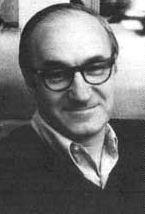
Albert Bandura
Albert Bandura

Albert Bandura, born on December 4, 1925, is a renowned psychologist from Canada. He has made significant contributions to the fields of social learning theory, self-efficacy, and observational learning. more

You May Also Like

“People regulate their level and distribution of effort in accordance with the effects they expect their actions to have. As a result, their behavior is better predicted from their beliefs than from the actual consequences of their actions”

“Accurate processing of information about outcomes is no simple task under the variable conditions of everyday life . . . usually, many factors enter into determining what effects, if any, given actions will have, Actions, therefore, produce outcomes probabilistically rather than certainly. Depending on the particular conjunction of factors, the same course of action may produce given outcomes regularly, occasionally, or only infrequently”

“The difficulty in judging what type of behavior works well arises not only because a given course of action does not always produce the outcomes. Similar outcomes can occur for reasons other than the person's actions, which further complicates inferential judgment. Effects that arise independently of one's actions distort the influence of similar effects produced by the actions, but only on some occasions. Given a strong cognitive set to perceive regularities, even chance joint occurrences of events can be easily misjudged as genuine relationships of low contingent probability”

“Moreover, joint occurrences tend to be better recalled than instances when the effect does not occur. The proneness to remember confirming instances, but to overlook disconfirming ones, further serves to convert, in thought, coincidences into causalities.”

“Dysfunctions can occur in each of the self-regulatory subfunctions-in how personal experiences are self-monitored and cognitively processed, in the evaluative self-standards that are adopted, and in the evaluative self-reactions to one's own behavior.. Problems at any one of these points can create self-dissatisfactions and dejection. dysfunctions in all aspects of the self system are most apt to produce the most chronic self-disparagement and despondency”