Quotessence
Home / Quotes / Quote by Karl Marx

Quote by Karl Marx

“Men make their own history, but they do not make it just as they please; they do not make it under circumstances chosen by themselves, but under circumstances directly encountered, given and transmitted from the past. The tradition of all the dead generations weighs like a nightmare on the brain of the living.”

Quote by Karl Marx

Author
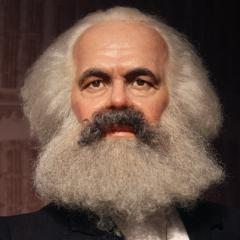
Karl Marx
Karl Marx

Karl Marx (May 5, 1818 - March 14, 1883) was a German philosopher, economist, sociologist, political theorist, and revolutionary. He is one of the founders of Marxism and his works, including 'Das Kapital' and 'The Communist Manifesto', have had a profound impact on the world. more

You May Also Like

“On the outside, Oscar simply looked tired, no taller, no fatter, only the skin under his eyes, pouched from years of quiet desperation, had changed. Inside, he was in a world of hurt. He saw black flashes before his eyes. He saw himself falling through the air. He knew what he was turning into. He was turning into the worst kind of human on the planet: an old bitter dork. Saw himself at the Game Room, picking through the miniatures for the rest of his life. He didn't want this future but he couldn't see how it could be avoided, couldn't figure his way out of it. Fukú.”

“But nobody ever forgot anything, not really, though sometimes they pretended, when it suited them. Memories were permanent. Sorrowful ones remained sad even with the passing of time, yet happy ones could never be recreated - not with the same joy. Remembering bred its own peculiar sorrow. It seemed so unfair: that time should render both sadness and happiness into a source of pain.”

“Now I began to understand art as a kind of black box the reader enters. He enters in one state of mind and exits in another. The writer gets no points just because what's inside the box bears some linear resemblance to "real life" -- he can put whatever he wants in there. What's important is that something undeniable and nontrivial happens to the reader between entry and exit.”