Quotessence
Home / Quotes / Quote by Anton Chekhov

Quote by Anton Chekhov

Work

The Complete Short Novels

Browse quotes and source details for this work. more

Author
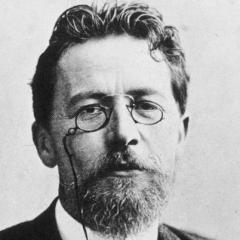
Anton Chekhov
Anton Chekhov

Anton Chekhov, born on January 29, 1860, was a prominent Russian physician and short story writer. His works are renowned for their profound psychological insights and critical portrayal of social realities. Chekhov's short stories have had a profound impact on literature both in Russia and around the world. more

You May Also Like

“Riddle me this: We celebrate and praise evil ppl because we call ourselves giving grace to the changes that can possibly take place with them, as we invite them into high places- alter calls and pulpits …all the while condemning the people they have hurt and destroyed along the way, for speaking about and sharing the pain and trying to rewrite their trauma story. Where’s their grace? And where’s their celebration for overcoming?”

“You know that thing when you're watching a film that you're not really enjoying and the other person doesn't like it either, but you've paid for the rental, you're halfway through, you sort of want to know what happens and, besides, there's nothing else on. But really you're just waiting for someone to say, "Can we stop this? I hate it." And neither of us did. Some people sit like that for their whole lives together. Waiting for it to pick up, waiting for a good bit. We were lucky in that respect. It could have gone on longer.”

“Nietsche once observed that the primary purpose of marriage was conversation. The purpose of a committed relationship, of which marriage is but one example, is not to take care of each other, to reinforce the parent-child complexes, but to grow through and with each other. Relationship is meant to be dialectical—soulful encounters that temper and enlarge.”

“Totul debitat de preot, cantat de cor, ca si ritualul cu impreunarea mainilor, inelele, coroanele etc. au ca sens nu o casatorie, o uniune, deci o iubire, ci o inlantuire (inelele), legarea unei femei de un barbat, legarea unei sclave de stapan. Cu claritate reiese ca aceasta ceremonie nu are loc intre doua fiinte egale,ci intre una inferioara si superiorul sau. Cu alte cuvinte, iubirea, dragostea nu exista in casatoria crestina. Caci intre un inferior si un superior pot exista, in cel mai bun caz-din partea inferiorului-respect, admiratie, supunere, iar din partea superiorului condescendenta, ocrotire. Toate acestea la un loc (repet: in cel mai bun caz) pot forma o "afectiune" a celor doi unul pentru celalalt (afectiune de natura diferita la fiecare dintre ei), dar in nici un caz dragoste. Dragostea implica, in primul rand, egalitatea, intelegerea.”