Quotessence
Home / Quotes / Quote by Charles Dickens

Quote by Charles Dickens

Work

a tale of two cities

Charles Dickens' novel explores themes of revolution, love, and fate through the lives of characters living in the tumultuous era of the late 18th and early 19th centuries. more
Author

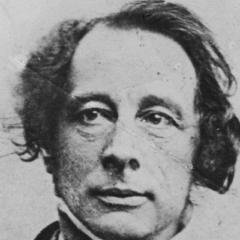
Charles Dickens
Charles Dickens

Charles Dickens, a British writer born on February 7, 1812, and died on June 9, 1870, is one of the greatest novelists of the 19th century. Known for his profound social criticism and vivid narrative style, Dickens' works extensively cover social reality, revealing various issues in the British society of the time. more

You May Also Like

“Inside, the box was divided into tiered chambers, each with a lacquered lid, and these held a selection of ground and whole spices: sage, turmeric, cumin, ginger, mustard, cinnamon, asafetida, mace, cayenne, and cloves. I felt like an emperor receiving the treasures of a new country. The odor rising from the box was like a clambering vine wrapping itself thickly around my head, musky with the deep minerals of the earth and dusting my shoulders with a rainbow of pollen.”

“Goats' refusal of young blackbrush shoots, furthermore, is outright. They want nothing to do with it. Provenza pointed at his hand, then his arm and body, and said, "Every organ and every cell has receptors similar to what's in your nose and on your tongue." Creatures communicate within their environment the same way they communicate within their own bodies -- through chemical trigger substances that bind to receptors and produce responses. "It's all part of a feedback system," Provenza said, "that tells the body what's good and what isn't." Goats are not stupid after all. They don't bumble through the world eating what they were born to like. They experience need states, satisfaction, and delight along with aversions to strong a mere hint of something can make them turn away in disgust. Flavor is what nutrition feels like to a goat. If goats had a word for delicious, it would have two meanings. The first would be: I like this. The second would be: This is what my body needs. For goats, they are the same thing.”

“Resistence takes place on many planes. Occasionally it can be dramatic and public, but most of the decisions we are faced with are mundane and private. What to eat is a choice that we make several times a day, if we are lucky. The cumulative choices we make about food have profound implications. Food offers us many opportunities to resist the culture of mass marketing and commodification. Though consumer action can take many creative and powerful forms, we do not have to be reduced to the role of consumers selecting from seductive convenience items. We can merge appetite with activism and choose to involve ourselves in food as cocreators. (Page 27)”