Quotessence
Home / Quotes / Quote by Joseph Roth

Quote by Joseph Roth

“An indescribable sadness emanated from the white splendour of the staircase and balustrade; the blood-red, now almost black splendour of the carpets. The huge palms in their huge pots looked like they had recently arrived from the cemetery. Their dark green leaves also looked blackish, like wizened, perished weapons from olden days.”

Quote by Joseph Roth

Work

The Tale of the 1002nd Night

Browse quotes and source details for this work. more

Author
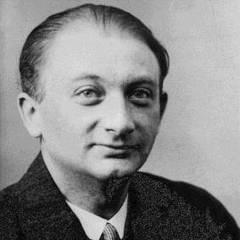
Joseph Roth
Joseph Roth

Joseph Roth, born on September 2, 1894, in the Austro-Hungarian Empire, was a renowned journalist and writer in the 20th century. Known for his profound insights into European society and politics, Roth's work has left a lasting impact on literature. more

You May Also Like

“Aquella noche fue por primera vez a la ópera; con gran sorpresa descubrió que cantaban en italiano y, como no entendía una sola palabra, supuso que toda la representación era una especie de servicio religioso. Deambuló a altas horas de la noche hasta los iluminados chapiteles de San Esteban; la torre sur de la catedral, leyó en una placa, se había iniciado a mediados del siglo XIV y concluido en 1439. Viena, pensó Garp, era un cadáver; posiblemente toda Europa era un cadáver ataviado en un ataúd abierto.”

“Vienna was the city of statues. They were as numerous as the people who walked the streets. They stood on the tip of the highest towers, lay down on stone tombs, sat on horseback, kneeled, prayed, fought animals and wars, danced, drank wine and read books made of stone. They adorned cornices like the figureheads of ships. They stood in the heart of fountains glistening with water as if they had just been born. They sat under trees in the parks summer and winter. Some wore costumes of other periods, and some had no clothes at all. Men, women, children, kings, dwarfs, gargoyles, unicorns, lions, clowns, heroes, wise men, prophets, angels, saints and soldiers preserved for Vienna an illusion of eternity.”

“As the nineteenth century progressed, Austria-Hungary took refuge in reaction at home and adventurism abroad in an effort to contain the centrifugal forces which eventually blew it, and much of Europe, apart. Austria, and Vienna in particular, was the real home of Central-European anti-semitism. Jews wew bottom of the pile. No matter how low you sank, the Jews were still below you, along with the gypsies. At the tail-end of the nineteenth century, the Viennese politician Karl Lueger founded his power base on an anti-semitic platform. Stories of ritual murder by Jewish cabals featured regularly in the Viennese gutter press. It is no accident that Schickelgruber, the faied artist who became Hitler, should have neen the son of a petty official and have spent his ambitions at the butt end of Viennese snobbery.”

“This evening : Fischl and Mayreder debated on Secession, Fischl pro and Mayreder contra - primarily against Olbrich. It's all very well to dismiss him, to criticize - but just try doing better yourself dear Mayreder ! It was the fourth time that M. had called on us in the last few days, and we're heartily glad to be rid of him. Nobody misses him, myself least of all. - I wonder if he's still fond of me? He's very taken with the Secessionist painters, being particularly 'enamoured' - as he puts it - of Bacher, Engelhart and Klimt. Of the latter he says he can well understand young ladies falling for him "in a big way". Oh yes, that was fun : while Kuehl, Klimt, Mayreder, Jettel etc. were here, Klimt gave me the idea of shaping my bread into a heart. I did so, then he formed a toothpick into an arrow and plunged it into the heart. He took red wine and made it flow from the would. It looked really good. He gave it to Mayreder as 'my wounded heart'. On reflection, I can see that it was a very brutal joke and I regret it, for at the time Mayreder gave me a look that went straight through me. Incidentally, Klimt knows that M. is fond of me. He noticed - and said as much as well. I didn't deny it.”

“It's strange. When I put something incomprehensible into a picture, it's usually because the form and colour interest me and because it just happens to fit in. Thwn my friends come along : 'What is that suppose to mean _' And they rack their brains for an interpretation, finding so many ingenious explanations that I feel quite proud of all the unarticulated ideas concealed in my pictures." - Fernand Khnopff to Alma Mahler, while walking in the Prater in Vienna, from her diary July 1899”