Quotessence
Home / Quotes / Quote by Bryan Stevenson

Quote by Bryan Stevenson

“After working for more than twenty-five years, I understood that I don’t do what I do because it’s required or necessary or important. I don’t do it because I have no choice. I do what I do because I’m broken, too. My years of struggling against inequality, abusive power, poverty, oppression, and injustice had finally revealed something to me about myself. Being close to suffering, death, executions, and cruel punishments didn’t just illuminate the brokenness of others; in a moment of anguish and heartbreak, it also exposed my own brokenness. You can’t effectively fight abusive power, poverty, inequality, illness, oppression, or injustice and not be broken by it. We are all broken by something. We have all hurt someone and have been hurt. We all share the condition of brokenness even if our brokenness is not equivalent.”

Quote by Bryan Stevenson

Work

Just Mercy

Browse quotes and source details for this work. more

Author
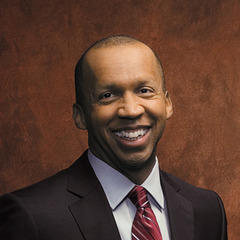
Bryan Stevenson
Bryan Stevenson

Bryan Stevenson is an American lawyer, educator, and social activist known for his contributions to criminal justice reform and the defense of the rights of the poor. Born on November 14, 1959, Stevenson is a professor at the University of Alabama at Birmingham School of Law. more

You May Also Like

“E qui bisogna menzionare anche quanto scritto da Walter Rathenau nelle sue Briefe an eine Liebende: “Le ho detto ciò che penso della morte volontaria, e le dirò ciò su cui non mi sono mai pronunciato: ma poi non voglio più né parlarne né sentirne parlare. […] Ritengo questa fine un'ingiustizia metafisica, un'ingiustizia nei confronti dello spirito. Una mancanza di fiducia nella Bontà eterna, una rivolta contro l'intimo dovere di obbedire alla legge universale. Chi si uccide, uccide e non solo se stesso, ma anche un altro essere. Perché l'uomo non è un'isola. Questa morte, ne sono profondamente convinto, non è una liberazione come quella naturale e incolpevole. Ogni violenza nel mondo ha delle conseguenze, come ogni azione. Esistiamo per prendere su di noi un po' del dolore del mondo offrendo il nostro petto, non per moltiplicarlo facendo a nostra volta violenza. So che lei soffre e io soffro con Lei. Sia indulgente con questo dolore, ed esso sarà indulgente con lei. I desideri e la collera lo accrescono; con la dolcezza esso si addormenta come un bambino. Lei è cosi ricca di amore, lo rivolga tutto agli esseri umani, ai bambini, alle cose e alle sue sofferenze. Non si chiuda nella solitudine, non voglia essere sola. Superi l'ostacolo, lo guardi negli occhi: non è nulla”.”

“The priest gazed around my cell and answered in a voice that sounded very weary to me. 'Every stone here sweats with suffering, I know that. I have never looked at them without a feeling of anguish. But deep in my heart I know that the most wretched among you have seen a divine face emerge from their darkness. That is the face you are asked to see.' This perked me up a little. I said I had been looking at the stones in these walls for months. There wasn't anything or anyone in the world I knew better. Maybe at one time, way back, I had searched for a face in them. But the face I was looking for was as bright as the sun and the flame of desire—and it belonged to Marie.”

“Until modern times, we focused a great deal of the best of our thought upon rituals of return to the human condition. Seeking enlightenment or the Promised Land or the way home, a man would go or be forced to go into the wilderness, measure himself against the Creation, recognize finally his true place within it, and thus be saved both from pride and from despair. Seeing himself as a tiny member of a world he cannot comprehend or master or in any final sense possess, he cannot possibly think of himself as a god. And by the same token, since he shares in, depends upon, and is graced by all of which he is a part, neither can he become a fiend; he cannot descend into the final despair of destructiveness. Returning from the wilderness, he becomes a restorer of order, a preserver. He sees the truth, recognizes his true heir, honors his forebears and his heritage, and gives his blessing to his successors. He embodies the passing of human time, living and dying within the human limits of grief and joy. (pg.95, "The Body and the Earth")”