Quotessence
Home / Quotes / Quote by Aimee Bender

Quote by Aimee Bender

“My favorite of all was still the place on Vermont, the French cafe, La Lyonnaise, that had given me the best onion soup on that night with George and my father. The two owners hailed from France, from Lyon, before the city had boomed into a culinary sibling of Paris. Inside, it had only a few tables, and the waiters served everything out of order, and it had a B rating in the window, and they usually sat me right by the swinging kitchen door, but I didn't care about any of it. There, I ordered chicken Dijon, or beef Bourguignon, or a simple green salad, or a pate sandwich, and when it came to the table, I melted into whatever arrived. I lavished in a forkful of spinach gratin on the side, at how delighted the chef had clearly been over the balance of spinach and cheese, like she was conducting a meeting of spinach and cheese, like a matchmaker who knew they would shortly fall in love. Sure, there were small distractions and preoccupations in it all, but I could find the food in there, the food was the center, and the person making the food was so connected with the food that I could really, for once, enjoy it.”

Quote by Aimee Bender

Work

The Particular Sadness of Lemon Cake

This book is a psychological drama that delves into the complex relationship between a young girl and her family, as she grapples with the extraordinary ability to taste the emotions of others through the food she prepares. The story is set in the 1970s and explores themes of identity, family dynamics, and the impact of one's unique abilities on personal relationships. more

Author
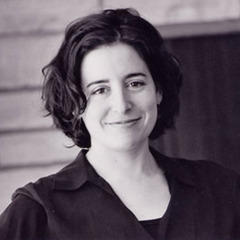
Aimee Bender
Aimee Bender

Aimee Bender is an American novelist celebrated for her imaginative and unique narrative style. Born on June 28, 1969, she has made a notable impact in the literary world with her thought-provoking themes and distinctive storytelling techniques. more

You May Also Like

“There is no place left for the buffalo to roam. There’s only corn, wheat, and soy. About the only animals that escaped the biotic cleansing of the agriculturalists are small animals like mice and rabbits, and billions of them are killed by the harvesting equipment every year. Unless you’re out there with a scythe, don’t forget to add them to the death toll of your vegetarian meal. They count, and they died for your dinner, along with all the animals that have dwindled past the point of genetic feasibility.”

“It is difficult to ascertain what role these articles play in marginalizing the vegetarian experience when there are so many more pressing issues that confront individuals who might otherwise choose to try to become vegetarian or vegan, such as the lack of healthy affordable food in low-income neighborhoods, often largely inhabited by people of color, and a government that subsidizes and promotes animal and sugar-heavy diets over ones with vegetables and fruits. yet rather than focus on these series structural barriers, many articles on vegetarianism and veganism often present the challenge of avoiding meat and animal products as challenge to one's very own normalcy and acceptability.”

“Your body belongs to the earth. In modern life, people tend to think their bodies belong to them, that they can do anything they want to themselves. But your body is not only yours. Your body belongs to your ancestors, your parents, and future generations. It also belongs to society and to all the other living beings. The trees, the clouds, the soil, and every living thing brought about the presence of your body. We can eat with care, knowing we are caretakers of our bodies, rather than their owners.”

“I started in our neighborhood, buying a pastrami burrito at Oki Dog and a deluxe gardenburger at Astro Burger and matzoh-ball soup at Greenblatt's and some greasy egg rolls at the Formosa. In part funny, and rigid, and sleepy, and angry. People. Then I made concentric circles outward, reaching first to Canter's and Pink's, then rippling farther, tofu at Yabu and mole at Alegria and sugok at Marouch; the sweet-corn salad at Casbah in Silver Lake and Rae's charbroiled burgers on Pico and the garlicky hummus at Carousel in Glendale. I ate an enormous range of food, and mood. Many favorites showed up- families who had traveled far and whose dishes were steeped with the trials of passageways. An Iranian cafe near Ohio and Westwood had such a rich grief in the lamb shank that I could eat it all without doing any of my tricks- side of the mouth, ingredient tracking, fast-chew and swallow. Being there was like having a good cry, the clearing of the air after weight has been held. I asked the waiter if I could thank the chef, and he led me to the back, where a very ordinary-looking woman with gray hair in a practical layered cut tossed translucent onions in a fry pan and shook my hand. Her face was steady, faintly sweaty from the warmth of the kitchen. Glad you liked it, she said, as she added a pinch of saffron to the pan. Old family recipe, she said. No trembling in her voice, no tears streaking down her face.”

“To Tree’s surprise, e could still feel the blade of Univervia that was on the deer’s tongue. And the feelings that came at Tree were fast, intense and surprising. The whole blade lay languid, surrendering as the tongue mashed the strands of grass up to the roof of the doe’s mouth. Then the deer twisted the grass sideways and ground teeth into the grass. As the grass was destroyed, each cell popped and gave shots of grass life-force into the hungry deer, in little pops of ecstatic release. The whole thing happened as swiftly as a string of firecrackers going off into light and smoke, leaving behind a dull residue that gave no sense of the evanescent beauty that had been enchanting the air only moments before. Tree felt this chunk of Univervia embrace willful dissolution and then suddenly all these little pieces that had been integrated into Univervia were separated into something like ananda, the joy which powers the universe and then... then the grass was deer.”