Quotessence
Home / Quotes / Quote by Leopold von Sacher-Masoch

Quote by Leopold von Sacher-Masoch

“Man is the one who desires, woman the one who is desired. This is woman's entire but decisive advantage. Through his passion nature has given man into woman's hands, and the woman who does not know how to make him her subject, her slave, her toy, and how to betray him with a smile in the end is not wise.”

Quote by Leopold von Sacher-Masoch

Work

Venus in Furs

A classic work of literature that delves into the complex psychological interplay between a dominant male and a female dominatrix, examining the boundaries of consent and the nature of desire. more

Author

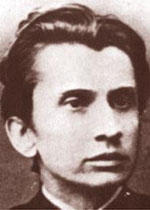
Leopold von Sacher-Masoch

Leopold von Sacher-Masoch was an Austrian writer renowned for his exploration of masochism and sadomasochism in literature. His novel 'Venus in Furs' is a cornerstone of sadomasochistic fiction. Born on January 27, 1836, Sacher-Masoch's life was characterized by his complex personality and intense personal relationships, which frequently influenced his writing. more

You May Also Like

“Consider the fact that no matter how many planets and stars are reflected in a lake, these reflections are encompassed within the water itself; that no matter how many universes there are, they are encompassed within a single space; and that no matter how vast and how numerous the sensory appearances of samsara and nirvana may be, they are encompassed within the single nature of mind (sem-nyid).”

“In meditation which is a continuous flow of staying in the state at all times and in every circumstance there is neither suppression nor production of dwelling and proliferation; if there is dwelling, that is the dharmakaya’s own face and if there is proliferation, that is preserved as the self-liveliness of wisdom, so, “Then, whether there is proliferation or dwelling,” Whatever comes from mind’s liveliness as discursive thoughts, be it the truth of the source—afflictions of anger, attachment, and so on—or the truth of unsatisfactoriness—the flavours of experience which are the feelings of happiness, sadness, and so on—if the nature of the discursive thoughts is known as dharmata, they become the shifting events of the dharmakaya, so, “Anger, attachment, happiness, or sadness,” That does not finish it though; generally speaking if they are met with through the view but not finished with by bringing them to the state with meditation, they fall into ordinary wandering in confusion and if that happens, you are bound into cyclic existence by the discursive thoughts of your own mindstream and, dharma and your own mindstream having remained separate, you become an ordinary person who has nothing special about them. Not to be separated from a great non-meditated self-resting is what is needed . . . Additionally, whatever discursive thought or affliction arises, it is not something apart from dharmakaya wisdom, rather, the nature of those discursive thoughts is actual dharmakaya, the ground’s luminosity. If that, which is called ‘the mother luminosity resident in the ground’, is recognized, there is self-recognition of the view of self-knowing luminosity previously introduced by the guru and that is called ‘the luminosity of the practice path’. Abiding in one’s own face of the two luminosities of ground and path become inseparable is called ‘the meeting of mother and son luminosities’ so, “The previously-known mother luminosity joins with the son.”