Quotessence
Home / Quotes / Quote by Vladimir Nabokov

Quote by Vladimir Nabokov

“Government and revolution, the Tsar and the Radicals, were both philistines in art. The radical critics fought despotism, but they evolved a despotism of their own. The claims, the promptings, the theories that they tried to enforce were in themselves just as irrelevant to art as was the conventionalism of the administration. What they demanded of an author was a social message and no nonsense, and from their point of view a book was good only insofar as it was of practical use to the welfare of the people. There was a disastrous flaw in their fervor. Sincerely and boldly they advocated freedom and equality but they contradicted their own creed by wishing to subjugate the arts to current politics. If in the opinion of the Tsars authors were to be the servants of the state, in the opinion of the radical critics writers were to be the servants of the masses. The two lines of thought were bound to meet and join forces when at last, in our times, a new kind of regime, the synthesis of a Hegelian triad, combined the idea of the masses with the idea of the state.”

Quote by Vladimir Nabokov

Work

Lectures on Russian Literature

This book offers in-depth analysis and discussion of significant Russian literary texts and authors, providing a scholarly perspective on the evolution of Russian literature. more

Author
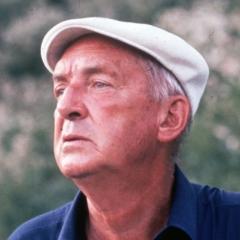
Vladimir Nabokov
Vladimir Nabokov

Russian-born American novelist, best known for his novel 'Lolita'. Nabokov is renowned for his unique literary style and profound use of language and symbolism. more

You May Also Like

“We could visit whenever we wanted, Ashiya and Okayama were practically next door, and there were no diesel fumes on the Shinkansen. Though we had parted repeating those assurances over and over, in the thirty years since, Mina and I have seen each other only a handful of times. It's not that we’ve grown apart or lost track of each other, but simply that time has slipped away much more quickly than we could have imagined when we were young.”

“Increasingly over the last maybe forty years, the thought has come to me that the old world in which our people lived by the work of their hands, close to weather and earth, plants and animals, was the true world; and that the new world of cheap energy and ever cheaper money, honored greed, and dreams of liberation from every restraint, is mostly theater. This new world seems a jumble of scenery and props never quite believable, an economy of fantasies and moods, in which it is hard to remember either the timely world of nature or the eternal world of the prophets and poets." -Wendell Berry, Andy Catlett Early Travels, p. 93”

“As children we got so we could tell time by the sun pretty well, and would know by the light in the room when we opened our eyes that it was seven o'clock and time to get  up for school, and later that it was almost ten and then almost noon and almost three o'clock and time to be dismissed. School ran strictly by clocks, the old Regulators that Mr. Hamburger was always fiddling with, adding and subtracting paper clips on the pendulum to achieve perfect time, but we were sensitive to light, knowing how little was available to us as winter came on, and always knew what time it was - as anyone will who leads a regular life in a familiar place. My poor great-grandpa,when his house burned down when Grandma left the bread baking in the summer kitchen oven to go visit the Berges and they built the new one facing west instead of south: they say he was confused the rest of his life and never got straightened out even when he set up his bed in the parlor ( which faced north as his former bedroom had): he lived in a twilight world for some time and then moved in his mind to the house he'd grown up in, and in the end didn't know one day from another until he died." Yea, though I walk through the valley of the shadow of death, I will fear no evil," but there's more than one kind of of shadow, and when a man loses track, it can kill him. Not even the siren could have saved my great-grandpa. He died of misdirection.”

“Though we could always explain that our life was not as glamorous as it might seem in the telling, we did come to realize that we'd made some radical decisions. We also came to realize, however, that the life that was laid before us in that not-so-distant past – becoming an industrial engineer, for example, working fifty hours a week for a car company's profit, getting an abysmal two weeks of vacation a year, never really feeling like your work had any meaning – was its own radical path. In Europe, life was different. Ambition was secondary to leisure; long, conversation-filled meals, the norm. The parks were full of people strolling, not running; cafes with people talking, not doing work on their own solitary computers.”

“As children we got so we could tell time by the sun pretty well, and would know by the light in the room when we opened our eyes that it was seven o'clock and time to get  up for school, and later that it was almost ten and then almost noon and almost three o'clock and time to be dismissed. School ran strictly by clocks, the old Regulatorsthat Mr. Hamburger was always fiddling with, adding and subtracting paper clips on the pendulum to ahieveperfect time, but we were sensitive to light, knowing how little was available to us as winter came on, and always knew what time it was - as anyone will who leads a regular life in a familiar place. My poor great-grandpa,when his house burned down when Grandma left the bread baking in the summer kitchen oven to go visit the Berges and they built the new one facing west instead of south: they say he was confused the test of his life and never got straightened out even when he set up his bed in the parlor ( which faced north as his former bedroom had): he lived in a twilight world for some time and 5hen moved in his mind to the house he'd grown up in, and in the end didn't know one day from another until he died." Yea, though I walk through the valley of the shadow of death, I will fear no evil," but there's more than one kind of of shadow, and when a man loses track, it can kill him. Not even the siren could have saved my great- grandpa. He died of misdirection. " /”

“Haley was a fierce critic of industrial elites, telling a crowd, "Two ideals are struggling for supremacy in American life today; one the industrial ideal dominating through the superiority of commercialism, which subordinates the worker to the product and the machines; the other, the ideal of democracy, the ideal of the educators, which places humanity above all machines, and demands that all activity shall be the expression of life.”