Quotessence
Home / Quotes / Quote by Bram Stoker

Quote by Bram Stoker

Work

Dracula

Written by Bram Stoker, this novel is renowned for its suspenseful narrative and its influence on vampire fiction. more

Author

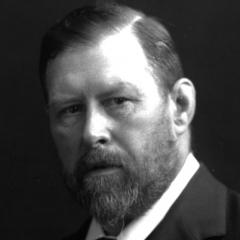
Bram Stoker
Bram Stoker

Bram Stoker, born on November 8, 1847 in Ireland, was a renowned novelist in the late 19th and early 20th centuries. He is best known for his gothic novel 'Dracula,' published in 1897. more

You May Also Like

“Now, tell me, have you ever heard of upyr? Vampir? Shrtriga?" The words rolled and hissed in his mouth. They reminded me, for no clear reason, of the trip I'd taken with Mr. Locke to Vienna when I was twelve. It'd been February and the city was shadowed, wind-scoured, old. "Well, the name hardly matters. I'm sure you've heard of them in general outline: things that creep out of the black forests of the north and feast on the lifeblood of the living." He was removing the glove from his left hand as he spoke, tugging on each white fingertip. "Lies spread by superstitious peasants, in the main, repeated in story papers and sold to Victorian urchins." Now his hand was entirely free, fingers so pale I could see blue veins threading them. "Stoker should've been summarily executed, if you ask me." And he reached toward me. There was perhaps half a second before his fingertip touched me when all the fine hairs on my arm stood straight and my heart seized and I knew, in a scrabbling, animalish way, that I shouldn't let him touch me, that I should scream for help- but it was too late. His finger was cold against my skin. Beyond cold. An aching, burning, tooth-hurting absence of heat. My body warmth drained desperately toward it, but the cold was ravenous. My lips tried to form words but they felt numb and clumsy, as if I'd been out walking in freezing wind.”

“Enquanto Stoker via seus vampiros como manifestações do proibido e do profano, Rice explorou-os como formas de lidar com sua realidade, com conflitos que lhes eram particulares; ela, que sempre se viu refletida na figura do outsider, sentiu-se confortável ao lidar com figuras que tentavam encontrar um significado para si fora da normatividade. Louis e Lestat, tão diferentes, carregam em si um pouco do fantasma da culpa católica e do desejo por ruptura e liberdade – sentimentos conflituosos, mas presentes simultaneamente em Rice.”

“Resta o entendimento de que o contato com o vampiro potencialmente acarreta um contaminar-se por perniciosa moléstia simultaneamente do corpo e da alma: o contágio não é apenas uma infecção, é também maldição, um contrair impurezas. Essa construção perpassa até mesmo o nível linguístico; entre as acepções etimológicas comumente atribuídas ao vocábulo “nosferatu”, que Stoker apenas popularizou ao se referir ao seu vampiro icônico, estariam “o impuro”, ou também, “aquele que carrega doenças”.”

“In the attempt to find the just measure of horror and terror, I came upon the writing of Carole Gill whose work revealed a whole new dimension to me. The figure of the gothic child was there. Stoker's horror was there. Along with the romance! At the heart of her writing one stumbles upon a genuine search for that darkness we lost with the loss of Stoker." ~Dr. Margarita Georgieva ~ Gothic Readings in The Dark”