Quotessence
Home / Quotes / Quote by Milan Kundera

Quote by Milan Kundera

Work

The Book of Laughter and Forgetting

Browse quotes and source details for this work. more

Author
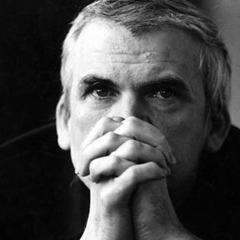
Milan Kundera
Milan Kundera

Milan Kundera is a renowned Czech-French writer known for his profound psychological insights and unique narrative techniques. His works often explore themes of personal freedom, love, morality, and existentialism, with notable titles including 'The Unbearable Lightness of Being' and 'The Joke'. more

You May Also Like

“Her gaze darted back to the computer screen. THIS IS YOUR CALL TO ACTION. If she posted this, it needed to be real. She needed people to believe Spartan could come back. They needed to trust that he'd made it out of the ship. It couldn't just be fangirl to fangirl, writing Starveil AU's that never really happened. This would be the guerrilla warfare of character ships. The fans would have to reweave the details they had into a new explanation of those last seconds of film. They'd take no prisoners, leave no wounded fans behind. But, as in any war, that meant the intel behind the revolution had to stay secret for as long as possible. Fandom had to believe.”

“About 35-40% of the time, a player wants to create a word ending in a specific letter. This, however, is not the way we traditionally think, and, not to mention, this is not the way dictionaries are sorted. In other words, in many situations, conventional dictionaries are not arranged in an easy to use manner. This dictionary solves that problem by sorting on the last letter of the word.”

“FV: Annandale defines 'definition' as "an explanation of the signification of a term." Yet Oxford, on the other hand, defines it as "a statement of the precise meaning of a word." A small, perhaps negligible difference you might think. And neither, would you say, is necessarily more correct than the other? But now look up each of the words comprising each definition, and then the definitions of those definitions, and so on. Some still may only differ slightly, while others may differ quite a lot. Yet any discrepancy, large or small, only compounds that initial difference further and further, pushing each 'definition' farther apart. How similar are they then at the end of this process...assuming it ever would end? Could we possibly even be referring to the same word by this point? And we still haven't considered what Collins here...or Gage, or Funk and Wagnalls might have to say about it. Off on enough tangents and you're eventually led completely off track. ML: Or around in circles. FV: Precisely! ML: Oxford, though, is generally considered the authority, isn't it? FV: Well, it's certainly the biggest...the most complete. But then, that truly is your vicious circle - every word defined...every word in every definition defined...around and around in an infinite loop. Truly a book that never ends. A concise or abridged dictionary may, at least, have an out... ML: I wonder, then, what the smallest possible "complete dictionary" would be? Completely self-contained, that is, with every word in every definition accounted for. How many would that be, do you suppose? Or, I guess more importantly, which ones? FV: Well, that brings to mind another problem. You know that Russell riddle about naming numbers?”