Quotessence
Home / Quotes / Quote by John Cowper Powys

Quote by John Cowper Powys

“The first thing he did was to attempt to analyse a mental device he was in the habit of resorting to - a device that supplied him with the secret substratum of his whole life. This was a certain trick he had of doing what he called 'sinking into his soul’. This trick had been a furtive custom with him from very early days. In his childhood his mother had often rallied him about it in her light-hearted way, and had applied to these trances, or these fits of absent-mindedness, an amusing but rather indecent nursery name. His father, on the other hand, had encouraged him in these moods, taking them very gravely, and treating him, when under their spell, as if he were a sort of infant magician. It was, however, when staying in his grandmother's house at Weymouth that the word had come to him which he now always used in his own mind to describe these obsessions. It was the word ‘mythology’ ; and he used it entirely in a private sense of his own.”

Quote by John Cowper Powys

Work

Wolf Solent

Browse quotes and source details for this work. more

Author
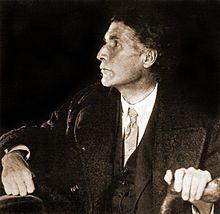
John Cowper Powys
John Cowper Powys

John Cowper Powys was an English novelist known for his profound psychological insights and exploration of human nature. His works are characterized by complex plots and rich symbolism, covering a wide range of themes from history to philosophy. more

You May Also Like

“But as his head cleared, Colin heard another sound, so beautiful that he never found rest again; the sound of a horn, like the moon on snow, and another answered it from the limits of the sky; and through the Brollachan ran silver lightnings, and he heard hoofs, and voices calling, “We ride! We ride!” and the whole cloud was silver, so that he could not look. The hoof-beats drew near, and the earth throbbed. Colin opened his eyes. Now the cloud raced over the ground, breaking into separate glories that whispered and sharpened to skeins of starlight, and were horsemen, and at their head was majesty, crowned with antlers, like the sun. But as they crossed the valley, one of the riders dropped behind, and Colin saw that it was Susan. She lost ground, though her speed was no less, and the light that formed her died, and in its place was a smaller, solid figure that halted, forlorn, in the white wake of the riding. The horsemen climbed from the hillside to the air, growing vast in the sky, and to meet them came nine women, their hair like wind. And away they rode together across the night, over the waves, and beyond the isles, and the Old Magic was free for ever, and the moon was new.”

“Art, mythology, religion, philosophy, history, anthropology, science, and medicine along with literature, autobiographies, biographies, essays, memoirs, poetry, and other works of fiction and nonfiction serve as a vast library for us to scour in search of the hidden keys to attaining knowledge and happiness. We glimpse individual revelation along with selective rays of radiance from every person’s conscientious act of documenting their long-term commitment to achieving a gleaming living testament to enlightenment.”

“How can I put the Auras back in the chest?” I asked, terror boiling inside my stomach. “You can’t. Not if those that were or will be struck by them won’t be eager to express their feelings and let you help them. You do not change people, dearie. It’s the people that change themselves. You’re the Guardian, but they’re the bearers,” the Oracle whispered. “I’m no Guardian. I’m doomed!” I said and I knew that this was true.”

“Elsewhere Lankford reiterates that this belief system was by no means confined to the Plains, the Eastern Woodlands, and the Mississippi Valley. It is better understood, he argues, as part of 'a widespread religious pattern' found right across North America and 'more powerful than the tendency towards cultural diversity.' Indeed, what the evidence suggests is the former existence of 'an ancient North American international religion ... a common ethnoastronomy ... and a common mythology. Such a multicultural reality hints provocatively at more common knowledge which lay behind the façade of cultural diversity united by international trade networks. One likely possibility of a conceptual realm in which that common knowledge became focused is mortuary belief [and] ... the symbolism surrounding death.”