Quotessence
Home / Quotes / Quote by Maryam Jameelah

Quote by Maryam Jameelah

“[w]hen I embraced Islam, this meant to me not only a change of faith but even more important, a transference of my allegiance from Western to Islamic civilization.”

Quote by Maryam Jameelah

Author
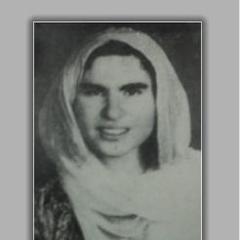
Maryam Jameelah
Maryam Jameelah

Maryam Jameelah (1934-2012) was a prominent Pakistani-Indian Islamic writer, scholar, and thinker. Born in Allahabad, India, she later migrated to Pakistan where she became renowned for her critical analysis of Western civilization and passionate advocacy of Islamic traditional values. Throughout her life, she authored numerous books and articles exploring Islamic culture, modernity, and religious philosophy. Her works, translated into multiple languages, significantly influenced Islamic intellectual discourse and the global Islamic revival movement. She is considered one of the most influential Islamic thinkers of the late 20th century. more

You May Also Like

“Maryam Jameelah’s significance [lies] in the manner with which she articulates an internally consistent paradigm for [Islamic] revivalism’s rejection of the West,” her entry in The Oxford Encyclopedia of the Modern Islamic World reads. “In this regard, her influence far exceeds [that of] the Jamaat [e-Islami] and has been important in the development of revivalist thought across the Muslim world.”

“The Devil answer'd: bray a fool in a morter with wheat, yet shall not his folly be beaten out of him; if Jesus Christ is the greatest man, you ought to love him in the greatest degree; now hear how he has given his sanction to the law of ten commandments: did he not mock at the sabbath, and so mock the sabbaths God? murder those who were murder'd because of him? turn away the law from the woman taken in adultery? steal the labor of others to support him? bear false witness when he omitted making a defense before Pilate? covet when he pray'd for his disciples, and when he bid them shake off the dust of their feet against such as refused to lodge them? I tell you, no virtue can exist without breaking these ten commandments; Jesus was all virtue, and acted from impulse, not from rules.”

“Recently I told a well-known, highly paid woman novelist the sub-title if this book: 'Is feminism relevant to the new millennium?' 'Of course it is,' she said without missing a beat. 'We still don't have equal pay.' Everywhere, powerful women repeat this mantra. Even Germaine Greer now says nothing has really changed. Influential feminists insist that because there are still many individual areas of injustice or unfairness, there is still an overarching system of sexual injustice with men always advantaged and women disadvantaged. One injustice, like the inequality which exists between the average pay of women and the average pay of men, is supposed to prove the rest. But this is no longer true in any simple way. Of course, women still suffer many injustices, discriminations and sometimes even outrages but it is no longer a simple coherent picture of male advantage and female disadvantage.”

“The fact that they're shaped like tiny elves!" Keefe said, clapping his hands before he pointed to the label. "Hang on-THEY CALL THEM 'ELF WITCHES'?" "They do, Keefe. They do. And that's not even the best part." "AHHHHHH LOOK AT THEIR LITTLE FACES!" Keefe shouted as he peeled back the plastic cover. "THIS IS THE GREATEST THING I HAVE EVER SEEN---EVER!" "Greater than when you discovered Fitz slept with Mr. Snuggles?" Sophie had to ask. "Um. YEAH. They have names, Foster. NAMES!" He held up one of the cookies and pointed to the name tag the little elf was holding. "This one's Ernie! AHHHH AND THIS ONE IS FAST EDDIE!" he said, snatching a different cookie. "And this one is Bickets! And Elwood! I don't know who named these guys, but whoever they are, they're a genius, I tell you--a GENIUS. - Legacy, chapter 37, page 596-97 hardcover.”

“The movement's institutional legacy can also be seen in the realm of higher education: Chicano and Puerto Rican studies programs are the product of these movements and continue to play a key role in providing Latinos with a "civic education" that both politicizes and produces particular conceptions of Latino identity and subjectivity.”

“Unlike the civil rights struggles of African Americans or the protest politics surrounding the Vietnam War, the Chicano and Puerto Rican movements represent a decidedly underexplored aspect of 1960s New Left radicalism. Outside of the communities themselves, the names, places, and events of these two movements are virtually unknown.”