Quotessence
Home / Quotes / Quote by Niles Eldredge

Quote by Niles Eldredge

“I'm doing now with cornets exactly what I used to do with trilobites: measuring, analyzing and cataloging the myriad gradations of their forms.”

Quote by Niles Eldredge

Author
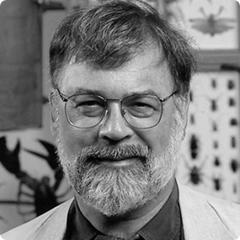
Niles Eldredge
Niles Eldredge

Niles Eldredge is a renowned biologist known for his contributions to evolutionary theory and paleontology. His research focused on the processes of species formation and extinction, particularly in the context of the Cenozoic mass extinction event, where he proposed the theory of punctuated equilibrium. more

You May Also Like

“March 1898 What a strange dream I had last night! I wandered in the warm streets of a port, in the low quarter of some Barcelona or Marseille. The streets were noisome, with their freshly-heaped piles of ordure outside the doors, in the blue shadows of their high roofs. They all led down towards the sea. The gold-spangled sea, seeming as if it had been polished by the sun, could be seen at the end of each thoroughfare, bristling with yard-arms and luminous masts. The implacable blue of the sky shone brilliantly overhead as I wandered through the long, cool and sombre corridors in the emptiness of a deserted district: a quarter which might almost have been dead, abruptly abandoned by seamen and foreigners. I was alone, subjected to the stares of prostitutes seated at their windows or in the doorways, whose eyes seemed to ransack my very soul. They did not speak to me. Leaning on the sides of tall bay-windows or huddled in doorways, they were silent. Their breasts and arms were bare, bizarrely made up in pink, their eyebrows were darkened, they wore their hair in corkscrew-curls, decorated with paper flowers and metal birds. And they were all exactly alike! They might have been huge marionettes, or tall mannequin dolls left behind in panic - for I divined that some plague, some frightful epidemic brought from the Orient by sailors, had swept through the town and emptied it of its inhabitants. I was alone with these simulacra of love, abandoned by the men on the doorsteps of the brothels. I had already been wandering for hours without being able to find a way out of that miserable quarter, obsessed by the fixed and varnished eyes of all those automata, when I was seized by the sudden thought that all these girls were dead, plague-stricken and putrefied by cholera where they stood, in the solitude, beneath their carmine plaster masks... and my entrails were liquefied by cold. In spite of that harrowing chill, I was drawn closer to a motionless girl. I saw that she was indeed wearing a mask... and the girl in the next doorway was also masked... and all of them were horribly alike under their identical crude colouring... I was alone with the masks, with the masked corpses, worse than the masks... when, all of a sudden, I perceived that beneath the false faces of plaster and cardboard, the eyes of these dead women were alive. Their vitreous eyes were looking at me... I woke up with a cry, for in that moment I had recognised all the women. They all had the eyes of Kranile and Willie, of Willie the mime and Kranile the dancer. Every one of the dead women had Kranile's left eye and Willie's right eye... so that every one of them appeared to be squinting. Am I to be haunted by masks now?”

“The other evening, in that cafe-cabaret in the Rue de la Fontaine, where I had run aground with Tramsel and Jocard, who had taken me there to see that supposedly-fashionable singer... how could they fail to see that she was nothing but a corpse? Yes, beneath the sumptuous and heavy ballgown, which swaddled her and held her upright like a sentry-box of pink velvet trimmed and embroidered with gold - a coffin befitting the queen of Spain - there was a corpse! But the others, amused by her wan voice and her emaciated frame, found her quaint - more than that, quite 'droll'... Droll! that drab, soft and inconsistent epithet that everyone uses nowadays! The woman had, to be sure, a tiny carven head, and a kind of macabre prettiness within the furry heap of her opera-cloak. They studied her minutely, interested by the romance of her story: a petite bourgeoise thrown into the high life following the fad which had caught her up - and neither of them, nor anyone else besides in the whole of that room, had perceived what was immediately evident to my eyes. Placed flat on the white satin of her dress, the two hands of that singer were the two hands of a skeleton: two sets of knuckle-bones gloved in white suede. They might have been drawn by Albrecht Durer: the ten fingers of an evil dead woman, fitted at the ends of the two overlong and excessively thin arms of a mannequin... And while that room convulsed with laughter and thrilled with pleasure, greeting her buffoonery and her animal cries with a dolorous ovation, I became convinced that her hands no more belonged to her body than her body, with its excessively high shoulders, belonged to her head... The conviction filled me with such fear and sickness that I did not hear the singing of a living woman, but of some automaton pieced together from disparate odds and ends - or perhaps even worse, some dead woman hastily reconstructed from hospital remains: the macabre fantasy of some medical student, dreamed up on the benches of the lecture-hall... and that evening began, like some tale of Hoffmann, to turn into a vision of the lunatic asylum. Oh, how that Olympia of the concert-hall has hastened the progress of my malady!”

“You know, a carving, especially if it’s polychrome, is not meant to move. These faces, these half-bodies, when you animate them, they’re more live than the living. They can be dangerous for those who don’t really understand them. With contained energy, no one can predict what will happen when it’s released.”

“The success of totalitarian movements among the masses meant the end of two illusions of democratically ruled countries in general and of European nation-states and their party system in particular. The first was that the people in its majority had taken an active part in government and that each individual was in sympathy with one’s own or somebody else’s party. On the contrary, the movements showed that the politically neutral and indifferent masses could easily be the majority in a democratically ruled country, that therefore a democracy could function according to rules which are actively recognized by only a minority. The second democratic illusion exploded by the totalitarian movements was that these politically indifferent masses did not matter, that they were truly neutral and constituted no more than the inarticulate backward setting for the political life of the nation. Now they made apparent what no other organ of public opinion had ever been able to show, namely, that democratic government had rested as much on the silent approbation and tolerance of the indifferent and inarticulate sections of the people as on the articulate and visible institutions and organizations of the country. Thus when the totalitarian movements invaded Parliament with their contempt for parliamentary government, they merely appeared inconsistent: actually, they succeeded in convincing the people at large that parliamentary majorities were spurious and did not necessarily correspond to the realities of the country, thereby undermining the self-respect and the confidence of governments which also believed in majority rule rather than in their constitutions.”

“Yet in his own estimate, one theme in particular dominated all others: the growing tyranny of the majority, the ever-increasing and most formidable barriers raised by the majority around the free expression of opinion, and, as a result, the frightening oneness of American thinking, the absence of eccentricity and divergence from the norm. A perfect liberty of the Mind exists in America, said Tocqueville, just as long as the sovereign majority has yet to decide its course. But once the majority has made up its mind, then all contrary thought must cease, and all controversy must be abandoned, not at the risk of death or physical punishment, but rather at the more subtle and more intolerable pain of ostracism, of being shunned by one's fellows, of being rejected by society. Throughout history kings and princely rulers had sought without success to control human thought, that most elusive and invisible power of all. Yet where absolute monarchs had failed, democracy succeeds, for the strength of the majority is unlimited and all pervasive, and the doctrines of equality and majority rule have substituted for the tyranny of the few over the many the more absolute, imperious and widely accepted tyranny of the many over the few.”