Quotessence
Home / Quotes / Quote by Susan Cooper

Quote by Susan Cooper

“The strange white world lay stroked by silence. No birds sang. The garden was no longer there, in this forested land. Nor were the out-buildings nor the old crumbling walls. There lay only a narrow clearing round the house now, hummocked with unbroken snowdrifts, before the trees began, with a narrow path leading away.”

Quote by Susan Cooper

Work

The Dark Is Rising

This novel is a part of a series and follows a young boy who discovers he is part of a prophecy that will determine the fate of the world. As he grows and learns about his destiny, he must confront dark forces and ancient magic. more

Author

Susan Cooper
Susan Cooper

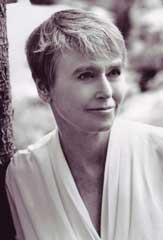
Susan Cooper (born May 23, 1935) is a renowned British author best known for her fantasy series The Dark Is Rising. Her works blend mythology, history, and adventure, captivating readers worldwide. Cooper has won prestigious awards including the Newbery Medal and Carnegie Medal. Her writing has profoundly influenced modern fantasy literature, inspiring generations of young readers and authors. more

You May Also Like

“But those men who know anything at all about the Light also know that there is a fierceness to its power, like the bare sword of the law, or the white burning of the sun." Suddenly his voice sounded to Will very strong, and very Welsh. "At the very heart, that is. Other things, like humanity, and mercy, and charity, that most good men hold more precious than all else, they do not come first for the Light. Oh, sometimes they are there; often, indeed. But in the very long run the concern of you people is with the absolute good, ahead of all else. You are like fanatics. Your masters, at any rate. Like the old Crusaders -- oh, like certain groups in every belief, though this is not a matter of religion, of course. At the centre of the Light there is a cold white flame, just as at the centre of the Dark there is a great black pit bottomless as the Universe." His warm, deep voice ended, and there was only the roar of the engine. Will looked out over the grey-misted fields, silent. "There was a great long speech, now," John Rowlands said awkwardly. "But I was only saying, be careful not to forget that there are people in this valley who can be hurt, even in the pursuit of good ends.”

“I am a battery hen. I live in a cage so small I cannot stretch my wings. I am forced to stand night and day on a sloping wire mesh floor that painfully cuts into my feet. The cage walls tear my feathers, forming blood blisters that never heal. The air is so full of ammonia that my lungs hurt and my eyes burn and I think I am going blind. As soon as I was born, a man grabbed me and sheared off part of my beak with a hot iron, and my little brothers were thrown into trash bags as useless alive. My mind is alert and my body is sensitive and I should have been richly feathered. In nature or even a farmyard I would have had sociable, cleansing dust baths with my flock mates, a need so strong that I perform 'vacuum' dust bathing on the wire floor of my cage. Free, I would have ranged my ancestral jungles and fields with my mates, devouring plants, earthworms, and insects from sunrise to dusk. I would have exercised my body and expressed my nature, and I would have given, and received, pleasure as a whole being. I am only a year old, but I am already a 'spent hen.' Humans, I wish I were dead, and soon I will be dead. Look for pieces of my wounded flesh wherever chicken pies and soups are sold.”

“The ten billion animals that are killed every year for meat and the virulent consequences of contemporary animal agricultural practices remain conspicuously absent from public discourse. How often have you seen media exposés on the violent treatment of farm animals and the corrupt practices of carnistic industry? Compare this with the amount of coverage afforded fluctuating gas prices or Hollywood fashion blunders. Most of us are more outraged over having to pay five cents more for a gallon of gas than over the fact that billions of animals, millions of humans, and the entire ecosystem are systematically exploited by an industry that profits from such gratuitous violence. And most of us know more about what the stars wore to the Oscars than we do about the animals we eat.”

“For most women (as for most men) links between sexism and speciesism are not readily apparent. We have been conditioned not to see exploitation. For example, men generally have no idea how patriarchy affects women—unless they go out of their way to learn. The same is true for women with regard to cows and pigs and chickens and turkeys. Both women and nonhuman animals have traditionally been viewed as property—"things” to be owned and controlled by those in power. While the plight of women is linked with that of nonhuman animals through a single system of oppression, through their comparative powerlessness and invisibility, and through sexual exploitation, it is important to elucidate these similarities through concrete examples. Links between women and nonhuman animals are nowhere more apparent than through the vulnerabilities of mothers and their young, and the control of pregnancies and offspring; this particular form of oppression is nowhere more blatant than on factory farms.”

“El Papa me miró y me sonrió. Su mirada estaba llena de cordialidad y amor, y sentí que estaba en la presencia de un hombre santo, un verdadero hijo de la Bienaventurada Madre. Por entonces, ya había empezado a reconocer algo especial en los ojos de las personas que amaban a Nuestra Señora, una ternura que sólo la Madre puede transmitir. Lo vi en el Papa Juan Pablo II de una manera más fuerte de lo que lo había visto jamás en otra persona.”