“[Scarlett] knew how to smile so that her dimples leaped, how to walk pigeon-toed so that her wide hoop skirts swayed entrancingly, how to look up into a man's face and then drop her eyes and bat the lids rapidly so that she seemed a-tremble with gentle emotion. Most of all she learned how to conceal from men a sharp intelligence beneath a face as sweet and bland as a baby's. Ellen, by soft admonition, . . . labored to inculcate in her the qualities that would make her truly desirable as a wife. "You must be more gentle, dear, more sedate," Ellen told her daughter. "You must not interrupt gentlemen when they are speaking, even if you do think you know more about matters than they do. Gentlemen do not like forward girls." [Ellen] taught her all that a gentlewoman should know, but she learned only the outward signs of gentility. The inner grace from which these signs should spring, she never learned nor did she see any reason for learning it. Appearances were enough, for the appearances of ladyhood won her popularity and that was all she wanted. . . . At sixteen, thanks to Mammy and Ellen, she looked sweet, charming and giddy, but she was, in reality, self-silled, vain and obstinate. She had the easily stirred passions of her Irish father and nothing except the thinnest veneer of her mother's unselfish and forbearing nature. . . It was not that these two loving mentors deplored Scarlett's high spirits, vivacity and charm. These were traits of which Southern women were proud. It was Gerald's headstrong and impetuous nature in her that gave them concern, and they sometimes feared they would not be able to conceal her damaging qualities until she had made a good match. But Scarlett intended to marry-and marry Ashley-and she was willing to appear demure, pliable and scatterbrained, if those were the qualities that attracted men. Just why men should be this way, she did not know. She only knew that such methods worked. It never interested her enough to try to think out the reason for it, for she knew nothing of the inner workings of any human being's mind, not even her own. She knew only that if she did or said thus-and-so, men would unerringly respond with the complementary thus-and-so. It was like a mathematical formula and no more difficult . . . If she knew little about men's minds, she knew even less about the minds of women, for they interested her less. She had never had a girl friend, and she never felt any lack on that account. To her, all women, including her two sisters, were natural enemies in pursuit of the same prey-man.”
Quote by Margaret Mitchell
Work
Margaret Mitchell's 'Gone with the Wind' is a sweeping historical romance that follows the adventures of Scarlett O'Hara, a headstrong and ambitious woman living in the American South. The story spans the tumultuous years of the Civil War and the subsequent Reconstruction era, capturing the social and political changes that reshape the lives of its characters. Known for its vivid portrayal of the antebellum South and its characters, the novel has become a staple of American literature. more
Author
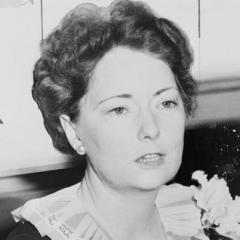
Margaret Mitchell, an American author born on November 8, 1900, and died on August 16, 1949, is best known for her novel 'Gone with the Wind'. This historical novel, set against the backdrop of the American Civil War and Reconstruction, has won the hearts of readers worldwide. more