Quotessence
Home / Quotes / Quote by John Medina

Quote by John Medina

Work

Author

John Medina
John Medina

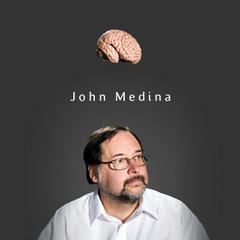
John Medina is a renowned molecular biologist born in 1956. He has made significant contributions to the field of molecular biology, particularly in the areas of gene expression and cellular signaling. Professor Medina's research has had a profound impact on biotechnology and the medical field. more

You May Also Like

“Trauma and pain are the foundations of art. I believe that. When tragedy strikes, however, a muralist or a watercolorist has the opportunity to be a human being in the moment and an artist afterward. Faced with the death of a loved one, a sculptor or portraitist can first grieve, suffer, and heal--then create. Most artists go through life this way. They can react normally to the trials and tribulations of the human experience. They can pass through the world with compassion and comradeship. They can make their art later. Outside, elsewhere, beyond. But photography is immediate. It does not offer the luxury of time. Faced with blood, death, or transformation, a photographer has no choice but to reach for the camera. An artist first, a human being afterward. Photography is a neutral record of all events, a chronicle of things both sublime and terrible. By necessity, this work is made without emotion, without connection, without love.”

“After all relationships had sell-by dates. Sometimes, the ones with the most passion were the ones to burn out faster. Others had a sweet and long-winding coil which burned with slow amicability. At times, it was true, people rekindled a dying ember with a new flame. But they hardly ever noticed the rekindling had come after some time of estrangement - whether physical or emotional. Because people needed newness to make a thing last indefinitely. To make it really last. And because Jan didn't like letting people go, she knew to look for the signs of love's waning. So she could tell how to ease it down slowly into its grave and keep her lovers as friends. Because she really believed people were meant to cross paths. People were meant to stay in your life. There was a reason for all encounters. And relationships had to be cosseted, no matter their shelf life. But they had to be allowed to change shape and form. It had to be given space to grow into something different.”

“I imagine you come across a number of people who are disconcerted by the difference between what you do feel and what they fancy you ought to feel. It is fatal to pay the smallest attention to them.” “Yes,” said Harriet, “but I am one of them. I disconcert myself very much. I never know what I do feel.” “I don’t think that matters, provided one doesn’t try to persuade one’s self into appropriate feelings.”