Quotessence
Home / Quotes / Quote by Rainer Maria Rilke

Quote by Rainer Maria Rilke

“Oh scattered band, once my playmates, you few Who were amidst the gardens here and there in the city, How hesitantly we located one another, took fancies and Like the tapestry lamb whose mute words are on a scroll, Spoke through silence. Our little joys were Never communicated, - Whose indeed were they? And among all the passers-by, those hurriers, how it all Evanesced quite away, weighed down by the torment of the endless year. Past us were drawn the carriages, wholly indifferent, Round us the houses stood strong but not real, - and none Of these were aware of us. What was truly real in it all? Nothing. Only the balls we tossed, their magnificent arcs, But certainly not the children. ... Though sometimes one would step - Alas, one who would soon be lost, - beneath a falling ball.”

Quote by Rainer Maria Rilke

Work

Sonnets to Orpheus

Sonnets to Orpheus is a poetic work that delves into the emotional depths of love and the enduring power of human emotion. The author uses the myth of Orpheus, a figure from Greek mythology known for his musical prowess and tragic love story, as a backdrop for a series of sonnets. These sonnets reflect on themes such as unrequited love, the pain of separation, and the quest for redemption. The work is characterized by its rich imagery and profound emotional resonance, offering readers a contemplative journey through the complexities of the human heart. more

Author
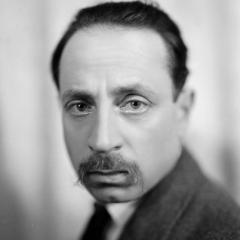
Rainer Maria Rilke
Rainer Maria Rilke

German poet known for his profound poetry and epistolary works. Rainer Maria Rilke's poetry style is unique, often exploring themes such as loneliness, love, and religious faith. more

You May Also Like

“We are all children, they thought, and none of us is equipped to deal with such an adversary. We go through life under other people's protection. We listen to instructions and try to follow them. We don't know what's true and what's not. What's fair and unfair. Our world is small. Our world is narrow. We do as we are told.”

“Why raise children on the promise of magic? Why create a want in them that can never be satisfied - for revelation, for transformation - and then set them adrift in a bleak, pragmatic world? In Darlington she'd seen what grief over that loss could do to someone, but maybe that same mourning lived inside her too. The terrible knowledge that there would be no secret destiny, no kindly mentor to see some hidden talent inside her, no deadly nemesis to best.”

“But I loved Joe, perhaps for no better reason in those early days than be- cause the dear fellow let me love him, and, as to him, my inner self was not so easily composed. It was much upon my mind (particularly when I first saw him looking about for his file) that I ought to tell Joe the whole truth. Yet I did not, and for the reason that I mistrusted that if I did, he would think me worse than I was. The fear of losing Joe's confidence, and of thenceforth sitting in the chimney corner at night staring drearily at my forever lost companion and friend, tied up my tongue. I morbidly represented to myself that if Joe knew it, I never afterwards could see him at the fireside feeling his fair whisker, without thinking that he was meditating on it. That, if Joe knew it, I never af- terwards could see him glance, however casually, at yesterday's meat or pudding when it came on to-day's table, without thinking that he was debating whether I had been in the pantry. That, if Joe knew it, and at any subsequent period of our joint domestic life remarked that his beer was flat or thick, the conviction that he suspected tar in it, would bring a rush of blood to my face. In a word, I was too cowardly to do what I knew to be right, as I had been too cowardly to avoid doing what I knew to be wrong.”