Quotessence
Home / Quotes / Quote by Bertolt Brecht

Quote by Bertolt Brecht

Work

Hundert (100) Gedichte

Browse quotes and source details for this work. more

Author
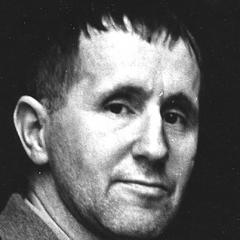
Bertolt Brecht
Bertolt Brecht

Bertolt Brecht, born on February 10, 1898, and died on August 14, 1956, was a German poet, playwright, director, and theorist. He is considered one of the most important theater reformers of the 20th century, whose innovative theatrical theories and practices have had a profound impact on world theater. more

You May Also Like

“Ah, we've had so many masters, Swine or eagle, lean or fat one: Some were tiers, some hyenas, Still we fed this one and that one. Whether one is better than the other: Ah, one boot is always like another When it treads upon you. What I say about them Is we need no other masters: we can do without them! Yes, the wheel is always turning madly, Neither side stays up or down, But the water underneath fares badly For it has to make the wheel go round. (Ach, wir hatten viele Herren Hatten Tiger und Hyänen Hatten Adler, hatten Schweine Doch wir nährten den und jenen. Ob sie besser waren oder schlimmer: Ach, der Stiefel glich dem Stiefel immer Und uns trat er. Ihr versteht, ich meine Dass wir keine andern Herren brauchen, sondern keine! Freilich dreht das Rad sich immer weiter Dass, was oben ist, nicht oben bleibt. Aber für das Wasser unten heisst das leider Nur dass es das Rad halt ewig treibt.)”

“Those Who Take the Meat from the Table Teach Contentment. Those for whom the taxes are destined Demand sacrifice. Those who eat their fill speak to the hungry Of wonderful times to come. Those who lead the country into the abyss Call ruling too difficult For ordinary men. (Die das Fleisch wegnehmen vom Tisch Lehren Zufriedenheit. Die, für die die Gabe bestimmt ist Verlangen Opfermut. Die Sattgefressenen sprechen zu den Hungernden Von den grossen Zeiten, die kommen werden. Die das Reich in den Abgrund führen Nennen das Regieren zu schwer Für den einfachen Mann.)”

“I take it that the intent of science is to ease human existence. If you give way to coercion, science can be crippled, and your new machines may simply suggest new drudgeries. Should you, then, in time, discover all there is to be discovered, your progress must become a progress away from the bulk of humanity. The gulf might even grow so wide that the sound of your cheering at some new achievement would be echoed by a universal howl of horror.”

“When the Regime commanded the unlawful books to be burned, teams of dull oxen hauled huge cartloads to the bonfires. Then a banished writer, one of the best, scanning the list of excommunicated texts, became enraged: he'd been excluded! He rushed to his desk, full of contemptuous wrath, to write fierce letters to the morons in power — Burn me! he wrote with his blazing pen — Haven't I always reported the truth? Now here you are, treating me like a liar! Burn me!”

“Every civil war builds on illusions and fear Even war between individuals; whatever bonds may exist between them To recapitulate images from history: After the first world war, exhaustion, victory, inability to build a new order, growing dissolution, chaos Revanchism Economic depression Then the waiting for Germany, the generalized war initiated by Germany This dread waiting, 1938, 1939 When I was conceived After the cold war another period of exhaustion, another victory Perhaps we are in the presence of generalized civil war, internal division, hatred Should we prefer the empire? As Dante did? Or Ezra Pound, Heidegger Or for that matter Brecht? We love dissolution and chaos passionately, I hear a voice say, I know whose It is not here that I shall say it It is not easy There are no nations Pillars of fire precede the returning, in human terms, lost son.”