Quotessence
Home / Quotes / Quote by John Adams

Quote by John Adams

“There is nothing in which mankind have been more unanimous [founding nations upon superstition]; yet nothing can be inferred from it more than this, that the multitude have always been credulous, and the few artful. The United States of America have exhibited, perhaps, the first example of governments erected on the simple principles of nature: and if men are now sufficiently enlightened to disabuse themselves of artifice, imposture, hypocrisy, and superstition, they will consider this event as an era in their history... [T]he detail of the formation of the American governments... may hereafter become an object of curiosity. It will never be pretended that any persons employed in that service had any interviews with the gods, or were in any degree under the inspiration of heaven... it will for ever be acknowledged that these governments were contrived merely by the use of reason and the senses... Thirteen governments thus founded on the natural authority of the people alone, without a pretence of miracle or mystery, which are destined to spread over the northern part of that whole quarter of the globe, are a great point gained in favour of the rights of mankind. [A Defence of the Constitutions of the United States of America, 1787]”

Quote by John Adams

Work

The Political Writings of John Adams

This compilation includes a variety of Adams' writings, such as his correspondence with fellow Founding Fathers and his reflections on the formation of the United States government, providing a comprehensive look at his political thought and the historical context of his time. more

Author
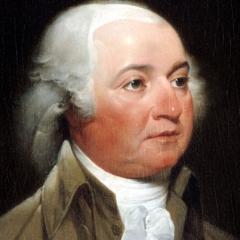
John Adams
John Adams

John Adams, the second President of the United States, was a statesman, diplomat, and writer. Born on October 30, 1735, and died on July 4, 1826, Adams played a significant role in the American Revolutionary War. He was one of the drafters of the Declaration of Independence and served as the President from 1789 to 1797. more

You May Also Like

“Reasonableness is a matter of degree. Beliefs can be very reasonable (Japan exists), fairly reasonable (quarks exist), not unreasonable (there's intelligent life on other planets) or downright unreasonable (fairies exist). There's a scale of reasonableness, if you like, with very reasonable beliefs near the top and deeply unreasonable ones towards the bottom. Notice a belief can be very high up the scale, yet still be open to some doubt. And even when a belief is low down, we can still acknowledge the remote possibility it might be true. How reasonable is the belief that God exists? Atheists typically think it very unreasonable. Very low on the scale. But most religious people say it is at least not unreasonable (have you ever met a Christian who said 'Hey, belief in God is no more reasonable than belief in fairies, but I believe it anyway!'?) They think their belief is at least halfway up the scale of reasonableness. Now, that their belief is downright unreasonable might, in fact, be established empirically. If it turned out that not only is there no good evidence of an all-powerful, all-good God, there's also overwhelming evidence against (from millions of years of unimaginable and pointless animal suffering, including several mass extinctions - to thousands of children being crushed to death or buried alive in Pakistan earthquake, etc. etc. etc.) then it could be empirically confirmed that there's no God. Would this constitute a 'proof' that there's no God? Depends what you mean by 'proof'. Personally I think these sorts of consideration do establish beyond any reasonable doubt that there is no all-powerful all-good God. So we can, in this sense, prove there's no God. Yet all the people quoted in my last blog say you cannot 'scientifically' prove or disprove God's existence. If they mean prove beyond any doubt they are right. But then hardly anything is provable in that sense, not even the non-existence of fairies.”

“Let's Look at Subjective Religious Experiences This Way: What if ten thousand people went up to a mountain top, saw something, and then they all disagreed with what they saw, even people who largely agreed with each other? Even with this best possible analogy to subjective religious experiences we would still have a reason to think the lack of oxygen caused them all to hallucinate.”

“Religion has ever filled the mind of man with darkness, and kept him in ignorance of his real duties and true interests. It is only by dispelling the clouds and phantoms of Religion, that we shall discover Truth, Reason, and Morality. Religion diverts us from the causes of evils, and from the remedies which nature prescribes; far from curing, it only aggravates, multiplies, and perpetuates them.”

“...Spinoza’s Conjecture:“Belief comes quickly and naturally, skepticism is slow and unnatural, and most people have a low tolerance for ambiguity. The scientific principle that a claim is untrue unless proven otherwise runs counter to our natural tendency to accept as true that which we can comprehend quickly. Thus it is that we should reward skepticism and disbelief, and champion those willing to change their mind in the teeth of new evidence. Instead, most social institutions-most notably those in religion, politics, and economics-reward belief in the doctrines of the faith or party or ideology, punish those who challenge the authority of the leaders, and discourage uncertainty and especially skepticism.”

“The traditional arguments for the existence of God have been fairly thoroughly criticised by philosophers. But the theologian can, if he wishes, accept this criticism. He can admit that no rational proof of God's existence is possible. And he can still retain all that is essential to his position, by holding that God's existence is known in some other, non-rational way. I think, however, that a more telling criticism can be made by way of the traditional problem of evil. Here it can be shown, not that religious beliefs lack rational support, but that they are positively irrational, that the several parts of the essential theological doctrine are inconsistent with one another, so that the theologian can maintain his position as a whole only by a much more extreme rejection of reason than in the former case. He must now be prepared to believe, not merely what cannot be proved, but what can be disproved from other beliefs that he also holds.”

“One of the recent arguments from design, that based on the so-called fine-tuning life of some fundamental physical constants, founders on the following objections: an extremely small prior probability merited by the God of theism in light – if that is the right word – of the Problem of Evil; the fact that it is not unreasonable to place a substantial probability on the hypothesis that a future theory will fix those values; and the sheer incoherence of computations of the ‘chances’ of fine-tuning were there no fine-tuner.”