Quotessence
Home / Quotes / Quote by Nicholas Evans

Quote by Nicholas Evans

“They drove south with the night falling soft and blue around them. Away to their right the Front Range stood out against the last red ribbon of the dying day like ramparts of some dread empire. Through the open windows came the smell of cooling earth and sage long baked by the sun.”

Quote by Nicholas Evans

Work

The Smoke Jumper

Browse quotes and source details for this work. more

Author

Nicholas Evans
Nicholas Evans

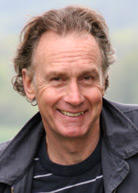
Nicholas Evans, born on July 26, 1950, is a renowned British journalist. His career began in local newspapers and later evolved into an international reputation for his in-depth investigative reporting. more

You May Also Like

“The great chestnut-wood tables groaned under the weight of platters, trays, plates, dishes and bowls. The whole Feast was here, John saw. Every word in the book, every fruit in the gardens, every green thing that grew, every creature that ran or swim or flew. John felt his demon creep forward as a great wave of flavors and tastes washed through him, those his mother had shown him on the slopes joined with others he had never sensed before. He could smell the rich tang of the meats. His head swirled from the steaming fumes of the wine. His jaw ached from the sweets which rose in heaps on silver platters while honeyed syllabubs shivered in their cups. He felt the pastry crunch, shiny with beaten butter. He heard the sugar-pane crackle. The sweetmeats flooded his senses, banishing his hunger and cold. A great procession of dishes floated up out of the pages, all theirs.”

“I grabbed a handful of tarragon and closed my eyes, inhaling its sweet fragrance. I could almost feel my grandmother next to me, smell the aromas embedded into her poppy-print apron, taste her creamy veloutés. Thanks to her, my skills in the kitchen started developing from the age of seven. I'd learned how to chop, slice, and dice without cutting my fingers, to sauté, fry, and grill, pairing flavors and taming them into submission. Just as I'd experienced with my grandmother's meals, when people ate my creations, I wanted them to think "now this is love"- while engaging all of the five senses. For me, cooking was the way I expressed myself, each dish a balance of flavors and ingredients representing my emotions- sweet, sour, salty, smoky, spicy-hot, and even bitter. My inspiration as a chef was to give people sensorial experiences, to bring them back to times of happiness, to let them relive their youth, or to awaken their minds.”

“The loss of all five senses seems to mean the loss of the individual’s connection with an external reality. What this might mean is the individual would come to solely rely on an internal reality. An internal reality is abstract and therefore hard to conceptualize. This also means an internal reality has little to no basis in the hard sciences...This person might be able to form new beliefs by going over memories stored within their brain despite no longer having a connection to the outside world. Memories could be another component of the internal reality, but only as long as that person lived long enough with some of the five senses to form memories, and then the five senses were removed.”

“When you live authentically according to your values, you create ripples that extend far beyond your personal experience.”

“To counter a depression such as this, Maimonides recommended tending to the five senses 'for the purpose of quickening the soul.' Hearing was to be nourished 'by listening to stringed and reed-pipe music,' seeing 'by gazing at beautiful pictures,' smelling 'by strolling through beautiful gardens,' feeling 'by wearing fine raiment,' and tasting 'by eating highly seasoned delicacies.' Such things, Maimonides judged, 'are not to be considered immoral nor unnecessary,' These recommendations give us a rare glimpse into the private man and allow the question of whether, under the stern guise of his role as adviser and legislator, Maimonides could enjoy good food and the smell of jasmine in a garden for their own sake. Cairo was not Córdoba, but it would do. Intellectual pursuits, both religious and scientific, he tells us, were of help to lift a little the dark clouds.”