Quotessence
Home / Quotes / Quote by Jean-Paul Sartre

Quote by Jean-Paul Sartre

“This feeling of adventure definitely does not come from events: I have proved it. It’s rather the way in which the moments are linked together. I think this is what happens: you suddenly feel that time is passing, that each instant leads to another, this one to another one, and so on; that each instant is annihilated, and that it isn’t worth while to hold it back, etc., etc. (. . .) If I remember correctly, they call that the irreversibility of time.”

Quote by Jean-Paul Sartre

Book:Nausea

Work

Nausea

In this seminal work, the protagonist grapples with the meaninglessness of existence and the absurdity of everyday life, leading to a profound exploration of the human condition. more

Author

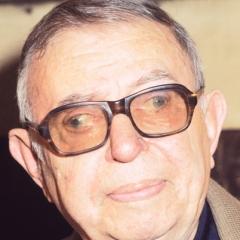
Jean-Paul Sartre
Jean-Paul Sartre

Jean-Paul Sartre was a French philosopher, writer, and playwright, born on June 21, 1905, and died on April 15, 1980. He is considered one of the most important philosophers of the 20th century, renowned for his existentialist philosophy. Sartre's works spanned across philosophy, literature, and drama, and had a profound impact on later generations. more

You May Also Like

“The relentless agony of being, the anguish, and the utter destruction of every facet of my existence and potential have reduced me to desolation. Life has become devoid of any significance for me. I’ve become a withered essence It has grown unbearable, a weight too heavy to carry any further. The relentless agony of existence, the torture, and the destruction of every depth of my soul and all my capacities. I find myself devoid of any appreciation for the mere act of being. I have transformed into a fading waste, and the weight of this life is growing more intolerable with every passing moment.”

“Per chi fa parte del bel mondo, la distrazione è l'arte di usare gli altri al solo scopo di soddisfare i propri bisogni e dissimulare la noia. Quando ci sono in ballo gli affetti, però, questa meccanica non può essere confessata né a se stessi né agli altri. Ecco perché i personaggi di Proust si nascondono, fingono e si tradiscono a vicenda. Mentono a se stessi e agli altri, celando le loro reali motivazioni [...]. Lasciati a se stessi, e con ampia disponibilità di denaro e tempo libero, i membri dell'alta società hanno un solo desiderio profondo: essere protetti dalla vacuità dell'esistenza e trarre dalla sterile e inquietante sostanza della vita una maschera che sia rassicurante e compiacente [...]. Non vogliono né comprendere né sapere, solo adornarsi e svagarsi.”

“Keskellä Evon suuria metsiä Lauri Lusi seisoi eksyneenä. Kun hän tajusi kerta kaikkiaan olevansa tietymättömissä, hänen mielensä tuli häneen takaisin kaikkialta maailmasta. Pois kuun valloituksesta, pois kylmästä sodasta, pois valtakuntien ja puolueitten ristiriidoista, pois yliopistoista, pois keittiöistä ja makuuhuoneista, vaatekaapeista ja ruokakaupoista. Hän tuli metsään takaisin ja tajusi miten valtavan osan hänen ajattelustaan ja olemisestaan historiat, yhteiskuntatieteet, isänmaat ja äidinkielet ja yhteiset moraalikäsitykset ja suggestiiviset käyttäytymistavat, ilmeet ja asennot olivat vallanneet. Hän tunsi itsensä puiden korkuiseksi - jalat ulottuivat maahan ja elämänvoima virtasi turhasta tyhjentyneeseen päähän asti. Niin hän seisoi keskellä metsää ja huusi, ja huutaessaan hän tajusi, että hän on niin kuin erämaan karhu, että kukaan ei koskaan tule häntä kuulemaan mutta hän voi kuunnella kaikkia ja ketä tahansa. Että kukaan ei kenties koskaan voi häntä rakastaa - mutta hän rakastaa jokaista ja ketä tahansa. Hän katsoi puita ja sanoi itselleen, että niin kuin puu yksin seisoo ja tavoittelee taivasta, niin on tämä Lauri tässä. Ikuisesti yksin metsässä, rakastamassa kaikkia ilman kenenkään apua.”