Quotessence
Home / Quotes / Quote by Don DeLillo

Quote by Don DeLillo

“This is what comes from the wrong kind of attentiveness. People get brain fade. This is because they've forgotten how to listen and look as children. They've forgotten how to collect data. In the psychic sense a forest fire on TV is on a lower plane than a ten-second spot for Automatic Dishwasher All. The commercial has deeper waves, deeper emanations. But we have reversed the relative significance of these things. This is why people's eyes, ears, brains and nervous systems have grown weary. It's a simple case of misuse.”

Quote by Don DeLillo

Work

White Noise

Don DeLillo's 'White Noise' is a critically acclaimed work that delves into the complexities of modern American life. The story follows Jack, a professor of semiotics, and his family as they navigate the surreal and often absurd aspects of contemporary society. The novel is known for its exploration of themes such as consumerism, media influence, and the erosion of privacy in the digital age. more

Author

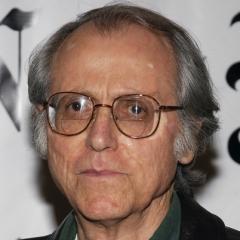
Don DeLillo
Don DeLillo

Don DeLillo is an American writer born on November 20, 1936. Known for his unique literary style and profound insights into modern society, his works often explore the impacts of technology, consumerism, and globalization. more

You May Also Like

“The telling and the hearing of a story is not a simple act. The one who tells must reach down into deeper layers of the self, reviving old feelings, reviewing the past. Whatever is retrieved is reworked into a new form, one that narrates events and gives the listener a path through these events that leads to some fragment of wisdom. The one who hears takes the story in, even to a place not visible or conscious to the mind, yet there. In this inner place a story from another life suffers a subtle change. As it enters the memory of the listener it is augmented by reflection, by other memories, and even the body hearing and responding in the moment of the telling. By such transmissions, consciousness is woven.”

“After weaning the indigenous people's of Egypt: 'from their miserable and barbarous manners, [Osiris] taught them how to till the earth, and how to sow and reap crops, he formulated a code of laws for them, and made them worship the gods and perform service to them. He then left Egypt and traveled over the rest of the world teaching the various nations to do what his own subjects were doing. He forced no man to carry out his instructions, but by means of gentle persuasion and an appeal to their reason, he succeeded in inducing them to practice what he preached.”

“Les arbres savent quand un des leurs a soif et ils savent aussi comment rediriger l’eau vers lui. Ils sont solidaires. Ils peuvent se prévenir l’un l’autre du danger, des prédateurs, assurer la survie du groupe dans son ensemble. Tout part des racines, des origines, mais le message transite par les racines secondaires et les radicelles, qui sont plus fines, s’étendent plus loin. Tout se fait en chuchotant à travers le réseau souterrain de champignons, le mycélium, ce que tout le monde croit pourri, oui.”

“It's not unreasonable [...] to suppose that some kind of cosmic "sky-ground" religion lay behind the alignments to the solstices and the equinoxes at Watson Brake and at the other early sites--a religion sufficiently robust to ensure the continuous successful transmission of a system of geometry, astronomy, and architecture over thousands of years. John Clark is in no doubt. 'The evidence,' he says, 'suggests very old and widely disseminated knowledge about how to build large sites. The building lore persisted remarkably intact for so long that I think we can, and must, assume that it was part of special knowledge tied to ritual practice.' Where did this special knowledge come from before it appeared at Watson Brake?”

“For Zen Buddhism, historical narratives do matter; stories of the "transmission of the lamp" of the awakened mind down through the ages constitute the narrative thread that holds the history of Zen together, supporting the continuity and authority of its institutional tradition. But what matters most to many sincere Zen practitioners, especially today, is how the teachings and practices embedded in those stories can illuminate and change our lives-not when, where, and by whom they were first taught and written down.”