Quotessence
Home / Quotes / Quote by Arthur Schopenhauer

Quote by Arthur Schopenhauer

“This universal conflict is to be seen most clearly in the animal kingdom. Animals have the vegetable kingdom for their nourishment, and within the animal kingdom again every animal is the prey and food of some other. This means that the matter in which an animal’s Idea manifests itself must stand aside for the manifestation of another Idea, since every animal can maintain its own existence only by the incessant elimination of another’s. Thus the will-to-live generally feasts on itself, and is in different forms its own nourishment, till finally the human race, because it subdues all the others, regards nature as manufactured for its own use. Yet, as will be seen in the fourth book, this same human race reveals in itself with terrible clearness that conflict, that variance of the will with itself, and we get homo homini lupus.71 However, we shall again recognize the same contest, the same subjugation, just as well at the low grades of the will’s objectivity. Many insects (especially the ichneumon flies) lay their eggs on the skin, and even in the body, of the larvae of other insects, whose slow destruction is the first task of the newly hatched brood. The young hydra, growing out of the old one as a branch, and later separating itself therefrom, fights while it is still firmly attached to the old one for the prey that offers itself, so that the one tears it out of the mouth of the other. But the most glaring example of this kind is afforded by the bulldog-ant of Australia, for when it is cut in two, a battle begins between the head and the tail. The head attacks the tail with its teeth, and the tail defends itself bravely by stinging the head. The contest usually lasts for half an hour, until they die or are dragged away by other ants. This takes place every time.”

Quote by Arthur Schopenhauer

Work

The World as Will and Representation, Volume I

Browse quotes and source details for this work. more

Author
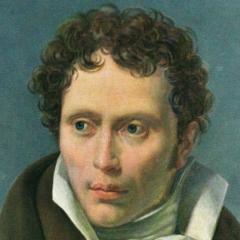
Arthur Schopenhauer
Arthur Schopenhauer

Arthur Schopenhauer was a prominent German philosopher born on February 22, 1788, and died on September 21, 1860. He is one of the most important figures in 19th-century German philosophy and is known for his unique pessimistic philosophical ideas. more

You May Also Like

“The less you associate with some people, the more your life will improve. Any time you tolerate mediocrity in others, it increases your mediocrity. An important attribute in successful people is their impatience with negative thinking and negative acting people. As you grow, your associates will change. Some of your friends will not want you to go on. They will want you to stay where they are. Friends that don't help you climb will want you to crawl. Your friends will stretch your vision or choke your dream. Those that don't increase you will eventually decrease you. Consider this: Never receive counsel from unproductive people. Never discuss your problems with someone incapable of contributing to the solution, because those who never succeed themselves are always first to tell you how. Not everyone has a right to speak into your life. You are certain to get the worst of the bargain when you exchange ideas with the wrong person. Don't follow anyone who's not going anywhere. With some people you spend an evening: with others you invest it. Be careful where you stop to inquire for directions along the road of life. Wise is the person who fortifies his life with the right friendships. If you run with wolves, you will learn how to howl. But, if you associate with eagles, you will learn how to soar to great heights. "A mirror reflects a man's face, but what he is really like is shown by the kind of friends he chooses." The simple but true fact of life is that you become like those with whom you closely associate - for the good and the bad. Note: Be not mistaken. This is applicable to family as well as friends. Yes...do love, appreciate and be thankful for your family, for they will always be your family no matter what. Just know that they are human first and though they are family to you, they may be a friend to someone else and will fit somewhere in the criteria above. "In Prosperity Our Friends Know Us. In Adversity We Know Our friends." "Never make someone a priority when you are only an option for them." "If you are going to achieve excellence in big things,you develop the habit in little matters. Excellence is not an exception, it is a prevailing attitude.."..”

“[…] la guardavo e mi si riempirono gli occhi di lacrime, non è che piangessi, avevo capito, avevo coscienza del fatto che dovevo farmi tatuare anch’io una barchetta così sul petto, che senza una barchetta come quella non potevo vivere, che quella barchetta doveva dare calore, che era l’emblema dell’anima, e che anch’io l’avrei avuta. Quella barchetta lì si può lavare?”

“Ciò che manca, ovunque si guardi, è un progetto di comunità, un’idea forte di cosa possa essere la Repubblica italiana del futuro, la capacità di render finalmente concreto l’attualissimo disegno contenuto nella Costituzione: quella vera. E questa idea manca perché oggi sembra impossibile avere un’idea dell’uomo che non sia ridotta alla sola dimensione monetaria. Far evadere il patrimonio culturale dalla prostrazione materiale e morale in cui è stato confinato dal totalitarismo neoliberista significa rimettere in circolo uno dei pochi antidoti a questo dogma. In rare occasioni è possibile sentire, quasi vedere ad occhio nudo, la forza morale, e profondamente politica, di ciò che chiamiamo «cultura». Il 27 gennaio 2014, alle sei di sera, l’Orchestra della Scala ha eseguito la Marcia funebre della Terza Sinfonia di Beethoven in onore di Claudio Abbado, scomparso sette giorni prima. Rispettando una tradizione iniziata nel 1957 –in occasione della traslazione del corpo di Arturo Toscanini, al Monumentale –l’orchestra ha celebrato il suo direttore suonando con la sala vuota, e con le porte del teatro spalancate. Ottomila cittadini milanesi riempivano la piazza, silenziosi e commossi. E il profondo impegno civile di Abbado ha conferito un tono particolare a questa struggente liturgia laica, ripetuta per la quinta volta in sessant’anni. La musica creava una comunità e la rendeva visibile: e non nello spazio separato del teatro, non per un pubblico pagante. In una piazza, invece, nel cuore della polis: dove alcuni cittadini suonavano per altri cittadini. Non per non pensare, per rimuovere le difficoltà della vita e l’esistenza della morte, ma per affrontarle tutti insieme, uniti da una musica scritta duecento anni fa, e per salutare un uomo che ha messo la sua arte straordinaria al servizio di un progetto di uguaglianza e giustizia. È da quello spirito che dobbiamo essere capaci di ripartire. Perché le nostre città, i nostri musei, il nostro paesaggio non contengono solo cose belle: contengono valori e prospettive che possono liberarci, innalzarci, renderci di nuovo umani, restituirci un’idea dell’uomo e un’idea di comunità che ci permettano di costruire un futuro diverso.”

“«Vedete», disse Fonardi senza senza badargli, «il calcio da queste parti è un carnevale di maglie allegre che nasconde la realtà di un Paese dove bianchi e neri godono di opportunità molto diverse. Per questo è importante che squadre come il San Giorgio o noialtri possiamo competere in Serie Africa contro i club di soli bianchi. Il terreno da calcio, qui, è l'unico posto dove si può proporre una società diversa, dove il razzismo sarà solo un brutto ricordo.»”

“Il che esercita il potere non è sempre quello stesso popolo sul quale il potere viene esercitato; e l' di cui si parla non è il governo di ognuno su se stesso, ma quello che su ognuno hanno tutti gli altri. Inoltre, volontà del popolo significa in pratica la volontà della parte più numerosa e più attiva del popolo : la maggioranza, ossia coloro che son riusciti a farsi accettare come maggioranza; ne consegue quindi la possibilità che il popolo desideri effettivamente opprimere una parte dei propri componenti: contro questo abuso di potere, non meno che contro qualsiasi altro abuso, occorre prendere delle precauzioni.”