Quotessence
Home / Quotes / Quote by Gabriele d'Annunzio

Quote by Gabriele d'Annunzio

“« [...] non vi sembra che noi seguitiamo il corteo dell'Estate defunta? Ella giace nella barca funebre, vestita d'oro come una dogaressa, come una Loredana o una Morosina o una Soranza del secolo lucente; e il corteo la conduce verso l'isola di Murano dove un maestro del fuoco la chiuderà in un involucro di vetro opalino affinché, immersa nella laguna, ella possa almeno guardare a traverso le sue palpebre diafane i molli giochi delle alghe e illudersi di aver tuttavia intorno al corpo l'ondulazione continua della sua capellatura voluttuosa aspettando l'ora di risorgere.»”

Quote by Gabriele d'Annunzio

Work

Il fuoco: (Edizione integrale)

Browse quotes and source details for this work. more

Author
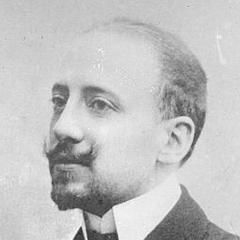
Gabriele d'Annunzio
Gabriele d'Annunzio

Italian poet, playwright, novelist, and journalist, known for his passionate style and rebellious spirit. His works covered a wide range of themes, including love, war, nature, and religion. more

You May Also Like

“Real burrata is a creation of arresting beauty- white and unblemished on the surface, with a swollen belly and a pleated top. The outer skin should be taut and resistant, while the center should give ever so slightly with gentle prodding. Look at the seam on top: As with mozzarella, it should be rough, imperfect, the sign of human hands at work. Cut into the bulge, and the deposit of fresh cream and mozzarella morsels seems to exhale across the plate. The richness of the cream- burrata comes from burro, the Italian word for "butter"- coats the mouth, the morsels of mozzarella detonate one by one like little depth charges, and the entire package pulses with a gentle current of acidity. The brothers, of course, like to put their own spin on burrata. Sometimes that means mixing cubes of fresh mango into its heart. Or Spanish anchovies. Even caviar. Today, Paolo sends me next door to a vegetable stand to buy wild arugula, which he chops and combines with olives and chunks of tuna and stirs into the liquid heart of the burrata, so that each bite registers in waves: sharp, salty, fishy, creamy. It doesn't move me the same way the pure stuff does, but if I lived on a daily diet of burrata, as so many Dicecca customers do, I'd probably welcome a little surprise in the package from time to time. While the Diceccas experiment with what they can put into burrata, the rest of the world rushes to find the next food to put it onto. Don't believe me? According to Yelp, 1,800 restaurants in New York currently serve burrata. In Barcelona, more than 500 businesses have added it to the menu. Burrata burgers, burrata pizza, burrata mac and cheese. Burrata avocado toasts. Burrata kale salads. It's the perfect food for the globalized palate: neutral enough to fit into anything, delicious enough to improve anything.”

“In the side refrigerators, where Vito so carefully arranges the morning's new attractions, you'll find even more examples of a traditional caseificio gone rogue: a wheel of aged goat cheese coated in a rough armor of wild herbs; a thick, blue-veined goat cheese soaked red with purple with Primitivo wine; goat yogurt in half a dozen international flavors. You won't be surprised to find that the early efforts of the Dicecca boys were met with opposition- both from the family and the regular clientele. Each brother has a story about the resistance he has encountered along the way- the parental eye rolling at the cacao-coated goat cheese, the sisterly skepticism about mango-stuffed burrata, the customers' confusion at the latest experiment to emerge from the lactic laboratory in back. Every story ends the same way: with one or all of the family members doubting the viability of another esoteric cheese, followed by the long, slow acceptance by enough customers to justify its real estate space in the display case. "When I started making cheese with the Nikka barrel, they made fun of me, said I was destroying the taste of the cheese. Now they're copying me. That's the pattern we always see: at first they make fun, then they start to copy.”

“The Venetians catalogue everything, including themselves. ‘These grapes are brown,’ I complain to the young vegetable-dealer in Santa Maria Formosa. ‘What is wrong with that ? I am brown,’ he replies. ‘I am the housemaid of the painter Vedova,’ says a maid, answering the telephone. ‘I am a Jew,’ begins a cross-eyed stranger who is next in line in a bookshop. ‘Would you care to see the synagogue?’ Almost any Venetian, even a child, will abandon whatever he is doing in order to show you something. They do not merely give directions; they lead, or in some cases follow, to make sure you are still on the right way. Their great fear is that you will miss an artistic or ‘typical’ sight. A sacristan, who has already been tipped, will not let you leave until you have seen the last Palma Giovane. The ‘pope’ of the Chiesa dei Greci calls up to his housekeeper to throw his black hat out the window and settles it firmly on his broad brow so that he can lead us personally to the Archaeological Museum in the Piazza San Marco; he is afraid that, if he does not see to it, we shall miss the Greek statuary there. This is Venetian courtesy. Foreigners who have lived here a long time dismiss it with observation : ‘They have nothing else to do.’ But idleness here is alert, on the qui vive for the opportunity of sightseeing; nothing delights a born Venetian so much as a free gondola ride. When the funeral gondola, a great black-and-gold ornate hearse, draws up beside a fondamenta, it is an occasion for aesthetic pleasure. My neighbourhood was especially favoured this way, because across the campo was the Old Men’s Home. Everyone has noticed the Venetian taste in shop displays, which extends down to the poorest bargeman, who cuts his watermelons in half and shows them, pale pink, with green rims against the green side-canal, in which a pink palace with oleanders is reflected. Che bello, che magnifici, che luce, che colore! - they are all professori delle Belle Arti. And throughout the Veneto, in the old Venetian possessions, this internal tourism, this expertise, is rife. In Bassano, at the Civic Museum, I took the Mayor for the local art-critic until he interupted his discourse on the jewel-tones (‘like Murano glass’) in the Bassani pastorals to look at his watch and cry out: ‘My citizens are calling me.’ Near by, in a Paladian villa, a Venetian lasy suspired, ‘Ah, bellissima,’ on being shown a hearthstool in the shape of a life-size stuffed leather pig. Harry’s bar has a drink called a Tiziano, made of grapefruit juice and champagne and coloured pink with grenadine or bitters. ‘You ought to have a Tintoretto,’ someone remonstrated, and the proprietor regretted that he had not yet invented that drink, but he had a Bellini and a Giorgione. When the Venetians stroll out in the evening, they do not avoid the Piazza San Marco, where the tourists are, as Romans do with Doney’s on the Via Veneto. The Venetians go to look at the tourists, and the tourists look back at them. It is all for the ear and eye, this city, but primarily for the eye. Built on water, it is an endless succession of reflections and echoes, a mirroring. Contrary to popular belief, there are no back canals where tourist will not meet himself, with a camera, in the person of the another tourist crossing the little bridge. And no word can be spoken in this city that is not an echo of something said before. ‘Mais c’est aussi cher que Paris!’ exclaims a Frenchman in a restaurant, unaware that he repeats Montaigne. The complaint against foreigners, voiced by a foreigner, chimes querulously through the ages, in unison with the medieval monk who found St. Mark’s Square filled with ‘Turks, Libyans, Parthians, and other monsters of the sea’. Today it is the Germans we complain of, and no doubt they complain of the Americans, in the same words.”

“While stationed in Fort Jackson, I experienced racial prejudice for the first time and came to the understanding that humans are not born with prejudice, but learn prejudice. Back home in South Dakota, I only knew one black American. The Scandinavians in my community treated him just like any other Swede; my family considered him a friend. My parents taught me, and I believed that all men are equal because God created all men in His image. One day during a week end furlough, I boarded a crowded city bus. As I walked down the aisle, I looked for an open seat. Looking towards the rear of the bus, I noticed three huge, young black men sitting on a bench in the back. I decided to squeeze onto the bench with them. As I sat down, a woman said in a very loud voice, "What is that white soldier doing in our part of the bus?" Neither my life experiences nor my education prepared me for what I experienced walking the streets of Fort Jackson. I saw water fountains for whites only, barbershops for blacks only, and separation for most aspects of Southern living. I discovered that the feelings of prejudice ran deeply amongst many of the people that we encountered. In fact, the blacks even trained separately from the whites during our military preparation, even though we all worked towards defending the United States of America.”