Quotessence
Home / Quotes / Quote by Matt Haig

Quote by Matt Haig

Work

Reasons to Stay Alive

In this poignant memoir, the author candidly shares their personal journey through the depths of depression and anxiety, providing a raw and honest account of the challenges faced. The book delves into the author's experiences, offering hope and inspiration to those who may be struggling with similar mental health issues. more

Author
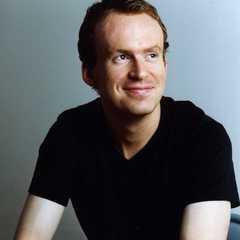
Matt Haig
Matt Haig

Matt Haig is a British novelist born in 1975. His works are known for their humor and profound emotional insight, enjoying great popularity among readers. Haig's writing spans a variety of genres, including science fiction, fantasy, and realism. more

You May Also Like

“Vogelstein’s challenge was that of the landscape artist: How does one convey the gestalt of a territory (in this case, the “territory” of a genome) in a few broad strokes of a brush? How can a picture describe the essence of a place?Vogelstein’s answer to these questions borrows beautifully from an insight long familiar to classical landscape artists: negative space can be used to convey expanse, while positive space conveys detail. To view the landscape of the cancer genome panoramically, Vogelstein splayed out the entire human genome as if it were a piece of thread zigzagging across a square sheet of paper. (Science keeps eddying into its past: the word mitosis -- Greek for "thread" -- is resonant herw again.)”

“Yeah. It's a metaphor. Jess and I are partners.' I point across the bay at nearby San Francisco. 'Look at that city,' I say. 'That's society. It's Out There. I this its own illusions, its own abilities, its own tasks. We used to be a part of it. Oh, we are, in some way, but now we are something else. We are a distinct culture, a separate island. To get to Us, you have to swim across a bay in cold ocean waters. By the time you get here, you would have come to respect the ocean and the waters and the waves—and the beaches of this island would remind you of how great it is to be on land, to be in the presence of a great, married couple.' Jack laughs. 'Now you really are a megalomaniac. A true idealist.' 'I don't know, Jack,' I say. 'I think marriage is sacred.' 'I can tell.' He pulls out a cigarette and lights it. He blows smoke around and then looks at me. 'You want one?' he asks. 'This one's not a metaphor.”

“The ideal of explication differs not only from previous philosophy, and from Carnap’s own previous framework of rational reconstruction, but also from most present analytic philosophy. It differs from Quine’s influential programme, for instance, encapsulated in Neurath’s metaphor of reconstructing the boat of our conceptual scheme on the open sea, without being able to put it in dry-dock and reconstruct it from new materials. In Carnap’s framework, our collective mental life is not – to adopt the metaphor – all in the same boat. It consists rather of a give and take between two kinds of communicative devices that operate in different ways. Carnap’s boat is only one of these two parts, not both. It is the medium of action and practical decisions, in which vague concepts of ordinary language have a continuing, perhaps essential, role. This is not, in Carnap’s terms, a proper linguistic ‘framework’ at all. It is a medium not for the pursuit of truth but for getting things done, and it is well adapted to this purpose. To improve it further, we chip away at it and replace its components, a few at a time, with better ones – and this reconstruction, it is true, we carry out at sea. But the better components we acquire from the ports we call at, where we go shopping for proper linguistic frameworks. We take on board better materials and better navigational instruments that help us to reach whatever ports we hope to visit in future – where we can again bring on new and improved materials and instruments. Sometimes, the improved instruments will so influence our knowledge of where we are going that the whole plan of the journey will be revised, and we will change course. But the decision what port to head for next we have to make on board, in our pragmatic vernacular, with whatever improvements we have incorporated up to that point.”