Quotessence
Home / Quotes / Quote by Sarah Winman

Quote by Sarah Winman

“Questionei-me quanto achariam os raptores que ele valia; quanto achariam os meus pais que eu valia e interroguei-me sobre se o valor das pessoas estava ligado a coisas como a bondade, a utilidade ou a disponibilidade para ajudar as pessoas menos afortunadas. Achei que era provável que o meu valor fosse superior quando era criança.”

Quote by Sarah Winman

Work

When God Was a Rabbit

Browse quotes and source details for this work. more

Author
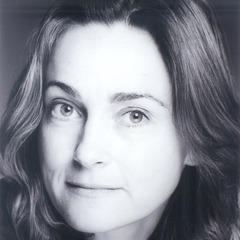
Sarah Winman
Sarah Winman

Sarah Winman is a British actress born in 1964. She has a rich experience in the British theater and film industry, known for her outstanding performances on stage and screen. more

You May Also Like

“The recipe for becoming a good novelist, for example is easy to give but to carry it out presupposes qualities one is accustomed to overlook when one says 'I do not have enough talent'. One has only to make a hundred or so sketches for novels, none longer than two pages but of such distinctness that every word in them is necessary; one should write down anecdotes each day until one has learned how to give them the most pregnant and effective form; one should be tireless in collecting and describing human types and characters; one should above all relate things to others and listen to others relate, keeping one's eyes and ears open for the effect produced on those present, one should travel like a landscape painter or costume designer; one should excerpt for oneself out of the individual sciences everything that will produce an artistic effect when it is well described, one should, finally, reflect on the motives of human actions, disdain no signpost to instruction about them and be a collector of these things by day and night. One should continue in this many-sided exercise some ten years: what is then created in the work­shop, however, will be fit to go out into the world. - What, however, do most people do? They begin, not with the parts, but with the whole. Per­haps they chance to strike a right note, excite attention and from then on strike worse and worse notes, for good, natural reasons.”

“នៅពេលដែលអ្នកស្លាប់ទៅ មិនមែនគេឲ្យតម្លៃអ្នកថាជាមនុស្សមានតម្លៃ ព្រោះអ្នកមានលុយច្រើន ឬមានសញ្ញាប័ត្រធំនោះទេ តែព្រោះតែជាសមិទ្ធិផល្អសម្រាប់មនុស្សជាជាតិ។”

“Meanwhile, the extraordinary measures we take to stay abreast of each minuscule change to the data stream end up magnifying the relative importance of these blips to the real scheme of things. Investors trade, politicians respond, and friends judge based on the micromovements of virtual needles. By dividing our attention between our digital extensions, we sacrifice our connection to the truer present in which we are living. The tension between the faux present of digital bombardment and the true now of a coherently living human generated the second kind of present shock, what we're calling digiphrenia—digi for "digital," and phrenia for "disordered condition of mental activity.”

“What happens when those of us living at the pace of fashion try to insert an awareness of these much larger cycles into our everyday activity? In other words, what's it like to envision the ten-thousand-year impact of tossing that plastic bottle into the trash bin, all in the single second it takes to actually toss it? Or the ten-thousand-year history of the fossil fuel being burned to drive to work or iron a shirt? It may be environmentally progressive, but it's not altogether pleasant. Unless we're living in utter harmony with nature, thinking in ten-thousand-year spans is an invitation to a nightmarish obsession. It's a potentially burdensome, even paralyzing, state of mind. Each present action becomes a black hole of possibilities and unintended consequences. We must walk through life as if we had traveled in to the past, aware that any change we make—even moving an ashtray two inches to the left—could ripple through time and alter the course of history. It's less of a Long Now than a Short Forever. This weight on every action—this highly leveraged sense of the moment—hints at another form of present shock that is operating in more ways and places than we may suspect. We'll call this temporal compression overwinding—the effort to squish really big timescales into much smaller or nonexistent ones. It's the effort to make the "now" responsible for the sorts of effects that actually take real time to occur—just like overwinding a watch in the hope that it will gather up more potential energy and run longer than it can.”

“A civilization makes progress by leveraging the achievements and observations of past generations. We compress history into words, stories, and symbols that allow living people to learn and benefit from the experiences of the dead. In the space of one childhood, we can learn what it took humanity many centuries to figure out. While animals may have some capacity to instruct their young, humans are unlimited in their capacity to learn from one another. Thanks to stories, books, and our symbol systems, we can learn from people we have never met. We create symbols, or what Korzybski calls abstractions, in order to represent things to one another and our descendants more efficiently. They can be icons, brands, religious symbols, familiar tropes, or anything that compresses information bigger than itself.”

“So which is more probable: That today's atheist apocalyptans are unique and right? Or that they are like their many predecessors—at the very least, in their motivations? If anything, the vehemence with which the believers in emergent complexity debunk all religion may betray their own creeping awareness of the religious underpinnings and precedents for their declarations. In fact, the concept of Armageddon first emerged in response to the invention of monotheism by the ancient Persian priest Zoroaster, around the tenth or eleventh century BCE. Until that time, the dominant religions maintained a pantheon of gods reigning in a cyclical precession along with the heavens, so there was little need for absolutes. As religions began focusing on a single god, things got a bit trickier. For if there is only one god, and that god has absolute power, then why do bad things happen? Why does evil still exist? If one's god is fighting for control of the universe against the gods of other people, then there's no problem. Just as in polytheism, the great achievements of one god can be undermined by the destructive acts of another. But what if a religion, such as Judaism of the First and Second Temple era, calls for one god and one god alone? How do its priests and followers explain the persistence of evil and suffering? They do it the same way Zoroaster did: by introducing time into the equation. The imperfection of the universe is a product of its incompleteness. There's only one true god, but he's not done yet. In the monotheist version, the precession of the gods was no longer a continuous cycle of seasonal deities or metaphors. It was nor a linear story with a clear endpoint in the victory of the one true and literal god. Once this happens, time can end. Creation is the Alpha, and the Return is the Omega. It's all good. This worked well enough to assuage the anxieties of both the civilization of the calendar and that of the clock. But what about us? Without time, without a future, how to we contend with the lingering imperfections in our reality? As members of a monotheist culture—however reluctant—we can't help but seek to apply its foundational framework to our current dilemma. The less aware we are of this process—or the more we refuse to admit its legacy in our construction of new models—the more vulnerable we become to its excesses. Repression and extremism are two sides of the same coin. In spite of their determination to avoid such constructs, even the most scientifically minded futurists apply the Alpha-Omega framework of messianic time to their upgraded apocalypse narratives. Emergence takes the place of the hand of God, mysteriously transforming a chaotic system into a self-organized one, with coherence and cooperation. Nobody seems able to explain how this actually happens.”