Quotessence
Home / Authors / Sarah Winman Biography
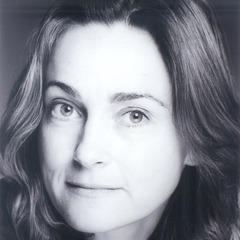
Sarah Winman

Sarah Winman Biography

Actress

Related Quotes

“This had always been the worst time when the quiet emptiness could leave him gasping for breath. She was there, his wife, a peripheral shadow moving across a doorway, or in the reflection of a window, and he had to stop looking for her. And the whiskey helped – helped him walk past her when the fire was doused. But occasionally she followed him up the stairs and that’s why he began to take the bottle with him, because she stood in the corner of their bedroom and watched him undress, and when he was on the verge of sleep, she leant over him and asked him things like, Remember when we first met?”

“I feel empty finally and wonder why that's a good feeling. I drink water, and it's warm. It leaves my thirst unquenced. I can veer off this track any time I want to. I come across signposts to towns and hotels and could easily divert and seek comfort, but I don't. I'm forcing myself into this solitude and keep on walking. There's something about movement, the necessity of movement, to deal with trauma. Academic papers have been written about it, and I've read them, how animals shake to release fear in their muscles. I do that too. Under the sun, amidst the scrub, I shake, I shout, I scream. So I keep to the track, transfixed by the motion of walking. Trusting in an invisible remedy that will make me feel human once again.”

“And for the four remaining days - the ninety-six remaining hours - we mapped out a future away from everything we knew. When the walls of the map were breached, we gave one another courage to build them again. And we imagined our home an old stone barn filled with junk and wine and paintings, surrounded by fields of wildflowers and bees. I remember our final day in the villa. We were supposed to be going that evening, taking the sleeper back to England. I was on edge, a mix of nerves and excitement, looking out to see if he made the slightest move toward leaving, but he didn’t. Toiletries remained on the bathroom shelves, clothes stayed scattered across the floor. We went to the beach as usual, lay side by side in our usual spot. The heat was intense and we said little, certainly nothing of our plans to move up to Provence, to the lavender and light. To the fields of sunflowers. I looked at my watch. We were almost there. It was happening. I kept saying to myself, he’s going to do it. I left him on the bed dozing, and went out to the shop to get water and peaches. I walked the streets as if they were my new home. Bonjour to everyone, me walking barefoot, oh so confident, free. And I imagined how we’d go out later to eat, and we’d celebrate at our bar. And I’d phone Mabel and Mabel would say, I understand. I raced back to the villa, ran up the stairs and died. Our rucksacks were open on the bed, our shoes already packed away inside. I watched him from the door. He was silent, his eyes red. He folded his clothes meticulously, dirty washing in separate bags. I wanted to howl. I wanted to put my arms around him, hold him there until the train had left the station. I’ve got peaches and water for the journey, I said. Thank you, he said. You think of everything. Because I love you, I said. He didn’t look at me. The change was happening too quickly. Is there a taxi coming? My voice was weak, breaking. Madame Cournier’s taking us. I went to open the window, the scent of tuberose strong. I lit a cigarette and looked at the sky. An airplane cast out a vivid orange wake that ripped across the violet wash. And I remember thinking, how cruel it was that our plans were out there somewhere. Another version of our future, out there somewhere, in perpetual orbit. The bottle of pastis? he said. I smiled at him. You take it, I said. We lay in our bunks as the sleeper rattled north and retraced the journey of ten days before. The cabin was dark, an occasional light from the corridor bled under the door. The room was hot and airless, smelled of sweat. In the darkness, he dropped his hand down to me and waited. I couldn’t help myself, I reached up and held it. Noticed my fingertips were numb. We’ll be OK, I remember thinking. Whatever we are, we’ll be OK. We didn’t see each other for a while back in Oxford. We both suffered, I know we did, but differently. And sometimes, when the day loomed gray, I’d sit at my desk and remember the heat of that summer. I’d remember the smells of tuberose that were carried by the wind, and the smell of octopus cooking on the stinking griddles. I’d remember the sound of our laughter and the sound of a doughnut seller, and I’d remember the red canvas shoes I lost in the sea, and the taste of pastis and the taste of his skin, and a sky so blue it would defy anything else to be blue again. And I’d remember my love for a man that almost made everything possible./”

“He heard the back door open and close. Carol, of course. Smelled her before he could see her. He’d never asked them when the affair began but always presumed it ran along invisible tracks parallel to his parents’ marriage. Mum had the painting and he had Carol. Truce. /It’s hard being born here, breathing this air. It becomes part of you, whether you want it to or not. Those lights become dawn and dusk. Mum used to say that. Did she? We were friends once. I never knew that. In the early days, we were. But the she seemed to withdraw. Rarely went out with your dad anymore. Maybe it was being a new mum. I reckon you were enough for her. Lucky Dora, we used to say. Ellis put his arm around her shoulder./ It was hard for us, wasn’t it? Getting to know each other? We know each other now, said Ellis. Yeah. And you know you’re too good for him. I know, said Carol, and they laughed. Do you think he’s alright? said Ellis, looking back to the house. Course he is. He’s just used to being a bastard. He’s one of them men who discovered later on that he’s got a heart.”

“Pero sobre todo escribí acerca de él, que ahora se llamaba Max, acerca de mi hermano, nuestro amigo, que llevaba diez días desaparecido. Y escribí acerca de lo que había perdido aquella mañana: el testigo de mi alma, mi sombra de la infancia, cuando los sueños eran pequeños y alcanzables para todos; cuando los dulces costaban un penique y Dios era un conejo.”

“I’d been feeling like this for a while; the continual looking back the stuckness of it all. I blamed it on the coming new year only 4 1/2 months away when the clocks would read zero and we would start again, could start again, but I knew we wouldn’t. Nothing would. The world would be the same, just a little bit worse.”

“You smell nice,’ she said. ‘Chanel,’ he said. ‘Wasted on you,’ she said and he reached into his bag and pulled out an almond tart. ‘Look what I’ve got,’ he said triumphantly as he lowered it under her nose. ‘Almonds,’ she said, ‘just like Paris.’ ‘For us to share,’ he said, ‘just like Paris.’ I never knew if she had any real appetite or not for she hadn’t eaten solids for days. But he broke a piece off and held it to her mouth and she ate hungrily for it was the memory she was tasting again and the memory tasted good. I moved a chair close to the bed for him and he sat down and held her hand. his own death he’d made peace with years ago but everyone else’s still frightened him and so he held her hand to not let her go. He held her hand because he wasn’t ready to let her go.”

“I sat in front of the roaring hearth and watched the men play poker badly and loudly. My mother bent down and filled my wine glass. Maybe it was the angle or the light. Maybe it was simply her, but she looked so young that night. And Nancy must’ve noticed it too because I caught her looking at her as she carried in a tray of teas and it was a gaze I could see that extinguished all thoughts of her erratic marriage (A marriage that incidentally would never happen due to Detective Butler’s shameful ‘outing’ by national Inquirer magazine). Later, as my mother entered my room to say good night I sat up and said, ‘Nancy’s in love with you.’ ‘And I’m in love with her.’ ‘But what about dad?’ She smiled, ‘I’m in love with him too.’ ‘Oh. Is that allowed?’ She laughed and said, ‘for a child of sixties, Elle . . . I know. Bit of a letdown.’ ‘Never,’ she said. ‘Never. I love them differently that’s all. I don’t sleep with Nancy.’ ‘Oh God I don’t need to know that.’ ‘Yes you do. We play by our own rules Ellie always have. That’s all we can do. For us it works.’ And she leaned over and kissed me good night.”

“Do I believe in an old man in the clouds with a white beard judging us mortals with a moral code from one to ten? Good Lord no, my sweet Elly, I do not! I would have been cast out from this life years ago with my tatty history. Do I believe in a mystery; the unexplained phenomenon that is life itself? The greater something that illuminates inconsequence in our lives; that gives us something to strive for as well as the humility to brush ourselves down and start all over again? Then yes, I do. It is the source of art, of beauty, of love, and proffers the ultimate goodness to mankind. That to me is God. That to me is life. That is what I believe in.”

“Las tardes de verano se alargaron y sentí deseos de salir con ella al patio, para que el sol le diera en la cara, y ver aparecer, una vez más, sus pecas bronceadas. Quería llevarla de nuevo a mi piso, detrás de la calle Cloth Fair, el piso que me aconsejó que me quedara cinco minutos después de verlo por primera vez, el noviembre pasado. Deseaba sentarme con ella en el tejado y contemplar el barrio de Smithfield al amanecer, y ver cómo abrían el mercado de carne, como si se tratara de una floración gigante y nocturna. Quería que volviéramos a escuchar juntas las campanas de Bartholomew, mientras comíamos cruasanes, leíamos los periódicos del domingo y cotilleábamos sobre las personas que conocíamos. Pero, sobre todo, quería que volviera a estar bien y que se incorporara enseguida a la colorida vida londinense. Pero Ginger nunca volvió a salir al exterior y, al final, le dije que no se perdía gran cosa, porque lo habíamos hecho todo, lo habíamos vivido todo, ¿no? Así que no hacía falta.”

“/A weekend toward the end of September, the bell above the door rang and there he was in the shop. Same old feeling in my guts. I’ll go if you want me to, he said. I smiled, I was so fucking happy to see him. You’ve only just got here, you twat, I said. Now give us a hand with this, and he took the other end of the trestle table and moved it over to the wall. Pub? I said. He grinned. And before I could say anything else he put his arms around me. And everything he couldn’t say in our room in France was said in that moment. I know, I said. I know. I’d already accepted I wasn’t the key to unlock him. She’d come later. It took a while to acknowledge the repercussions of that time. How the numbness in my fingertips traveled to my heart and I never even knew it. I had crushes, I had lovers, I had orgasms. My trilogy of desire, I liked to call it, but I’d no great love after him, not really. Love and sex became separated by a wide river and one the ferryman refused to cross. The psychiatrist liked that analogy. I watched him write it down. Chuckle, chuckle, his pen across the page.”

“—¿Que si creo en un anciano de barba blanca que vive en las nubes y juzga a los mortales con un código moral de diez mandamientos? ¡Cielo santo, querida Elly, claro que no! Me habría expulsado de esta vida hace años por mi alocada historia. ¿Que si creo en un misterio, en el inexplicable fenómeno que constituye la vida misma? ¿Que si creo en algo más grande que nosotros y que ilumina la inconsecuencia de nuestras vidas? ¿En algo que nos da una razón por la que luchar y la humildad para purificarnos y empezar de nuevo? Entonces sí, sí que creo en él. Es la fuente del arte, de la belleza, del amor, y ofrece la bondad suprema a la humanidad. Esto es Dios para mí. Esto es la vida, y es en esto en lo que creo.”

“Without reason, why bother? Existence needs purpose: to be able to endure the pain of life with dignity; to give us a reason to continue. The meaning must enter our hearts, not our heads. We must understand the meaning of our suffering”