Quotessence
Home / Quotes / Quote by Janet Fitch

Quote by Janet Fitch

“You ask me about regret? Let me tell you a few things about regret, my darling. There is no end to it. You cannot find the beginning of the chain that brought us from there to here. Should you regret the whole chain, and the air in between, or each link separately, as if you could uncouple them? Do you regret the beginning which ended so badly, or just the ending itself? I’ve given more thought to this question than you can begin to imagine.”

Quote by Janet Fitch

Work

White Oleander

White Oleander is a work of fiction that follows the life of Astrid Magnussen, a girl whose mother, Ingrid, is a brilliant but narcissistic poet. After Ingrid is sentenced to prison for murder, Astrid is placed into a series of foster homes across Southern California. Each home presents a different set of challenges and influences, shaping Astrid's identity as she grows from a child into a young woman. The narrative explores themes of resilience, the search for belonging, and the powerful, often destructive, bond between mother and daughter. The title refers to a poisonous flowering shrub, serving as a metaphor for Ingrid's beautiful yet dangerous influence on her daughter's life. more

Author

Janet Fitch
Janet Fitch

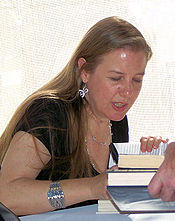
Janet Fitch is a renowned American contemporary author, born on November 9, 1955, in California. Her works are known for their profound character development and unique narrative style, with notable titles including 'The Geeks' and 'Paint It Black'. more

You May Also Like

“I thought about suicide all the time, but it seemed toomuch effort, swallowing all those pills or jumping off things. If I'd lived out in the country I would have found a quiet stretch of railway track, and lain on it, fallen asleep, so that I would never have known when my last moment came. In London, the minimum tube fare had gone up so much that even to get near the line cost a fortune. Suicide seemed an extravagance I couldn't afford. People never leave you alone, either; I knew that if I'd tried to lie down on the line, any number of commuters would have pulled me off again, so that I didn't delay their train. There must have been murderers out there who wanted to kill, with no way of finding those who wanted to be dead. If there had been some way of contacting them, a date-with-death line, I would have called them to set up a meeting. The current ways of death seemed too haphazard; it was all left up to chance. Had Chance come up, tapped me on the shoulder, said "Oi, you - long black tunnel, white light, off you go," I wouldn't have complained. It was like having frostbite all over - feeling numb and in pain at the same time.”

“We all want to be there to support and show that we care when something “bad” happens. But what about if we learned to live this way every day? What if we would live every day as if we are about to die tomorrow? Wouldn’t that be nice? How many more I love yous would you say per day? How would you speak to the people around you if you knew these were the last words they would hear from you? Oh, how we would take nothing for granted. Life would be so much more loving. Please do it, let’s not wait for death or accidents or something bad to happen to wake us up.”

“Few I have met have actually had a ‘last year.’ Most had only a ‘last’ month or two, a few weeks or days, or a few seconds. To have a whole year to examine one’s life consciously in the context of approaching death is almost unique in the human experience. And it gives a person the power to heal that which remains unloved and unloving. But why wait for a terminal diagnosis before opening to the potential grace and wonder of this living moment. No one can afford to put this work off any longer, because almost no one knows the day on which the last year begins.”