Quotessence
Home / Quotes / Quote by Nathaniel Hawthorne

Quote by Nathaniel Hawthorne

“Throughout them all, giving up her individuality, she would become the general symbol at which the preacher and moralist might point, and in which they might vivify and embody their images of woman's frailty and sinful passion. Thus the young and pure would be taught to look at her, with the scarlet letter flaming on her breast-- at her, the child of honorable parents--at her, who had once been innocent---as the figure, the body, the reality of sin.”

Quote by Nathaniel Hawthorne

Work

The Scarlet Letter

Nathaniel Hawthorne's classic novel is a profound exploration of human nature and the consequences of sin in a Puritan community. The protagonist, Hester Prynne, faces societal judgment and personal turmoil after being caught in an adulterous affair. The novel delves into themes of guilt, forgiveness, and the struggle for identity, while also examining the complexities of human relationships and the role of society in shaping individual lives. more

Author

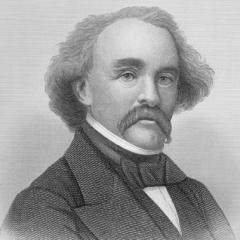
Nathaniel Hawthorne
Nathaniel Hawthorne

Nathaniel Hawthorne was an American novelist known for his Gothic novels and romantic works. His writings often delve into themes of morality and sin, influenced by his family history and Puritan background. more

You May Also Like

“It was sharpest of all for Protestants who did not belong to tightly organised and disciplined churches, in which there was either formal confession of sins (as in many Lutheran churches) or systematic oversight of the moral status of church members (as in many Calvinist churches). Those systems did not solve the problem of belief logically, but they did solve it emotionally, since anxious Christians could outsource their concern about themselves to the ministers who policed them. It was a kind of fideism: you cannot be certain of your own beliefs, but you can place your trust in your community instead.”

“I. G.’s sufferings were positively transient compared to Hannah Allen’s. As a teenager in the 1650s, Allen went through a period of despair in which she was convinced she was damned. She found a more even keel when she married, but when her husband died in 1664, her spiritual agonies returned worse than ever. She considered suicide, repeatedly harmed herself, and once crawled into a roof void in order to starve to death (her resolve broke after three days). In the end the fog gradually lifted, which she ascribed to God’s mercy, her family’s love and the passage of time. What matters for us is that during her struggles, her family repeatedly tried to persuade her of God’s mercy, but she would have none of it. Once she heard a thunderclap, and told her aunt it was a message from God that she was damned. Surely not, said the aunt: God would not send a miracle to convince someone of their damnation. ‘We do not read of such a thing in all the Scripture.’ But Allen would not be reasoned with. ‘My Answer was, “Therefore my condition is unparalleled; there was never such a one [as me] since God made any Creature, either Angels or Men, nor never will be to the end of the world.”’ She begged friends not to pray for her, since ‘it would but sink me the deeper into Hell’. At first she worried that she had committed the ‘unpardonable sin’ mentioned in the Gospels, but soon she concluded that that sin was for amateurs and she had committed even worse: My Sins are so great, that if all the Sins of all the Devils and Damned in Hell, and all the Reprobates on Earth were comprehended in one man, mine are greater. There is no word comes so near the comprehension of the dreadfulness of my Condition; as that, I am the Monster of the Creation.”

“Do not give dogs what is holy; and do not throw your pearls before swine, lest they trample them underfoot and turn to attack you’ (Matt. 7:6). The promise of grace is not to be squandered; it needs to be protected from the godless. There are those who are not worthy of the sanctuary. The proclamation of grace has its limits. Grace may not be proclaimed to anyone who does not recognize or distinguish or desire it. Not only does that pollute the sanctuary itself, not only must those who sin still be guilty against the Most Holy, but in addition, the misuse of the holy must turn against the community itself. The world upon whom grace is thrust as a bargain will grow tired of it, and it will not only trampled upon the Holy, but also will tear apart those who force it on them. For its own sake, for the sake of the sinner, and for the sake of the community, the Holy is to be protected from cheap surrender. The Gospel is protected by the preaching of repentance which calls sin sin and declares the sinner guilty. The key to loose is protected by the key to bind. The preaching of grace can only be protected by the preaching of repentance.”