Quotessence
Home / Quotes / Quote by Ta-Nehisi Coates

Quote by Ta-Nehisi Coates

Work

The Message

Browse quotes and source details for this work. more
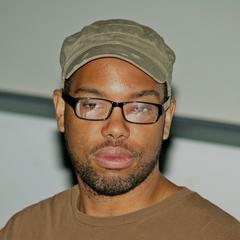
Author

Ta-Nehisi Coates
Ta-Nehisi Coates

Ta-Nehisi Coates is an American writer known for his insightful social commentary and literary works. His writings often focus on themes of race, history, and social justice, with his most famous work being 'Between the World and Me', which won the Pulitzer Prize in 2015. more

You May Also Like

“I believe that there are four institutions in American history that have shaped our approach to race and justice but remain poorly understood. The first, of course, is slavery. This was followed by the reign of terror that shaped the lives of people of color following the collapse of Reconstruction until World War II. ....The third institution, "Jim Crow," is the legalized racial segregation and suppression of basic rights that defined the American apartheid era. ....The fourth institution is mass incarceration.”

“On the train I had a lot of time to think. I thought how in the thirty years of my life I had seldom gotten on a train in America without being conscious of my color. In the South, there are Jim Crow cars and Negroes must ride separate from the whites, usually in a filthy antiquated coach next to the engine, getting all the smoke and bumps and dirt. In the South, we cannot buy sleeping car tickets. Such comforts are only for white folks. And in the North where segregated travel is not the law, colored people have, nevertheless, many difficulties. In auto buses they must take the seats in the rear, over the wheels. On the boats they must occupy the worst cabins. The ticket agents always say that all other accommodations are sold. On trains, if one sits down by a white person, the white person will sometimes get up, flinging back an insult at the Negro who has dared to take a seat beside him. Thus it is that in America, if you are yellow, brown, or black, you can never travel anywhere without being reminded of your color, and oft-times suffering great inconveniences. I sat in the comfortable sleeping car on my first day out of Moscow and remembered many things about trips I had taken in America. I remembered how, once as a youngster going alone to see my father who was working in Mexico, I went into the dining car of the train to eat. I sat down at a table with a white man. The man looked at me and said, "You're a nigger, ain't you?" and left the table. It was beneath his dignity to eat with a Negro child. At St. Louis I went onto the station platform to buy a glass of milk. The clerk behind the counter said, “We don't serve niggers," and refused to sell me anything. As I grew older I learned to expect this often when traveling. So when I went South to lecture on my poetry at Negro universities, I carried my own food because I knew I could not go into the dining cars. Once from Washington to New Orleans, I lived all the way on the train on cold food. I remembered this miserable trip as I sat eating a hot dinner on the diner of the Moscow-Tashkent express. Traveling South from New York, at Washington, the capital of our country, the official Jim Crow begins. There the conductor comes through the train and, if you are a Negro, touches you on the shoulder and says, "The last coach forward is the car for colored people." Then you must move your baggage and yourself up near the engine, because when the train crosses the Potomac River into Virginia, and the dome of the Capitol disappears, it is illegal any longer for white people and colored people to ride together. (Or to eat together, or sleep together, or in some places even to work together.) Now I am riding South from Moscow and am not Jim-Crowed, and none of the darker people on the train with me are Jim-Crowed, so I make a happy mental note in the back of my mind to write home to the Negro papers: "There is no Jim Crow on the trains of the Soviet Union.”

“...Me, I do not want to go to no suburbans not even Brooklyn. But Joyce wants to integrate. She says America has got two cultures, which should not he divided as they now is, so let's leave Harlem." "Don't you agree that Joyce is right?" "White is right," said Simple, "so I have always heard. But I never did believe it. White folks do so much wrong! Not only do they mistreat me, but they mistreats themselves. Right now, all they got their minds on is shooting off rockets and sending up atom bombs and poisoning the air and fighting wars and Jim Crowing the universe." "Why do you say 'Jim Crowing the universe'?" "Because I have not heard tell of no Negro astronaughts nowhere in space yet. This is serious, because if one of them white Southerners gets to the moon first, COLORED NOT ADMITTED signs will go up all over heaven as sure as God made little green apples, and Dixiecrats will be asking the man in the moon, 'Do you want your daughter to marry a Nigra?' Meanwhile, the N.A.A.C.P. will have to go to the Supreme Court, as usual, to get an edict for Negroes to even set foot on the moon. By that time, Roy Wilkins will be too old to make the trip, and me, too." "But perhaps the Freedom Riders will go into orbit on their own," I said. "Or Harlem might vote Adam Powell into the Moon Congress.'' "One thing I know," said Simple, "is that Martin Luther King will pray himself up there. The moon must be a halfway stop on the way to Glory, and King will probably be arrested. I wonder if them Southerners will take police dogs to the moon?”

“We drove across the Red Square past Lenin's Mausoleum and the towers and domes of the Kremlin--and stopped a block away at the Grand Hotel. Our rooms were ready for us--clean and comfortable, with hot and cold water, homelike settees and deep roomy chairs. Courteous attendants were there, baths and elevator, a book shop and two restaurants. Everything that a hotel for white folks at home would have--except that, quite truthfully, there was no toilet paper. And no Jim Crow. Of course, we knew that one of the basic principles of the Soviet Union is the end of all racial distinctions. That's the main reason we had come to Moscow.”