Quotessence
Home / Authors / Alice Miller
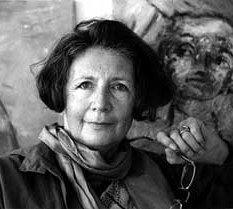
Alice Miller

Alice Miller Quotes

Psychologist

Filter quotes by topic

Famous Alice Miller Quotes

“[The mutually dependent child] cannot rely on his own emotions, has not come to experience them through trial and error, has no sense of his own real needs, and is alienated from himself to the highest degree. Under these circumstances he cannot separate from his parents, and even as an adult he is still dependent on affirmation from his partner, from groups, and especially from his own children ... Unless the heir casts off his 'inheritance' by becoming fully conscious of his true past, and thus of his true nature, loneliness in the parental home will necessarily be followed by an adulthood lived in emotional isolation.”

“This story sounds as though it were invented, but it is true from beginning to end. There are people who have to pay for the smallest things in life with their very substance and their spinal cord. That is a constantly recurring pain, and then when they are tired of suffering… Does not mother love belong to the ‘smallest’, but also indispensable, things in life, for which many people paradoxically have to pay by giving up their living selves?”

“Adolescents can divert this hatred from their parents if they are given a clear-cut enemy whom they are permitted to hate freely and with impunity. This may be why so many young painters and writers volunteered for the front in World War I. The hope of freeing themselves from the constraints imposed by their family enabled them to take pleasure in marching to the music of a military band. One of heroin’s roles is to replace this function, with the difference that in the case of drugs the destructive rage is directed against one’s own body and self.”

“Adolescents can divert this hatred from their parents if they are given a clear-cut enemy whom they are permitted to hate freely and with impunity. This may be why so many young painters and writers volunteered for the front in World War I. The hope of freeing themselves from the constraints imposed by their family enabled them to take pleasure in marching to the music of a military band.”

“Morality and performance of duty are artificial measures that become necessary when something essential is lacking. The more successfully a person was denied access to his or her feelings in childhood, the larger the arsenal of intellectual weapons and the supply of moral prostheses has to be, because morality and a sense of duty are not sources of strength or fruitful soil for genuine affection. Blood does not flow in artificial limbs; they are for sale and can serve many masters. What was considered good yesterday can--depending on the decree of government or party--be considered evil and corrupt today, and vice versa. But those who have spontaneous feelings can only be themselves. They have no other choice if they want to remain true to themselves. Rejection, ostracism, loss of love, and name calling will not fail to affect them; they will suffer as a result and will dread them, but once they have found their authentic self they will not want to lose it. And when they sense that something is being demanded of them to which their whole being says no, they cannot do it. They simply cannot.”

“Every life and every childhood is filled with frustrations; we cannot imagine it otherwise, for even the best mother cannot satisfy all her child's wishes and needs. It is not the suffering caused by frustration, however, that leads to emotional illness, but rather the fact that the child is forbidden by the parents to experience and articulate this suffering, the pain felt at being wounded.”

“It is very difficult for people to believe the simple fact that every persecutor was once a victim. Yet it should be very obvious that someone who was allowed to feel free and strong from childhood does not have the need to humiliate another person.”

“Without realizing that the past is constantly determining their present actions, they avoid learning anything about their history. They continue to live in their repressed childhood situation, ignoring the fact that is no longer exists, continuing to fear and avoid dangers that, although once real, have not been real for a long time.”

“People whose integrity has not been damaged in childhood, who were protected, respected, and treated with honesty by their parents, will be-both in their youth and in adulthood-intelligent, responsive, empathic, and highly sensitive. They will take pleasure in life and will not feel any need to kill or even hurt others or themselves. They will use their power to defend themselves, not to attack others. They will not be able to do otherwise than respect and protect those weaker than themselves, including their children, because this is what they have learned from their own experience.”

“The truth about our childhood is stored up in our body, and although we can repress it, we can never alter it. Our intellect can be deceived, our feelings manipulated, and conceptions confused, and our body tricked with medication. But someday our body will present its bill, for it is as incorruptible as a child, who, still whole in spirit, will accept no compromises or excuses, and it will not stop tormenting us until we stop evading the truth.”

“It is not true that evil, destructiveness , and perversion inevitably form part of human existence, no matter how often this is maintained. But it is true that we are daily producing more evil and, with it, an ocean of suffering for millions that is absolutely avoidable. When one day the ignorance arising from childhood repression is eliminated and humanity has awakened, an end can be put to this production of evil.”

“The truth about childhood, as many of us have had to endure it, is inconceivable, scandalous, painful. Not uncommonly, it is monstrous. Invariably, it is repressed. To be confronted with this truth all at once and to try to integrate it into our consciousness, however ardently we may wish it, is clearly impossible.”

“Sadism is not an infectious disease that strikes a person all of a sudden. It has a long prehistory in childhood and always originates in the desperate fantasies of a child who is searching for a way out of a hopeless situation.”

“The achievement of freedom is hardly possible without the felt mourning. This ability to mourn, i.e, to give up the illusion of a happy childhood, can restore vitality and creativity if a person is able to experience that he was never loved as a child for what he was, but for his achievements, success and good qualities. And that he sacrificed his childhood for this love, this will shake him very deeply.”