Quotessence
Home / Authors / Alice Miller
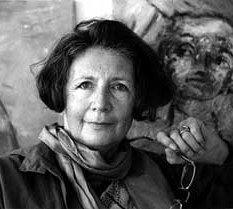
Alice Miller

Alice Miller Quotes

Psychologist

Filter quotes by topic

Famous Alice Miller Quotes

“someday we will regard our children not as creatures to manipulate or to change but rather as messengers from a world we once deeply knew, but which we have long since forgotten, who can reveal to us more about the true secrets of life, and also our own lives, than our parents were ever able to.”

“Anyone who has ever been a mother or father and is at all honest knows from experience how difficult it can be for parents to accept certain aspects of their children. It is especially painful to have to admit this if we really love our child and want to respect his or her individuality yet are unable to do so.”

“Every life and every childhood is filled with frustrations; we cannot imagine it otherwise, for even the best mother cannot satisfy all her child's wishes and needs. It is not the suffering caused by frustration, however, that leads to emotional illness, but rather the fact that the child is forbidden by the parents to experience and articulate this suffering, the pain felt at being wounded.”

“The knowledge that you were beaten and that this, as your parents tell you, was for your own good may well be retained (although not always), but the suffering caused by the way you were mistreated will remain unconscious and will later prevent you from empathizing with others. This is why battered children grow up to be mothers and fathers who beat their offspring”

“The attempt to be an ideal parent, that is, to behave correctly toward the child, to raise her correctly, not to give to little ortoo much, is in essence an attempt to be the ideal child--well behaved and dutiful--of one's own parents. But as a result of these efforts the needs of the child go unnoticed. I cannot listen to my child with empathy if I am inwardly preoccupied with being a good mother; I cannot be open to what she is telling me.”

“Till now, society has protected the adult and blamed the victim. It has been abetted in its blindness by theories, still in keeping with the pedagogical principles of our great- grandparents, according to which children are viewed as crafty creatures, dominated by wicked drives, who invent stories and attack their innocent parents or desire them sexually. In reality, children tend to blame themselves for their parents' cruelty and to absolve the parents, whom they invariably love, of all responsibility.”

“Many people suffer all their lives from this oppressive feeling of guilt, the sense of not having lived up to their parents' expectations. This feeling is stronger than any intellectual insight they might have, that it is not a child's task or duty to satisfy his parents needs. No argument can overcome these guilt feelings, for they have their beginnings in life's earliest periods, and from that they derive their intensity and obduracy.”

“Quite often I have been faced with people who were praised and admired for their talents and their achievements... According to prevailing attitudes, these people-the pride and joy of their parents-should have had a strong and stable sense of self-assurance. But the case is exactly the opposite... Whenever they suddenly get the feeling they have failed to live up to some ideal image or have not measured up to some standard, then they are plagued by anxiety or deep feelings of guilt and shame. What are the reasons for such disturbances in these competent, accomplished people?”

“People whose integrity has not been damaged in childhood, who were protected, respected, and treated with honesty by their parents, will be-both in their youth and in adulthood-intelligent, responsive, empathic, and highly sensitive. They will take pleasure in life and will not feel any need to kill or even hurt others or themselves. They will use their power to defend themselves, not to attack others. They will not be able to do otherwise than respect and protect those weaker than themselves, including their children, because this is what they have learned from their own experience.”

“People who, as children, were intellectually far beyond their parents and therefore admired by them, but who also therefore had to solve their own problems alone. These people, who give us a feeling of their intellectual strength and will power, also seem to demand that we, too, ought to fight off any feeling of weakness with intellectual means. In their presence one feels one cannot be recognized as a person with problems just as they and their problems were unrecognized by their parents, for whom he always had to be strong.”

“Child abuse is still sanctioned — indeed, held in high regard — in our society as long as it is defined as child-rearing. It is a tragic fact that parents beat their children in order to escape the emotions from how they were treated by their own parents.”