Quotessence
Home / Authors / Anne Applebaum
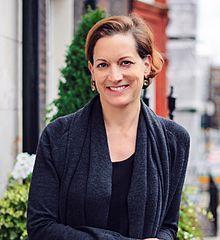
Anne Applebaum

Anne Applebaum Quotes

Journalist

Filter quotes by topic

Famous Anne Applebaum Quotes

“In many advanced democracies there is now no common debate, let alone a common narrative. People have always had different opinions. Now they have different facts. At the same time, in an information sphere without authorities--political, cultural, moral--and no trusted sources, there is no easy way to distinguish between conspiracy theories and true stories. False, partisan, and often deliberately misleading narratives now spread in digital wildfires, cascades of falsehood that move too fast for fact checkers to keep up. And even if they could, it no longer matters: a part of the public will never read or see fact-checking websites, and if they do they won't believe them.”

“But no one who studies autocratic propaganda believes that fact-checking or even swift reactions are sufficient. By the time the correction is made, the falsehood has already traveled around the world. Our old models never acknowledged the truth that many people desire disinformation. They are attracted by conspiracy theories and will not necessarily seek out reliable news at all.”

“The political scientist Lisa Wedeen has observed that the Syrian regime tells lies so ludicrous that no one could possibly believe them, for example that Syria, at the height of the civil war, was an excellent tourist destination. These "national fictions," she concluded, were not meant to persuade anyone, but rather to demonstrate the power of the people who were spinning the stories. Sometimes the point isn't to make people believe a lie; it's to make people fear the liar.”

“In Putin's Russia, Assad's Syria, or Maduro's Venezuela, politicians and television personalities often play a different game. They lie constantly, blatantly, obviously. But when they are exposed, they don't bother to offer counterarguments. When Russian-controlled forces shot down Malaysia Airlines Flight 17 over Ukraine in 2014, the Russian government reacted not only with a denial but with multiple stories, plausible and implausible: they blamed the Ukrainian army, or the CIA, or a nefarious plot in which 298 dead people were placed on a plane in order to fake a crash and discredit Russia. This tactic, the so-called "fire hose of falsehoods," produces not outrage but nihilism. Given so many explanations, how can you know what actually happened? What if you can never know? If can't understand what is going on around you, then you are not going to join a great movement for democracy, or follow a truth-telling leader, or listen when anyone speaks about positive political change. Instead, you will avoid politics altogether. Autocrats have an enormous incentive to spread that hopelessness and cynicism, not only in their own countries, but around the world.”

“Reflective nostalgics miss the past and dream about the past. Some of them study the past and even mourn the past, especially their own personal past. But they do not really want the past back. Perhaps this is because, deep down, they know that the old homestead is in ruins, or because it has been gentrified beyond recognition--or because they quietly recognize that they wouldn't much like it now anyway. Once upon a time life might have been sweeter or simpler, but it was also more dangerous, or more boring, or perhaps more unjust. Radically different from the reflective nostalgics are what Boym calls the restorative nostalgics, not all of whom recognize themselves as nostalgics at all. Restorative nostalgics don't just look at old photographs and piece together family stories. They are mythmakers and architects, builders of monuments and founders of nationalist political projects. They do not merely want to contemplate or learn from the past. They want, as Boym puts it, to "rebuild the lost home and patch up the memory gaps." Many of them don't recognize their own fictions about the past for what they are: "They believe their project is about truth." They are not interested in a nuanced past, in a world in which great leaders were flawed men, in which famous military victories had lethal side effects. They don't acknowledge that the past might have had its drawbacks. They want the cartoon version of history, and more importantly, they want to live in it, right now. They don't want to act out roles from the past because it amuses them: they want to behave as think their ancestors did, without irony. It is not by accident that restorative nostalgia often goes hand in hand with conspiracy theories and the medium-sized lies. These needn't be as harsh or crazy as the Smolensk conspiracy theory or the Soros conspiracy theory; they can gently invoke scapegoats rather than a full-fledged alternative reality. At a minimum, they can offer an explanation: The nation is no longer great because someone has attacked us, undermined us, sapped our strength. Someone—the immigrants, the foreigners, the elites, or indeed the EU—has perverted the course of history and reduced the nation to a shadow of its former self. The essential identity that we once had has been taken away and replaced with something cheap and artificial. Eventually, those who seek power on the back of restorative nostalgia will begin to cultivate these conspiracy theories, or alternative histories, or alternative fibs, whether or not they have any basis in fact.”

“...the polarizing political movements of twenty-first-century Europe demand much less of their followers. They do not espouse a full-blown ideology, and thus they don't require violence or terror police. They want their clercs to defend them, but they do not force them to proclaim that black is white, that war is peace, and that state farms have achieved 1,000 percent of their planned production. Most of them don't deploy propaganda that conflicts with everyday reality. And yet all of them depend, if not on a Big Lie, then on what the historian Timothy Snyder once told me should be called the Medium-Size Lie. To put it differently, all of them encourage their followers to engage, at least part of the time, with an alternative reality. Sometimes that alternative reality has developed organically; more often, it's been carefully formulated, with the help of modern marketing techniques, audience segmentation, and social-media campaigns.”

“With our powerful founding story, our unusual reverence for our Constitution, our geographic isolation, and our two centuries of relative economic success, modern Americans have long been convinced that liberal democracy, once achieved, was impossible to reverse. The founders themselves were not so certain: their beloved classical authors taught them that history was circular, that human nature was flawed, and that special measures were needed to precent democracy from sliding back into tyranny. But American history, to most modern Americans, does not feel circular. On the contrary, it is often told as a tale of progress, forward and upward, with the Civil War as a blip in the middle. Cultural despair does not come easily to a nation that believed in the Horatio Alger myth and Manifest Destiny. Pessimism is an alien sentiment in a state whose founding documents, the embodiment of the Enlightenment, contain one of the most optimistic views of the possibilities of human government ever written.”

“These selective, occasional murders don't just eliminate difficult opponents; they are also a form of messaging. The Saudi monarchy, the Cuban security services, the Kremlin, and the Chinese police don't have to kill every journalist in order to make all journalists in their countries afraid. Modern dictators have learned that the mass violence of the twentieth century is no longer necessary: targeted violence is often enough to keep ordinary people away from politics altogether, convincing them that it's a contest they can never win.”

“We have long known that in closed societies, the the arrival of democracy, with its clashing voices and differing opinions, can be "complex and frightening," as [Karen] Stenner puts it, for people unaccustomed to public dissent. The noise of argument, the constant hum of disagreement--these can irritate people who prefer to live in a society tied together by a single narrative. The strong preference for unity, at least among a portion of the population, helps explain why numerous liberal or democratic revolutions, from 1789 onward, ended in dictatorships that enjoyed wide support. Isaiah Berlin once wrote of the human need to believe that "somewhere, in the past or in the future, in divine revelation or in the mind of an individual thinker, in the pronouncements of history or science... there is a final solution." Berlin observed that not all of the things that human beings think are good or desirable are compatible. Efficiency, liberty, justice, equality, the demands of the individual, and the demands of the group--all these things push us in different directions. And this, Berlin wrote, is unacceptable to many people: "to admit that the fulfilment of some of our ideals may in principle make the fulfilment of others impossible is to say that the notion of total human fulfilment is a formal contradiction, a metaphysical chimera." Nevertheless, unity is a chimera that some will always pursue.”

“It is possible that we are already living through the twilight of democracy; that our civilization may already be heading for anarchy or tyranny, as the ancient philosophers and America's founders once feared; that a new generation of clercs, the advocates of illiberal or authoritarian ideas, will come to power in the twenty-first century, just as they did in the twentieth; that their visions of the world, born of resentment, anger, or deep, messianic dreams, could triumph. Maybe new information technology will continue to undermine consensus, divide people further, and increase polarization until only violence can determine who rules. Maybe fear of disease will create fear of freedom. Or maybe the coronavirus will inspire a new sense of global solidarity. Maybe we will renew and modernize our institutions. Maybe international cooperation will expand after the entire world has had the same set of experiences at the same time: lockdown, quarantine, fear of infection, fear of death. Maybe scientists around the world will find new ways to collaborate, above and beyond politics. Maybe the reality of illness and death will teach people to be suspicious of hucksters, liars, and purveyors of disinformation. Maddeningly, we have to accept that both futures are possible. No political victory is ever permanent, no definition of "the nation" is guaranteed to last, and no elite of any kind, whether so-called "populist" or so-called "liberal" or so called "aristocratic," rules forever.”

“[W]e made the mistake of assuming that there is something inevitable about democracy - you know, that it's a - you don't really have to do anything. If you just sit still, it will come because it's the natural way that human beings are. And, you know, we forgot about, first of all, how turbulent our own democracy has been over 200 years, and we also forgot about the deep appeal of autocracy and the power of extremism. You know, there are people - there is a part of every society that's deeply bothered by rapid change - that dislikes - you know, whether it's the election of Obama or whether it's racial integration or whether it's rapid economic change - you know, that dislikes change, wants it to stop, dislikes political strife, wants it to end and prefers to be within a homogenous movement where everybody's united. It's funny - there's a kind of deep human desire for unity, and this is what autocrats see and intuitively understand and why some of them have been able to hold power.”

“The emotional appeal of a conspiracy theory is in its simplicity. It explains away complex phenomena, accounts for chance and accidents, offers the believer the satisfying sense of having special, privileged access to the truth. For those who become the one-party state’s gatekeepers, the repetition of these conspiracy theories also brings another reward: power.”

“On February 24, 2022, Russia launched a full-scale war against Ukraine, the first full-scale kinetic battle in the struggle between Autocracy, Inc., and what might loosely be described as the democratic world. Russia plays a special role in the autocratic network, both as the inventor of the modern marriage of kleptocracy and dictatorship and as the country now most aggressively seeking to upend the status quo. The invasion was planned in that spirit. Putin hoped not only to acquire territory, but also to show the world that the old rules of international behavior no longer hold.”

“There is no liberal world order anymore, and the aspiration to create one no longer seems real. But there are liberal societies, open and free countries that offer a better chance for people to live useful lives than closed dictatorships do. They are hardly perfect. Those that exist have deep flaws, profound divisions, and terrible historical scars. But that’s all the more reason to defend and protect them. So few of them have existed across human history; so many have existed for a short time and then failed. They can be destroyed from the outside and from the inside, too, by division and demagogues. Or they can be saved. But only if those of us who live in them are willing to make the effort to save them.”

“If people are naturally drawn to the image of human rights, to the language of democracy, to the dream of freedom, then those ideas have to be poisoned. That requires not just surveillance, and not merely a political system that defends against liberal ideas. It also requires an offensive plan, a narrative that damages the idea of democracy, wherever it is being used, anywhere in the world.”

“...I believe the citizens of the United States, and the citizens of the democracies of Europe, Asia, Africa, and Latin America, should begin thinking of themselves as linked to one another and to the people who share their values inside autocracies too. They need one another, now more than ever, because their democracies are not safe. Nobody's democracy is safe. Americans, with our long history of imagining ourselves to be exceptional, would do well to remember that our domestic politics have always been connected to, and influenced by, a larger struggle for freedom and the rule of law around the world.”

“[Alexander Hamilton and John Adams] wanted to build democracy in America on the basis of rational debate, reason, and compromise. But they had no illusions about human nature: They knew that men could sometimes succumb to "passions," to use their old-fashioned word. They knew that any political system built on logic and rationality was always at risk from an outburst of the irrational.”

“The ancient philosophers always had their doubts about democracy. Plato feared the "false and braggart words" of the demagogue, and suspected democracy might be nothing more than a staging point on the road to tyranny. Early American advocates of republican government also recognized the challenge that a corrupt leader could pose to democracy, and thought hard about creating the institutions that would resist one. The Constitutional Convention of 1787 created the electoral college as a means of ensuring that a man with what Alexander Hamilton called "talents for low intrigue, and the little arts of popularity" could never become president of the United States.”

“You know, we were very overconfident about these institutions and how well designed they are. Then it turned out that a lot of what makes American democracy work happened by, you know, it was really norms rather than laws or a general agreement. You know, that, for example, that the president publishes his tax returns. You know, that wasn't a law, it was just a habit. You know, maybe it's time to make it a law. So thinking carefully about what changes we can make to ensure genuine legitimacy and also to ensure people's feelings and belief in legitimacy, I think that's another important addition to the conversation.”

“And this is what [Donald] Trump has proven: beneath the surface of the American consensus, the belief in our founding fathers and the faith in our ideals, there lies another America--[Pat] Buchanan's America, Trump's America--one that sees no important distinction between democracy and dictatorship. This America feels no attachment to other democracies; this America is not "exceptional." This America has no special democratic spirit of the kind [Thomas] Jefferson described. The unity of this America is created by white skin, a certain idea of Christianity, and an attachment to land that will be surrounded and defended by a wall. This America's ethnic nationalism resembles the old-fashioned ethnic nationalism of older European nations. This America's cultural despair resembles their cultural despair. The surprise is not that this definition of America is there: it has always existed. The surprise is that it emerged in the political party that has most ostentatiously used flags, banners, patriotic symbols, and parades to signify its identity.”

“Isolationism is an instinctive and even understandable reaction to the ugliness of the modern interconnected world. For some politicians in democracies, it will continue to offer a successful path to power. The campaign for Brexit succeeded by using the metaphor "take back control," and no wonder: everyone wants more control in a world where events on the other side of the planet can affect jobs and prices in our local towns and villages. But did the removal of Britain from the European Union give the British more power to shape the world? Did it prevent foreign money from shaping U.K. politics? Did it stop refugees from moving from the war zones of the Middle East to Britain? It did not.”

“These groups and movements were also inspired by a conviction that democracy is worthless, that elections cannot bring real change, and that only the most extreme and desperate actions can stop the decline of a certain vision of America. By 2016, some of the arguments of the old Marxist left--their hatred of ordinary, bourgeois politics and their longing for revolutionary change--met and mingled with the Christian right's despair about the future of American democracy. Together, they produced the restorative nostalgic campaign rhetoric of Donald Trump.”

“A few autocracies still portray themselves to their citizens as model states. The North Koreans, famously, hold vast military parades with elaborate gymnastics displays and huge portraits of their leader, very much in the Stalinist style. But many of the propagandists of Autocracy, Inc., have learned from the mistakes of the twentieth century. They don’t offer their fellow citizens a vision of utopia, and they don’t inspire them to build a better world. Instead, they teach people to be cynical and passive, because there is no better world to build. Their goal is to persuade people to mind their own business, stay out of politics, and never hope for a democratic alternative: Our state may be corrupt, but everyone else is corrupt too. You may not like our leader, but the others are worse. You may not like our society, but at least we are strong and the democratic world is weak, degenerate, divided, dying.”

“In recent years various dictatorships--of both internal and external origin--have collapsed or stumbled when confronted by defiant, mobilized people." Those are the opening words of From Dictatorship to Democracy, an iconic pamphlet composed by Gene Sharp, an American academic. Sharp emerged from the world of pacifism, civil rights, and antiwar activism in the 1950s to become, by the 1990s, an advocate of nonviolent revolution. A student of Gandhi, King, and Thoreau, Sharp believed that dictatorships survive not because of the unusual powers or personalities of dictators but because most people who live under their rule are apathetic or afraid. He believed that if they overcame their apathy and fear, and that if they refused to acquiesce to the dictator's demands, then the dictator would no longer be able to rule.”

“Democracies should work, again in coalitions, to promote transparency, to create international standards, to ensure that autocracies don't set the rules and shape the products. We are becoming aware of all these things very late. Around the world, democratic activists, from Moscow to Hong Kong to Caracas, have been warning us that our industries, our economic policies, and our research efforts are enabling the economic and even the military aggression of others, and they are right.”

“No democratic government should ever assume that arguments for democracy or for the rule of law are somehow obvious or self-evident. Authoritarian narratives are designed to undermine the innate appeal of those ideas, to characterize dictatorship as stable and democracy as chaotic. Democratic media, civic organizations, and politicians need to argue back and make the case for transparency, accountability, and liberty--at home and around the world.”

“The jangling, dissonant sound of modern politics; the anger on cable television and the evening news; the fast pace of social media; the headlines that clash with one another when we scroll through them; the dullness, by contrast, of the bureaucracy and the courts; all of this has unnerved that part of the population that prefers unity and homogeneity. Democracy itself has always been loud and raucous, but when its rules are followed, it eventually creates consensus. The modern debate does not. Instead, it inspires in some people the desire to forcibly silence the rest.”

“The issue is not merely one of false stories, incorrect facts, or even election campaigns and spin doctors: the social media algorithms themselves encourage false perceptions of the world. People click on the news they want to hear; Facebook, YouTube, and Google then show them more of whatever it is that they already favor, whether it is a certain brand of soap or a particular form of politics. The algorithms radicalize those who use them too. If you click on perfectly legitimate anti-immigration YouTube sites, for example, these can lead you quickly, in just a few more clicks, to white nationalist sites and then to violent xenophobic sites. Because they have been designed to keep you online, the algorithms also favor emotions, especially anger and fear. And because the sites are addictive, they affect people in ways they don't expect. Anger becomes a habit. Divisiveness becomes normal. Even if social media is not yet the primary news source for all Americans, it already helps shape how politicians and journalists interpret the world and portray it. Polarization has moved from the online world into reality. The result is a hyper-partisanship that adds to the distrust of "normal" politics, "establishment" politicians, derided "experts," and "mainstream" institutions--including courts, police, civil servants--and no wonder. As polarization increases, the employees of the state are invariably portrayed as having been "captured" by their opponents. It is not an accident that the Law and Justice Party in Poland, the Brexiteers in Britain, and the Trump administration in the United States have launched verbal assaults on civil servants and professional diplomats. It is not an accident that judges and courts are now the object of criticism, scrutiny, and anger in so many other places too. There can be no neutrality in a polarized world because there can be no nonpartisan or apolitical institutions.”

“When people have rejected aristocracy, no longer believe that leadership is inherited at birth, no longer assume that the ruling class is endorsed by God, the argument about who gets to rule--who is the elite--is never over. For a long time, some people in Europe and North America settled on the idea that various forms of democratic, meritocratic, and economic competition are the fairest alternative to inherited or ordained power. But even in countries that were never occupied by the Red Army and never ruled by Latin American populists, democracy and free markets can produce unsatisfying outcomes, especially when badly regulated, or when nobody trusts the regulators, or when people are entering the contest from very different starting points. The losers of these competitions were always, sooner or later, going to challenge the value of the competition itself.”

“Political change--alterations in public mood, sharp shifts in crowd sentiment, the collapse of party allegiance--has long been a subject of intense interest to academics and intellectuals of all kinds. There is a vast literature on revolutions, as well as a mini-genre of formulas designed to predict them. Most of these investigations focus on measurable, quantifiable economic criteria, like degrees of inequality or standards of living. Many seek to predict what level of economic pain--how much starvation, how much poverty--will produce a reaction, force people to the street, persuade them to take risks. Very recently, this question has become more difficult to answer. In the Western world, the vast majority of people are not starving. They have food and shelter. They are literate. If we describe them as "poor" or "deprived," it is sometimes because they lack things that human beings couldn't dream of a century ago, like air-conditioning or Wi-Fi. In this new world, it may be that big, ideological changes are not caused by bread shortages but by new kinds of disruptions. These new revolutions may not even look like the old revolutions at all. In a world where most political debate takes place online or on television, you don't need to go out on the street and wave a banner to assert your allegiance. In order to manifest a sharp change in political affiliation, all you have to do is switch channels, turn to a different website every morning, or start following a different group of people on social media.”

“If the Russian people and the Russian elite remembered - viscerally, emotionally remembered - what Stalin did to the Chechens, they could not have invaded Chechnya in the 1990s, not once and not twice. To do so was the moral equivalent of postwar Germany invading western Poland. Very few Russians saw it that way - which is itself evidence of how little they know about their own history.”

“Kleptocracy and autocracy go hand in hand, reinforcing each other but also undermining any other institutions that they touch. The real estate agents who don't ask too many questions in Sussex or Hampshire, the factory owners eager to unload failing businesses in Warren, the bankers in Sioux Falls happy to accept mystery deposits from mystery clients—all of them help undermine the rule of law in their own countries and around the world.”

“Some searched for metaphors to describe what had happened. Tetiana Pavlychka remembered that her sister Tamara “had a large, swollen stomach, and her neck was long and thin like a bird’s neck. People didn’t look like people — they were more like starving ghosts.” Another survivor remembered that his mother “looked like a glass jar, filled with clear spring water. All her body that could be seen . . . was see-through and filled with water, like a plastic bag.” A third remembered his brother lying down, “alive but completely swollen, his body shining as if it were made of glass”.”

“More recently, Karen Stenner, a behavioral economist who began researching personality traits two decades ago, has argued that about a third of the population in any country has what she calls an authoritarian predisposition, a word that is more useful than personality, because it is less rigid. An authoritarian predisposition, one that favors homogeneity and order, can be present without necessarily manifesting itself; its opposite, a “libertarian” predisposition, one that favors diversity and difference, can be silently present too. Stenner’s definition of authoritarianism isn’t political, and it isn’t the same thing as conservatism. Authoritarianism appeals, simply, to people who cannot tolerate complexity: there is nothing intrinsically “left-wing” or “right-wing” about this instinct at all. It is anti-pluralist. It is suspicious of people with different ideas. It is allergic to fierce debates. Whether those who have it ultimately derive their politics from Marxism or nationalism is irrelevant. It is a frame of mind, not a set of ideas.”

“The temptation of what is sometimes called realism—the belief that nations are solely motivated by a struggle for power, that they have eternal interests and permanent geopolitical orientations—is as strong as that of isolationism, and can be equally misleading, not least because it appeals to the indifferent. If nations never change, then of course we don’t need to exert the effort to make them change. If nations have permanent orientations, then all we need to do is discover what those are and get used to them. If nothing else, the Ukraine war showed us that nations are not pieces in a game of Risk. Their behavior can be altered by acts of cowardice or bravery, by wise leaders and cruel ones, and above all by good ideas and bad ones. Their interactions are not inevitable; their alliances and enmities are not permanent. There was no coalition to aid Ukraine until February 2022, and then there was. That coalition then made what had appeared to be the inevitable, rapid conquest of Ukraine impossible. By the same token, a different kind of Russian leader, with a different set of ideas, could now end the war quickly.”

“I would encourage everybody listening to involve themselves in public life and politics to some extent. You know, democracy doesn't just function by itself. It needs people to make it work. And so whether that means working in the polls, whether that means joining a party, whether that means running for a local office, whether that means helping somebody else run for local office, think of politics as something that you can be in and you can be part of and you can play a role in because that's actually what will determine the outcome.”

“High national emotions are permissible when a soccer team is playing precisely because they are impermissible at most other times. There aren't, simply, many other places where you can sing your national anthem until you lose your voice without causing a riot. In the context of soccer, flag-waving nationalism - even chauvinistic, anti-foreigner, flag-waving nationalism - is acceptable in Britain.”

“nothing happens in August - except when something really happens in August. World War I began in August, Saddam Hussein's invasion of Kuwait began in August, al Qaida was preparing to bring down the World Trade Center in August. August, in other words, is the time when all of us should prepare our backup plans, chart our reversals of course, [and] think through possible paradigm changes.”

“The world has always been a dangerous place. Now it is dangerous in a different way, because the world order that we've known since the end of the Cold War has been radically transformed. All of the institutions that preserved peace and promoted global trade will be weaker - NATO, the EU, NAFTA - and US relationships with other countries will change, too.”

“Though the poorest Americans voted for Hillary Clinton, many relatively wealthy people voted for Trump and generally it's a mistake to think that economics explains Trump. The US is doing relatively well, the economy has significantly recovered since 2008, unemployment rates are low. I would say rather that his appeal to the working class was cultural: "I'll bring back the kinds of jobs your fathers had," and, by implication, the whiter, simpler post-war world when America had no real economic competition.”