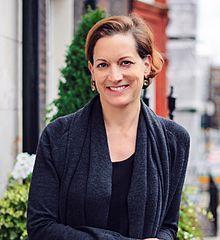
“I don't think Vladimir Putin and Donald Trump really have friends. But Trump has openly admired Putin for many years, with no reservations. He even seems to idolize him. Neither his cabinet appointees nor the civil servants in the Pentagon and the State Department feel the same way, however, so we don't know what this admiration will bring.” ThinkingKnowsWayFeelsYearsStatesSeemsTrumpServantDepartmentAdmirationPutinCabinetsReservationsPentagonCivil ServantsNo Reservations Author:Anne Applebaum
“Americans have long felt that NATO isn't doing its job and that the Europeans aren't contributing enough. Trump has accelerated the decline in Atlantic solidarity by offering open contempt for NATO allies as well. The future of NATO now very much depends on Europeans. Can you begin to identify security threats, prepare yourselves and arm yourselves without the US?” WellsLongEnoughJobsFeltSecurityArmsDependsTrumpThreatAlliesContemptOfferingDeclineSolidarityContributingNato Author:Anne Applebaum
“European security may now depend on Germany, France, Britain and one or two others, and it's better to start planning now for the possibility of European-only cyber-defense, counter-terrorism, and conventional defense too.” MayTwoSecurityPossibilityDependsTerrorismDefensePlanningFranceGermanyBritainConventionalCyberCounter Terrorism Author:Anne Applebaum
“The surge in right-wing populism and the phenomenon of Trump are related. You can think of them together as the same problem.” ThinkingProblemTogetherTrumpWingsRelatedPhenomenonRight WingPopulism Author:Anne Applebaum
“What is the appeal of Trump, really? It's nostalgic: "Make America great again." Like European nationalists, he has a vision of a "real" America, one which predates globalization, immigration, feminism, the civil rights movement and technological change, an imaginary 1950s to which we can now return. That is actually not very different from the kind of language that Marine Le Pen uses, or parts of the Brexit movement.” KindDifferentRealUseAmericaLanguageVisionRightsFeminismMovementReturnTrumpImmigrationCivil RightsAppealsPensImaginaryTechnologicalGlobalizationMarineCivil Rights MovementNostalgicTechnological Change Author:Anne Applebaum
“Think of the French presidential candidate Emmanuel Macron, Ciudadanos in Spain, Nowoczesna in Poland. These are early efforts to reimagine a liberalism which is neither right-wing nor left-wing in the traditional sense.” ThinkingLeftEffortWingsTraditionalPresidentialCandidatesLiberalismSpainRight WingLeft WingPolandPresidential CandidateEmmanuel Author:Anne Applebaum
“The old battle between Christian Democrats and Social Democrats is now meaningless, not least because the social structures that underlay those parties, the church and the unions, have faded away. Nationalists and populists understood this change earlier; now the rest of the political world needs to understand that the political lines have been redrawn and it's time to change.” WorldNeedsHas BeensChristianPoliticalSocialChurchLinesPartyBattleUnderstoodStructureUnionsDemocratMeaninglessFadedPopulistSocial Structure Author:Anne Applebaum
“I have been told by people close to Trump that "Brexit Britain" is the only foreign policy issue that interests him, because he thinks the UK referendum paved the way for him. He hopes to help Britain leave the EU, and possibly to damage the EU, by offering a trade deal.” PeopleThinkingWayHas BeensHelpingInterestDealsIssuesPolicyTrumpTradeDamageBritainForeign PolicyOfferingReferendums Author:Anne Applebaum
“Steve Bannon, the White House chief strategist, appears to imagine an alliance between Trump, Le Pen, Geert Wilders and Nigel Farage. Call it the populist international, a fraternal association of the nationalist right, binding people who want borders, across borders.” PeopleWantHouseWhiteImagineTrumpInternationalChiefsBordersPensWhite HouseAssociationAlliancesBindingStrategistPopulistWilderFraternal Author:Anne Applebaum
“The nationalist right have common views. They hate the EU, they hate NATO, they dislike trade, they admire Russia. Many of them are funded by Putin.” HateViewsCommonTradeRussiaAdmireDislikePutinNato Author:Anne Applebaum
“We may be reaching the end of the liberal world order.” WorldMayEndsOrderReachingWorld OrderReaching The End Author:Anne Applebaum
“The Soviet Union was, by the 1970s and 1980s, relatively stable and predictable. Putin's Russia is much more volatile. Nuclear policy is really in the hands of one person, or a small group of people, instead of a huge party-state apparatus. The possibility of a mistake is greater now.” PeoplePersonsStatesHandsPartyMistakeGreaterGroupsPolicyPossibilityHugeUnionsNuclearRussiaSovietStableSoviet UnionPutinPredictableSmall Groups Author:Anne Applebaum
“I believe democracy can survive. But it's certainly true that the euphoria of the 1990s - an era when democracy was spreading and more and more people found it attractive - has ended. Trump is not a cause but rather a symptom of this change.” PeopleBelieveFoundI BelieveCausesDemocracyTrumpErasAttractiveSymptomsEuphoria Author:Anne Applebaum
“Globalization has genuinely drained power away from national politicians and people feel it. People in our fast digital age are also frustrated with the comparably slow democratic processes. Many young people - and some old people - want to know, Why does everything take so long? Why can't someone just decide and then move forward?” PeopleKnowsWantFeelsLongDoeAgeMovingYoungProcessPoliticianDemocraticMoving ForwardDigitalFrustratedOld PeopleGlobalizationDigital AgeDrainedDemocratic Process Author:Anne Applebaum
“We can't continue assuming that politics is something which is decided elsewhere by distant leaders in a distant capital. Protest is insufficient too. If people who are willing to put time into demonstrations also prove willing to work on behalf of candidates in local elections - or to become candidates themselves - they will achieve far more. If all of this upheaval provokes more involvement, then we have a slim chance of ending up with more vibrant democracies eventually. The alternative, as you've hinted, is that democracy fails altogether.” PeopleIfsChanceLeaderDemocracyFailingAchieveWillingProveDecidedElectionAssumingLocalsAlternativesCandidatesProtestElsewhereProvokingBehalfInvolvementDemonstrationInsufficientSlimUpheaval Author:Anne Applebaum
“I didn't like doing predictions. It's certainly true that right now - and this could change tomorrow - but, right now there is no clear way for Putin to lose power. There seems little chance that a street revolution could unseat him; that's just not how things are going to work in Russia. And it seems as if the very tiny number of people who control the economy and who control politics in Russia are loyal to him.” PeopleChanceEconomyRevolutionTomorrowLoyalGoing To Work Author:Anne Applebaum
“Putin has made life difficult for a lot of Russia's richest men; they don't like the sanctions; they don't like the war with the West. Many of them have houses and families and businesses in the West, and so I can see them being unhappy. But at the moment, the political system is so constructed that it would be very difficult for them to leave. That's not saying it couldn't change.” MenWarMomentsPoliticalHouseDifficultUnhappyBeing Unhappy Author:Anne Applebaum
“To describe Russian politics as "managed democracy" - and that's sometimes hard for outsiders to understand, because a lot of the forms of democracy exist in Russia, so there are elections; there is a press; there is a campaign, and so on. But the outcome of the campaign is never in doubt. So the campaign is manipulated. There is a real opposition in Russia. There are one or two real opposition figures who do want to change the political system, but they will probably not be allowed to run, and one way or another they will be prevented from being on the ballot.” RealSometimesRunningPoliticalDemocracyDoubtElectionOutsiders Author:Anne Applebaum
“There will instead be a number of fake opposition figures, one of whom is now probably going to be Kseniya Sobchak, which is an absurd idea. I assume she's been chosen because just even the idea of her standing for liberals so makes fun of the idea of liberals and of liberal democracy.” FunDemocracyAssumingChosenAbsurdFake Author:Anne Applebaum
“If Putin decides to run, which we are assuming that he will, there really isn't anything that can stop him. He can manipulate the system so that he has not real opponents; he can manipulate the media so that nobody else gets any coverage. And then, if worse comes to worse, he can - as he has done in the past - just change the electoral results. So, it's not like it's going to be a very exciting election.” RealDoneRunningPastExcitingElectionAssumingManipulate Author:Anne Applebaum
“Putin saw the Ukrainian revolution as a challenge to him personally, and I think that's why he, in fact, over-reacted. I think his occupation of Crimea and then annexation for him was actually a mistake from Russia's point of view. And then his invasion of Eastern Ukraine was also a mistake. He imagined that he would invade Eastern Ukraine and then eventually split the country in half, and he discovered that in fact, Russian-speaking Ukrainians are not Russians, and they didn't support him.” ThinkingCountryChallengesMistakeSupportRevolutionPoint Of ViewEasternUkrainian Author:Anne Applebaum
“Putin imagined it would be different. So, like many Russian leaders before him, he imagined that Ukraine was basically Russia, but they speak with a funny accent. Actually, it's not Russia; it has a different identity. It has a very different language. Russians don't automatically understand Ukrainian. And, in particular, the way Ukraine has developed over the last two decades is different from the way Russia has developed.” DifferentSpeakLanguageLeaderIdentityUkrainian Author:Anne Applebaum
“Putin discovered that when he invaded Ukraine, he expected the Ukrainians to rise up and join him and say, "Yes, we want to be part of Russia," and that didn't happen. And they've been paying, actually, I think quite a high price for it, both in the ongoing war in Ukraine - which is I think increasingly unpopular in Russia - and also in the Western sanctions, and in general, the separation from the West that was caused by that.” ThinkingWarWesternSeparation Author:Anne Applebaum
“The Russian economy is about the size of the Italian economy; it's very small, and Russia's military force is larger than it was, because Putin's been investing in it, but it still doesn't compare to that of the United States, and his reach and aim still don't compare.” EconomyMilitaryAimCompareItalian Author:Anne Applebaum
“I don't think Americans realize the degree to which they are the main subject of Russian television news. Every night there's news from the United States and scandals about the United States, and every night the United States is shown to be an enemy of Russia over and over and over again. And this is, of course, useful to the Russian president, because it's, we have this big and important enemy - you need me here to fight back.” ThinkingImportantNightFightingPresidentRealizingEnemy Author:Anne Applebaum
“Khodorkovsky is richest man. And he lost everything when Putin arrested him and took his company away, and essentially took his company away, sold it, and gave it to other people, and enriched them. So, he's a complicated figure as an opposition leader, and people admire him - he was in prison, and he was very brave, and he's written some good things since then, and so on. But at the end of the day, people see him as being part of the corrupt system that has done so much to undermine the Russian system since the 1990s, and I don't know that he can ever be a really popular leader.” PeopleMenDoneLeaderPrisonBraveGood ThingsComplicatedAdmire Author:Anne Applebaum
“What's interesting about Navalny is that he has run a - not so much a pro-democracy campaign in Russia, but an anti-corruption campaign. He seems to have access to quite a lot of information about very senior Russians, including Putin.” RunningInterestingSenior Author:Anne Applebaum
“Navalny is a blogger-turned-activist, but he finds stuff and he puts together these very, very clever, very high production value videos which underline the corruption at the top of the system, and there are millions of people who watch them. Some people think he must have some kind of protection inside the system because he hasn't yet been completely put out of commission; he's allowed to go on. He himself has said he wants to run for president.” PeopleThinkingKindRunningTogetherValuesPresidentCorruptionProtectionCleverVery Clever Author:Anne Applebaum
“A lot of the Russian economy is built around people who are one way or another milking the state and taking money from the state and recycling it into their private bank accounts. And there are a lot of people who are taking advantage of that, so it's not just one person. It's a kind of web of people doing that, and that's how the system stays in power and how people stay in control.” PeopleKindEconomyRecyclingTaking Advantage Author:Anne Applebaum
“Putin is not a mass murderer. But, having said that, he is a product of the KGB, and the KGB was, of course, the secret police force of the Soviet Union.” SecretPoliceSovietSoviet UnionMurderer Author:Anne Applebaum
“Most of the people buying the Soviet paraphernalia were Americans and West Europeans. All would be sickened by the thought of wearing a swastika. None objected, however, to wearing the hammer and sickle on a T-shirt or a hat. It was a minor observation, but sometimes, it is through just such minor observations that a cultural mood is best observed. For here, the lesson could not have been clearer: while the symbol of one mass murder fills us with horror, the symbol of another mass murder makes us laugh.” PeopleHas BeensSometimesWould BeLaughingLessonsHorrorMassMurderWestMoodObservationSymbolsShirtsBuyingHatsSovietMinorsT ShirtHammers Book:Gulag: A History Source: Gulag: A History