Quotessence
Home / Authors / Anthony Trollope Books
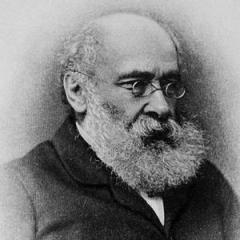
Anthony Trollope

Anthony Trollope Books

Novelist

Thackeray

A source page for quotes linked to Anthony Trollope.
0 quotes

The Bertrams

A source page for quotes linked to Anthony Trollope.

0 quotes

The Claverings

A source page for quotes linked to Anthony Trollope.

0 quotes

The Fixed Period

A source page for quotes linked to Anthony Trollope.

0 quotes

The Landleaguers

A source page for quotes linked to Anthony Trollope.

0 quotes

Related Quotes

“Idle Jeffrey, when asking his cousin for money: "I fear I have not a mercenary tendency." The Chancellor of the Exchequer and his cousin, Plantagenet Palliser: "Men must have mercenary tendencies or they would not have bred. The man who plows, so he may live, does so because, luckily, he has mercenary tendencies." Jeffrey: "Just so, but you see I am less lucky than the plowman." Palliser: "There is no vulgar error so vulgar, that is to say common or erroneous, as that by which men have been taught to say that mercenary tendencies are bad. The desire for wealth is the source of all progress. Civilization comes from what men call greed. Let your mercenary tendencies be combines with honesty, and they cannot take you astray.”

“Shall a woman be flayed alive because it is unfeminine in her to fight for her own skin?  What is the good of being—feminine, as you call it?  Have you asked yourself that?  That men may be attracted, I should say.  But if a woman finds that men only take advantage of her assumed weakness, shall she not throw it off?  If she be treated as prey, shall she not fight as a beast of prey?  Oh, no;—it is so unfeminine!”

“In social life we hardly stop to consider how much of that daring spirit which gives mastery comes from hardness of heart rather than from high purpose, or true courage. The man who succumbs to his wife, the mother who succumbs to her daughter, the master who succumbs to his servant, is as often brought to servility by a continual aversion to the giving of pain, by a softness which causes the fretfulness of others to be an agony to himself,—as by any actual fear which the firmness of the imperious one may have produced. There is an inner softness, a thinness of the mind's skin, an incapability of seeing or even thinking of the troubles of others with equanimity, which produces a feeling akin to fear; but which is compatible not only with courage, but with absolute firmness of purpose, when the demand for firmness arises so strongly as to assert itself.”

“I do not know that Lady Glencora's heart was made of that stern stuff which refuses to change its impressions; but it was a heart, and it required food. To love and fondle someone, - to be loved and fondled, were absolutely necessary to her happiness. She wanted the little daily assurance of her supremacy in the man's feelings, the constant touch of love, half accidental half contrived, the passing glance of the eye telling perhaps of some little joke understood only between them two rather than of love, the softness of an occasional kiss given here and there when chance might bring them together, some half-pretended interest in her little doings, a nod, a wink, a shake of the head, or even a pout.”

“I know it will be said of Lord Lufton himself that, putting aside his peerage and broad acres, and handsome, sonsy face, he was not worth a girl’s care and love. That will be said because people think that heroes in books should be so much better than heroes got up for the world’s common wear and tear. I may as well confess that of absolute, true heroism there was only a moderate admixture in Lord Lufton’s composition; but what would the world come to if none but absolute true heroes were to be thought worthy of women’s love? What would the men do? and what—oh! what would become of the women?”

“There is nothing in the world so difficult as that task of making up one's mind. Who is there that has not longed that the power and privilege of selection among alternatives should be taken away from him in some important crisis of his life, and that his conduct should be arranged for him, either this way or that, by some divine power if it were possible, - by some patriarchal power in the absence of divinity, - or by chance, even, if nothing better than chance could be found to do it? But no one dares to cast the die, and to go honestly by the hazard. There must be the actual necessity of obeying the die, before even the die can be of any use.”

“You are quite wrong about him," Felix had said. "He has not been atan English school, or English university, and therefore is not like other young men that you know; but he is, I think, well educated and clever. As for conceit, what man will do any good who is notconceited? Nobody holds a good opinion of a man who has a low opinion of himself." "All the same, my dear fellow, I do not like Lucius Mason.”

“Of all such reformers Mr. Sentiment is the most powerful. It is incredible the number of evil practices he has put down: it is to be feared he will soon lack subjects and that when he has made the working classes comfortable, and got bitter beer put into proper-sized pint bottles, there will be nothing further for him left to do. Mr. Sentiment is certainly a very powerful man, and perhaps not the less so that his good poor people are so very good; his hard rich people so very hard; and the genuinely honest so very honest. Namby-pamby in these days is not thrown away if it be introduced in the proper quarters. Divine peeresses are no longer interesting, though possessed of every virtue; but a pattern peasant or an immaculate manufacturing hero may talk as much twaddle as one of Mrs. Ratcliffe's heroines, and still be listened to. Perhaps, however, Mr. Sentiment's great attraction is in his second-rate characters. If his heroes and heroines walk upon stilts as heroes and heroines, I fear, ever must, their attendant satellites are as natural as though one met them in the street: they walk and talk like men and women, and live among our friends a rattling, lively life — yes, live, and will live till the names of their callings shall be forgotten in their own, and Buckett and Mrs. Gamp will be the only words left to us to signify detective police officer or a monthly nurse.”

“Now, now that she was older and perhaps wiser, love meant a partnership, in which each partner would be honest to the other, in which each would wish and strive for the other's welfare, to that this their joint welfare might be insured. Then, in those early girlish days, it had meant a total abnegation of self. The one was of earth, and therefore possible. The other had been a ray from heaven, - and impossible, except in a dream.”

“We are not content in looking to our newspapers for all the information that earth and human intellect can afford; but we demand from them what we might demand if a daily sheet could come to us from the world of spirits. The result, of course, is this,—that the papers do pretend that they have come daily from the world of spirits; but the oracles are very doubtful, as were those of old”

“Why is it that girls so constantly do this,—so frequently ask men who have loved them to be present at their marriages with other men? There is no triumph in it. It is done in sheer kindness and affection. They intend to offer something which shall soften and not aggravate the sorrow that they have caused. "You can't marry me yourself," the lady seems to say. "But the next greatest blessing which I can offer you shall be yours,—you shall see me married to somebody else." I fully appreciate the intention, but in honest truth, I doubt the eligibility of the proffered entertainment. On the present occasion John Eames seemed to be of this opinion, for he did not at once accept the invitation.”

“Such young men are often awkward, ungainly, and not yet formed in their gait; they straggle with their limbs, and are shy; words do not come to them with ease, when words are required, among any but their accustomed associates. Social meetings are periods of penance to them, and any appearance in public will unnerve them. They go much about alone, and blush when women speak to them. In truth, they are not as yet men, whatever the number may be of their years; and, as they are no longer boys, the world has found for them the ungraceful name of hobbledehoy.”

“Considering how much we are all given to discuss the characters of others, and discuss them often not in the strictest spirit of charity, it is singular how little we are inclined to think that others can speak ill-naturedly of us, and how angry and hurt we are when proof reaches us that they have done so.”

“The happiest man is he, who being above the troubles which money brings, has his hands the fullest of work.”

“Those who offend us are generally punished for the offence they give; but we so frequently miss the satisfaction of knowing that we are avenged !.”