Quotessence
Home / Authors / Beryl Markham
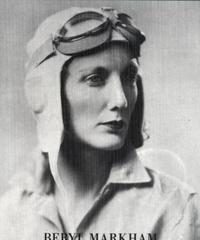
Beryl Markham

Beryl Markham Quotes

Author

Filter quotes by topic

Famous Beryl Markham Quotes

“Being alone in an aeroplane for even so short a time as a night and a day, irrevocably alone, with nothing to observe but your instruments and your own hands in semi-darkness, nothing to contemplate but the size of your small courage, nothing to wonder about but the beliefs, the faces, and the hopes rooted in your mind - such an experience can be as startling as the first awareness of a stranger walking by your side at night. You are the stranger.”

“There are all kinds of silences and each of them means a different thing. There is the silence that comes with morning in a forest, and this is different from the silence of a sleeping city. There is silence after a rainstorm, and before a rainstorm, and these are not the same. There is the silence of emptiness, the silence of fear, the silence of doubt. There is a certain silence that can emanate from a lifeless object as from a chair lately used, or from a piano with old dust upon its keys, or from anything that has answered to the need of a man, for pleasure or for work. This kind of silence can speak. Its voice may be melancholy, but it is not always so; for the chair may have been left by a laughing child or the last notes of the piano may have been raucous and gay. Whatever the mood or the circumstance, the essence of its quality may linger in the silence that follows. It is a soundless echo.”

“Everything has been done -- every material thing -- to give this place the aspect of benignity, of friendship, of tolerance and conviviality, but the character of a dwelling, like that of a man, grows slowly. The walls of my house are without memories, or secrets, or laughter. Not enough of life has been breathed into them -- their warmth is artificial; too few hands have turned the window latches, too few feet have trod the thresholds. The boards of the floor, self-conscious as youth or falsely proud as the newly rich, have not yet unlimbered enough to utter a single cordial creak. In time they will, but not for me.”

“(On WWI:) A man of importance had been shot at a place I could not pronounce in Swahili or in English, and, because of this shooting, whole countries were at war. It seemed a laborious method of retribution, but that was the way it was being done. ... A messenger came to the farm with a story to tell. It was not a story that meant much as stories went in those days. It was about how the war progressed in German East Africa and about a tall young man who was killed in it. ... It was an ordinary story, but Kibii and I, who knew him well, thought there was no story like it, or one as sad, and we think so now. The young man tied his shuka on his shoulder one day and took his shield and his spear and went to war. He thought war was made of spears and shields and courage, and he brought them all. But they gave him a gun, so he left the spear and the shield behind him and took the courage, and went where they sent him because they said this was his duty and he believed in duty. ... He took the gun and held it the way they had told him to hold it, and walked where they told him to walk, smiling a little and looking for another man to fight. He was shot and killed by the other man, who also believed in duty, and he was buried where he fell. It was so simple and so unimportant. But of course it meant something to Kibii and me, because the tall young man was Kibii's father and my most special friend. Arab Maina died on the field of action in the service of the King. But some said it was because he had forsaken his spear.”

“What a child does not know and does not want to know of race and colour and class, he learns soon enough as he grows to see each man flipped inexorably into some predestined groove like a penny or a sovereign in a banker's rack. Kibii, the Nandi boy, was my good friend. Arab Ruta (the same boy grown to manhood), who sits before me, is my good friend, but the handclasp will be shorter, the smile will not be so eager on his lips, and though the path is for a while the same, he will walk behind me now, when once, in the simplicity of our nonage, we walked together.”

“Elephant, beyond the fact that their size and conformation are aesthetically more suited to the treading of this earth than our angular informity, have an average intelligence comparable to our own. Of course they are less agile and physically less adaptable than ourselves -- nature having developed their bodies in one direction and their brains in another, while human beings, on the other hand, drew from Mr. Darwin's lottery of evolution both the winning ticket and the stub to match it. This, I suppose, is why we are so wonderful and can make movies and electric razors and wireless sets -- and guns with which to shoot the elephant, the hare, clay pigeons, and each other.”

“And now, at last, we are here. Now Eric fingers his glass and questions me hopefully, while the music of Muthaiga marches through our talk, and festive people clasp hands, revive old toasts -- and make bets on tomorrow's Leger. One hundred pounds -- two hundred pounds... "Has the filly a chance?" "Against Wrack? Of course not." "Don't be too sure... don't be too sure. Why, I remember..." Well, that's what makes a horse-race.”

“From the time I arrived in British East Africa at the indifferent age of four and went through the barefoot stage of early youth hunting wild pig with the Nandi, later training racehorses for a living, and still later scouting Tanganyika and the waterless bush country between the Tana and Athi Rivers, by aeroplane, for elephant, I remained so happily provincial I was unable to discuss the boredom of being alive with any intelligence until I had gone to London and lived there for a year. Boredom, like hookworm, is endemic.”

“Je n'ai jamais très bien compris pourquoi on estimait que les femmes étaient moins capables que les hommes d'éviter ces dangers évidents, mais je crois que le règlement était inspiré par la galanterie plutôt que par la raison. En tout, j'ai parcouru six fois la totalité de la route aérienne entre Nairobi et Londres - dont quatre fois en solo [...] -, et d'autres femmes en ont fait autant. De fait, la plus grande erreur de jugement commise pendant un vol au-dessus du Studd revient à un homme [...].”

“Night flying over the charted country by the aid of instruments and radio guidance can still be a lonely business, but to fly in unbroken darkness without even the cold companionship of a pair of ear-phones or the knowledge that somewhere ahead are lights and life and a well-marked airport is something more than just lonely. It is at times unreal to the point where the existence of other people seems not even a reasonable probability. The hills, the forests, the rocks, and the plains are one with the darkness, and the darkness is infinite. The earth is no more your planet than is a distant star — if a star is shining; the plane is your planet and you are its sole inhabitant.”

“Africa is never the same to anyone who leaves it and returns again. It is not a land of change, but it is a land of moods and its moods are numberless. It is not fickle, but because it has mothered not only men, but races, and cradles not only cities, but civilizations - and seen them die, and seen new ones born again - Africa can be dispassionate, indifferent, warm, or cynical, replete with the weariness of too much wisdom.”

“But the soul of Africa, its integrity, the slow inexorable pulse of its life, is its own and of such singular rhythm that no outsider, unless steeped from childhood in its endless, even beat, can ever hope to experience it, except only as a bystander might experience a Masai war dance knowing nothing of its music nor the meaning of its steps.”

“I know animals more gallant than the African warthog, but none more courageous. He is the peasant of the plains - the drab and dowdy digger in the earth. He is the uncomely but intrepid defender of family, home, and bourgeois convention, and he will fight anything of any size that intrudes upon his smug existence. ... His eyes are small and lightless and capable of but one expression - suspicion. What he does not understand, he suspects, and what he suspects, he fights.”

“[Elephants] are less agile and physically less adaptable than ourselves - Nature having developed their bodies in one direction and their brains in another, while human beings, on the other hand, drew from Mr. Darwin's lottery of evolution both the winning ticket and the stub to match it. This, I suppose, is why we are so wonderful and can make movies and electric razors and wireless sets - and guns with which to shoot the elephant, the hare, clay pigeons, and each other.”

“To me, desert has the quality of darkness; none of the shapes you see in it are real or permanent. Like night, the desert is boundless, comfortless, and infinite. Like night, it intrigues the mind and leads it to futility. When you have flown halfway across a desert, you experience the desperation of a sleepless man waiting for dawn which only comes when the importance of its coming is lost.”

“There are all kinds of silences and each of them means a different thing. There is the silence that comes with morning in a forest, and this is different from the silence of a sleeping city. There is silence after a rainstorm, and before a rainstorm, and these are not the same. There is the silence of emptiness, the silence of fear, the silence of doubt.”

“There is a certain silence that can emanate from a lifeless object as from a chair lately used, or from a piano with old dust upon its keys, or from anything that has answered to the need of a man, for pleasure or for work. This kind of silence can speak. Its voice may be melancholy, but it is not always so; for the chair may have been left by a laughing child or the last notes of the piano may have been raucous and gay. Whatever the mood or the circumstance, the essence of its quality may linger in the silence that follows. It is a soundless echo.”

“We fly, but we have not 'conquered' the air. Nature presides in all her dignity, permitting us the study and the use of such of her forces as we may understand. It is when we presume to intimacy, having been granted only tolerance, that the harsh stick fall across our impudent knuckles and we rub the pain, staring upward, startled by our ignorance.”

“I have learned that if you must leave a place that you have lived in and loved and where all your yesteryears are buried deep, leave it any way except a slow way, leave it the fastest way you can. Never turn back and never believe that an hour you remember is a better hour because it is dead. Passed years seem safe ones, vanquished ones, while the future lives in a cloud, formidable from a distance.”

“To see ten thousand animals untamed and not branded with the symbols of human commerce is like scaling an unconquered mountain for the first time, or like finding a forest without roads or footpaths, or the blemish of an axe. You know then what you had always been told -- that the world once lived and grew without adding machines and newsprint and brick-walled streets and the tyranny of clocks.”

“To an eagle or to an owl or to a rabbit, man must seem a masterful and yet a forlorn animal; he has but two friends. In his almost universal unpopularity he points out, with pride, that these two are the dog and the horse. He believes, with an innocence peculiar to himself, that they are equally proud of this alleged confraternity. He says, 'Look at my two noble friends -- they are dumb, but they are loyal.' I have for years suspected that they are only tolerant.”

“What a child does not know and does not want to know of race and colour and class, he learns soon enough as he grows to see each man flipped inexorably into some predestined groove like a penny or a sovereign in a banker's rack. Kibii, the Nandi boy, was my good friend. Arab Ruta (the same boy grown to manhood), wo sits before me, is my good friend, but the handclasp will be shorter, the smile will not be so eager on his lips, and though the path is for a while the same, he will walk behind me now, when once, in the simplicity of our nonage, we walked together.”

“We swung over the hills and over the town and back again, and I saw how a man can be master of a craft, and how a craft can be master of an element. I saw the alchemy of perspective reduce my world, and all my other life, to grains in a cup. I learned to watch, to put my trust in other hands than mine. And I learned to wander. I learned what every dreaming child needs to know -- that no horizon is so far that you cannot get above it or beyond it.”

“One day the stars will be as familiar to each man as the landmarks, the curves, and the hills on the road that leads to his door, and one day this will be an airborne life. But by then men will have forgotten how to fly; they will be passengers on machines whose conductors are carefully promoted to a familiarity with labelled buttons, and in whose minds knowledge of the sky and the wind and the way of weather will be extraneous as passing fiction.”