Quotessence
Home / Authors / Edgar Allan Poe Books
Edgar Allan Poe

Edgar Allan Poe Books

Author

The literati

A source page for quotes linked to Edgar Allan Poe.
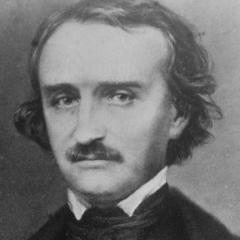
0 quotes

Annabel Lee

A source page for quotes linked to Edgar Allan Poe.

0 quotes

Bon-Bon

A source page for quotes linked to Edgar Allan Poe.

0 quotes

Collected Poems

A source page for quotes linked to Edgar Allan Poe.

0 quotes

Eureka

A source page for quotes linked to Edgar Allan Poe.

0 quotes

Letters

A source page for quotes linked to Edgar Allan Poe.

0 quotes

Marginalia

A source page for quotes linked to Edgar Allan Poe.

0 quotes

Morella

A source page for quotes linked to Edgar Allan Poe.

0 quotes

Mystery Tales

A source page for quotes linked to Edgar Allan Poe.

0 quotes

Tales

A source page for quotes linked to Edgar Allan Poe.

0 quotes

Tales and Poems

A source page for quotes linked to Edgar Allan Poe.

0 quotes

The Lake

A source page for quotes linked to Edgar Allan Poe.

0 quotes

Related Quotes

“They who dream by day are cognizant of many things which escape those who dream only by night. In their gray visions they obtain glimpses of eternity, and thrill, in awakening, to find that they have been upon the verge of the great secret. In snatches, they learn something of the wisdom which is of good, and more of the mere knowledge which is of evil. They penetrate, however, rudderless or compassless into the vast ocean of the "light ineffable," and again, like the adventures of the Nubian geographer, "agressi sunt mare tenebrarum, quid in eo esset exploraturi.”

“I dare say you have often observed this disposition to temporize, or to procrastinate, in people who are labouring under any very poignant sorrow. Their powers of mind seem to be rendered torpid, so that they have a horror of any thing like action, and like nothing in the world so well as to liequietly in bed and “nurse their grief,” as the old ladies express it- that is to say, ruminate over the trouble.”

“We have a task before us which must be speedily performed. We know that it will be ruinous to make delay. The most important crisis of our life calls, trumpet-tongued, for immediate energy and action. We glow, we are consumed with eagerness to commence the work, with the anticipation of whose glorious result our whole souls are on fire. It must, it shall be undertaken to-day, and yet we put it off until to-morrow; and why? There is no answer, except that we feel perverse, using the word with no comprehension of the principle. To-morrow arrives, and with it a more impatient anxiety to do our duty, but with this very increase of anxiety arrives, also, a nameless, a positively fearful, because unfathomable, craving for delay. This craving gathers strength as the moments fly. The last hour for action is at hand. We tremble with the violence of the conflict within us, — of the definite with the indefinite — of the substance with the shadow. But, if the contest have proceeded thus far, it is the shadow which prevails, — we struggle in vain. The clock strikes, and is the knell of our welfare. At the same time, it is the chanticleer-note to the ghost that has so long overawed us. It flies — it disappears — we are free. The old energy returns. We will labor now. Alas, it is too late!”

“From the dim regions beyond the mountains at the upper end of our encircled domain, there crept out a narrow and deep river, brighter than all save the eyes of Eleonora; and, winding stealthily about in mazy courses, it passed away, at length, through a shadowy gorge, among hills still dimmer than those whence it had issued. We called it the "River of Silence"; for there seemed to be a hushing influence in its flow. No murmur arose from its bed, and so gently it wandered along, that the pearly pebbles upon which we loved to gaze, far down within its bosom, stirred not at all, but lay in a motionless content, each in its own old station, shining on gloriously forever.”

“The ship and all in it are imbued with the spirit of Eld. The crew glide to and fro like the ghosts of buried centuries; their eyes have an eager and uneasy meaning; and when their fingers fall athwart my path in the wild glare of the battle-lanterns, I feel as I have never felt before, although I have been all my life a dealer in antiquities, and have imbibed the shadows of fallen columns at Balbec, and Tadmor, and Persepolis, until my very soul has become a ruin.”

“Todas as coisas são boas ou más por comparação. Uma análise suficiente mostrará que o prazer, em todos os casos, é apenas o contraste da dor. Prazer positivo é mera ideia. Para ser feliz, até certo ponto, devemos ter sofrido na mesma proporção. Jamais sofrer equivaleria a não ter jamais sido feliz. Mas está demonstrado que na vida inorgânica a dor não pode existir; daí a necessidade da dor para a vida orgânica. A dor da vida primitiva da Terra é a única base da felicidade da derradeira vida no Céu.”

“Men have called me mad; but the question is not settled whether madness is or is not the loftiest intelligence -- whether much that is glorious -- whether all that is profound -- does not spring from disease of thought -- from moods of mind exalted at the expense of the general intellect. They who dream by day are cognizant of many things which escape those who only dream by night. In their gray visions they obtain glimpses of eternity, and thrill, in waking, to find that they have been upon the verge of the great secret. In snatches, they learn something of the wisdom which is of good, and more of the mere knowledge which is of evil. They penetrate, however rudderless or compassless, into the vast ocean of the ‘light ineffable’.”

“I AM come of a race noted for vigor of fancy and ardor of passion. Men have called me mad; but the question is not yet settled, whether madness is or is not the loftiest intelligence--whether much that is glorious--whether all that is profound--does not spring from disease of thought--from moods of mind exalted at the expense of the general intellect. They who dream by day are cognizant of many things which escape those who dream only by night. In their gray visions they obtain glimpses of eternity, and thrill, in waking, to find that they have been upon the verge of the great secret. In snatches, they learn something of the wisdom which is of good, and more of the mere knowledge which is of evil. They penetrate, however, rudderless or compassless into the vast ocean of the "light ineffable", and again, like the adventures of the Nubian geographer, "agressi sunt mare tenebrarum, quid in eo esset exploraturi". We will say then, that I am mad.”

“Once upon a midnight dreary, while I pondered, weak and weary, Over many a quaint and curious volume of forgotten lore, While I nodded, nearly napping, suddenly there came a tapping, As of some one gently rapping, rapping at my chamber door. Tis some visitor," I muttered, "tapping at my chamber door — Only this, and nothing more." Ah, distinctly I remember it was in the bleak December, And each separate dying ember wrought its ghost upon the floor. Eagerly I wished the morrow; — vainly I had sought to borrow From my books surcease of sorrow — sorrow for the lost Lenore — For the rare and radiant maiden whom the angels name Lenore — Nameless here for evermore. And the silken sad uncertain rustling of each purple curtain Thrilled me — filled me with fantastic terrors never felt before; So that now, to still the beating of my heart, I stood repeating, Tis some visitor entreating entrance at my chamber door — Some late visitor entreating entrance at my chamber door; — This it is, and nothing more." Presently my soul grew stronger; hesitating then no longer, Sir," said I, "or Madam, truly your forgiveness I implore; But the fact is I was napping, and so gently you came rapping, And so faintly you came tapping, tapping at my chamber door, That I scarce was sure I heard you"— here I opened wide the door; — Darkness there, and nothing more. Deep into that darkness peering, long I stood there wondering, fearing, Doubting, dreaming dreams no mortals ever dared to dream before; But the silence was unbroken, and the stillness gave no token, And the only word there spoken was the whispered word, "Lenore?" This I whispered, and an echo murmured back the word, "Lenore!" — Merely this, and nothing more. Back into the chamber turning, all my soul within me burning, Soon again I heard a tapping somewhat louder than before. Surely," said I, "surely that is something at my window lattice: Let me see, then, what thereat is, and this mystery explore — Let my heart be still a moment and this mystery explore; — 'Tis the wind and nothing more." Open here I flung the shutter, when, with many a flirt and flutter, In there stepped a stately raven of the saintly days of yore; Not the least obeisance made he; not a minute stopped or stayed he; But, with mien of lord or lady, perched above my chamber door — Perched upon a bust of Pallas just above my chamber door — Perched, and sat, and nothing more. Then this ebony bird beguiling my sad fancy into smiling, By the grave and stern decorum of the countenance it wore. Though thy crest be shorn and shaven, thou," I said, "art sure no craven, Ghastly grim and ancient raven wandering from the Nightly shore — Tell me what thy lordly name is on the Night's Plutonian shore!" Quoth the Raven, "Nevermore." Much I marveled this ungainly fowl to hear discourse so plainly, Though its answer little meaning— little relevancy bore; For we cannot help agreeing that no living human being Ever yet was blest with seeing bird above his chamber door — Bird or beast upon the sculptured bust above his chamber door, With such name as "Nevermore.”

“Alone From childhood’s hour I have not been As others were; I have not seen As others saw; I could not bring My passions from a common spring. From the same source I have not taken My sorrow; I could not awaken My heart to joy at the same tone; And all I loved, I loved alone. Then- in my childhood, in the dawn Of a most stormy life- was drawn From every depth of good and ill The mystery which binds me still: From the torrent, or the fountain, From the red cliff of the mountain, From the sun that round me rolled In its autumn tint of gold, From the lightning in the sky As it passed me flying by, From the thunder and the storm, And the cloud that took the form (When the rest of Heaven was blue) Of a demon in my view.”

“Jetez sur une étoile un rapide coup d'œil, regardez-la obliquement, en tournant vers elle la partie latérale de la rétine (beaucoup plus sensible à une lumière faible que la partie centrale), et vous verrez l'étoile plus distinctement; vous aurez l'appréciation la plus juste de son éclat, éclat qui s'obscurcit à proportion que vous dirigez votre vue en plein sur elle. Dans le dernier cas, il tombe sur l'œil un plus grand nombre de rayons; mais dans le premier, il y a une réceptibilité plus complète, une susceptibilité beaucoup plus vive. Une profondeur outrée affaiblit la pensée et la rend perplexe; et il est possible de faire disparaître Vénus elle-même du firmament par une attention trop soutenue, trop concentrée, trop directe.”

“From childhood's hour I have not been As others were; I have not seen As others saw; I could not bring My passions from a common spring. From the same source I have not taken My sorrow; I could not awaken My heart to joy at the same tone; And all I loved, I loved alone. Then- in my childhood, in the dawn Of a most stormy life- was drawn From every depth of good and ill The mystery which binds me still: From the torrent, or the fountain, From the red cliff of the mountain, From the sun that round me rolled In its autumn tint of gold, From the lightning in the sky As it passed me flying by, From the thunder and the storm, And the cloud that took the form (When the rest of Heaven was blue) Of a demon in my view.”

“I Hear the sledges with the bells - Silver bells! What a world of merriment their melody foretells! How they tinkle, tinkle, tinkle, In the icy air of night! While the stars that oversprinkle All the heavens, seem to twinkle With a crystalline delight; Keeping time, time, time, In a sort of Runic rhyme, To the tintinnabulation that so musically wells From the bells, bells, bells, bells, Bells, bells, bells - From the jingling and the tinkling of the bells. II Hear the mellow wedding bells - Golden bells! What a world of happiness their harmony foretells! Through the balmy air of night How they ring out their delight! - From the molten - golden notes, And all in tune, What a liquid ditty floats To the turtle - dove that listens, while she gloats On the moon! Oh, from out the sounding cells, What a gush of euphony voluminously wells! How it swells! How it dwells On the Future! - how it tells Of the rapture that impels To the swinging and the ringing Of the bells, bells, bells - Of the bells, bells, bells, bells, Bells, bells, bells - To the rhyming and the chiming of the bells! III Hear the loud alarum bells - Brazen bells! What a tale of terror, now, their turbulency tells! In the startled ear of night How they scream out their affright! Too much horrified to speak, They can only shriek, shriek, Out of tune, In a clamorous appealing to the mercy of the fire, In a mad expostulation with the deaf and frantic fire, Leaping higher, higher, higher, With a desperate desire, And a resolute endeavor Now - now to sit, or never, By the side of the pale - faced moon. Oh, the bells, bells, bells! What a tale their terror tells Of Despair! How they clang, and clash and roar! What a horror they outpour On the bosom of the palpitating air! Yet the ear, it fully knows, By the twanging, And the clanging, How the danger ebbs and flows; Yet the ear distinctly tells, In the jangling, And the wrangling, How the danger sinks and swells, By the sinking or the swelling in the anger of the bells - Of the bells - Of the bells, bells, bells, bells, Bells, bells, bells - In the clamor and the clanging of the bells! IV Hear the tolling of the bells - Iron bells! What a world of solemn thought their monody compels! In the silence of the night, How we shiver with affright At the melancholy menace of their tone! For every sound that floats From the rust within their throats Is a groan. And the people - ah, the people - They that dwell up in the steeple, All alone, And who, tolling, tolling, tolling, In that muffled monotone, Feel a glory in so rolling On the human heart a stone - They are neither man nor woman - They are neither brute nor human - They are Ghouls: - And their king it is who tolls: - And he rolls, rolls, rolls, Rolls A paean from the bells! And his merry bosom swells With the paean of the bells! And he dances, and he yells; Keeping time, time, time, In a sort of Runic rhyme, To the paean of the bells: - Of the bells: Keeping time, time, time In a sort of Runic rhyme, To the throbbing of the bells - Of the bells, bells, bells: - To the sobbing of the bells: - Keeping time, time, time, As he knells, knells, knells, In a happy Runic rhyme, To the rolling of the bells - Of the bells, bells, bells - To the tolling of the bells - Of the bells, bells, bells, bells, Bells, bells, bells, - To the moaning and the groaning of the bells.”

“Twas noontide of summer, And mid-time of night; And stars, in their orbits, Shone pale, thro' the light Of the brighter, cold moon, 'Mid planets her slaves, Herself in the Heavens, Her beam on the waves. I gazed awhile On her cold smile; Too cold–too cold for me- There pass'd, as a shroud, A fleecy cloud, And I turned away to thee, Proud Evening Star, In thy glory afar, And dearer thy beam shall be; For joy to my heart Is the proud part Thou bearest in Heaven at night, And more I admire Thy distant fire, Than that colder, lowly light.”

“I Dwelt alone In a world of moan, And my soul was a stagnant tide, Till the fair and gentle Eulalie became my blushing bride- Till the yellow-haired young Eulalie became my smiling bride Ah, less-less bright The stars of night Than the eyes of the radiant girl! And never a flake That the vapor can make With the moon-tints of purple and pearl, Can vie with the modest Eulalie's most unregarded curl- Can vie compare with the bright-eyed Eulalie's most humble and careless curl Now Doubt-now Pain Come never again, For her soul gives me sigh for sigh, And all day long Shine, bright and strong, Astarte within the sky, While ever to her dear Eulalie upturns her matron eye- While ever to her young Eulalie upturns her violet eye.”

“It was many and many a year ago, In a kingdom by the sea, That a maiden there lived whom you may know By the name of ANNABEL LEE; And this maiden she lived with no other thought Than to love and be loved by me. I was a child and she was a child, In this kingdom by the sea; But we loved with a love that was more than love- I and my Annabel Lee; With a love that the winged seraphs of heaven Coveted her and me. And this was the reason that, long ago, In this kingdom by the sea, A wind blew out of a cloud, chilling My beautiful Annabel Lee; So that her highborn kinsman came And bore her away from me, To shut her up in a sepulchre In this kingdom by the sea. The angels, not half so happy in heaven, Went envying her and me- Yes!- that was the reason (as all men know, In this kingdom by the sea) That the wind came out of the cloud by night, Chilling and killing my Annabel Lee. But our love it was stronger by far than the love Of those who were older than we- Of many far wiser than we- And neither the angels in heaven above, Nor the demons down under the sea, Can ever dissever my soul from the soul Of the beautiful Annabel Lee. For the moon never beams without bringing me dreams Of the beautiful Annabel Lee; And the stars never rise but I feel the bright eyes Of the beautiful Annabel Lee; And so, all the night-tide, I lie down by the side Of my darling- my darling- my life and my bride, In the sepulchre there by the sea, In her tomb by the sounding sea." "It was many and many a year ago, In a kingdom by the sea, That a maiden there lived whom you may know By the name of ANNABEL LEE; And this maiden she lived with no other thought Than to love and be loved by me. I was a child and she was a child, In this kingdom by the sea; But we loved with a love that was more than love- I and my Annabel Lee; With a love that the winged seraphs of heaven Coveted her and me. And this was the reason that, long ago, In this kingdom by the sea, A wind blew out of a cloud, chilling My beautiful Annabel Lee; So that her highborn kinsman came And bore her away from me, To shut her up in a sepulchre In this kingdom by the sea. The angels, not half so happy in heaven, Went envying her and me- Yes!- that was the reason (as all men know, In this kingdom by the sea) That the wind came out of the cloud by night, Chilling and killing my Annabel Lee. But our love it was stronger by far than the love Of those who were older than we- Of many far wiser than we- And neither the angels in heaven above, Nor the demons down under the sea, Can ever dissever my soul from the soul Of the beautiful Annabel Lee. For the moon never beams without bringing me dreams Of the beautiful Annabel Lee; And the stars never rise but I feel the bright eyes Of the beautiful Annabel Lee; And so, all the night-tide, I lie down by the side Of my darling- my darling- my life and my bride, In the sepulchre there by the sea, In her tomb by the sounding sea.”

“I saw thee once - only once - years ago: I must not say how many - but not many. It was a July midnight; and from out A full-orbed moon, that, like thine own soul, soaring, Sought a precipitate pathway up through heaven, There fell a silvery-silken veil of light, With quietude, and sultriness, and slumber, Upon the upturn'd faces of a thousand Roses that grew in an enchanted garden, Where no wind dared stir, unless on tiptoe - Fell on the upturn'd faces of these roses That gave out, in return for the love-light, Their odorous souls in an ecstatic death - Fell on the upturn'd faces of these roses That smiled and died in the parterre, enchanted By thee, and by the poetry of thy presence. Clad all in white, upon a violet bank I saw thee half reclining; while the moon Fell upon the upturn'd faces of the roses, And on thine own, upturn'd - alas, in sorrow! Was it not Fate, that, on this July midnight - Was it not Fate, (whose name is also Sorrow,) That bade me pause before that garden-gate, To breathe the incense of those slumbering roses? No footsteps stirred: the hated world all slept, Save only thee and me. (Oh, Heaven! - oh, G**! How my heart beats in coupling those two words!) Save only thee and me. I paused - I looked - And in an instant all things disappeared. (Ah, bear in mind the garden was enchanted!) The pearly lustre of the moon went out: The mossy banks and the meandering paths, The happy flowers and the repining trees, Were seen no more: the very roses' odors Died in the arms of the adoring airs. All - all expired save thee - save less than thou: Save only divine light in thine eyes - Save but the soul in thine uplifted eyes. I saw but them - they were the world to me. I saw but them - saw only them for hours - Saw only them until the moon went down. What wild heart-histories seemed to lie enwritten Upon those crystalline, celestial spheres! How dark a wo! yet how sublime a hope! How silently serene a sea of pride! How daring an ambition! yet how deep - How fathomless a capacity for love! But now, at length, dear Dian sank from sight, Into a western couch of thunder-cloud; And thou, a ghost, amid the entombing trees Didst glide away. Only thine eyes remained. They would not go - they never yet have gone. Lighting my lonely pathway home that night, They have not left me (as my hopes have) since. They follow me - they lead me through the years. They are my ministers - yet I their slave. Their office is to illumine and enkindle - My duty, to be saved by their bright fire, And purified in their electric fire, And sanctified in their elysian fire. They fill my soul with Beauty (which is Hope,) And are far up in Heaven - the stars I kneel to In the sad, silent watches of my night; While even in the meridian glare of day I see them still - two sweetly scintillant Venuses, unextinguished by the sun!”

“A skillful literary artist has constructed a tale. If wise, he has not fashioned his thoughts to accommodate his incidents; but having conceived, with deliberate care, a certain unique or single effect to be wrought out, he then invents as may best aid him in establishing this preconceived effect. If his very initial sentence tend not to the outbringing of this effect, then he has failed in his first step. In the whole composition there should be no words written, of which the tendency, direct or indirect, is not to the one pre-established design. And by such means, with such care and skill, a picture is at length painted which leaves in the mind of him who contemplates it with a kindred art, a sense of the fullest satisfaction. The idea of the tale has been presented unblemished because undisturbed: and this is an end unattainable by the novel. Undue brevity is just as exceptionable here as in the poem; but undue length is yet more to be avoided.”

“The Lake In spring of youth it was my lot To haunt of the wide world a spot The which I could not love the less- So lovely was the loneliness Of a wild lake, with black rock bound, And the tall pines that towered around. But when the Night had thrown her pall Upon that spot, as upon all, And the mystic wind went by Murmuring in melody- Then-ah then I would awake To the terror of the lone lake. Yet that terror was not fright, But a tremulous delight- A feeling not the jewelled mine Could teach or bribe me to define- Nor Love-although the Love were thine. Death was in that poisonous wave, And in its gulf a fitting grave For him who thence could solace bring To his lone imagining- Whose solitary soul could make An Eden of that dim lake.”