Quotessence
Home / Authors / Immanuel Kant
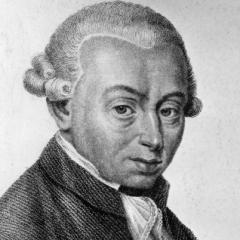
Immanuel Kant

Immanuel Kant Quotes

Philosopher

Filter quotes by topic

Famous Immanuel Kant Quotes

“[S]uppose the mind of [a] friend of humanity were clouded over with his own grief, extinguishing all sympathetic participation in the fate of others; he still has the resources to be beneficent to those suffering distress, but the distress of others does not touch him because he is sufficiently busy with his own; and now, where no inclination any longer stimulates him to it, he tears himself out of his deadly insensibility and does the action without any inclination, solely from duty.”

“One cannot avoid a certain feeling of disgust, when one observes the actions of man displayed on the great stage of the world. Wisdom is manifested by individuals here and there; but the web of human history as a whole appears to be woven from folly and childish vanity, often, too, from puerile wickedness and love of destruction: with the result that at the end one is puzzled to know what idea to form of our species which prides itself so much on its advantages.”

“To be beneficent when we can is a duty; and besides this, there are many minds so sympathetically constituted that, without any other motive of vanity or self-interest, they find a pleasure in spreading joy around them, and can take delight in the satisfaction of others so far as it is their own work. But I maintain that in such a case an action of this kind, however proper, however amiable it may be, has nevertheless no true moral worth, but is on a level with other inclinations. . . . For the maxim lacks the moral import, namely, that such actions be done from duty, not from inclination.”

“If it were possible for us to have so deep an insight into a man's character as shown both in inner and in outer actions, that every, even the least, incentive to these actions and all external occasions which affect them were so known to us that his future conduct could be predicted with as great a certainty as the occurrence of a solar or lunar eclipse, we could nevertheless still assert that the man is free.”